Manpower-lean push can wait, as businesses rush to hire returning Malaysians

Annabeth Leow
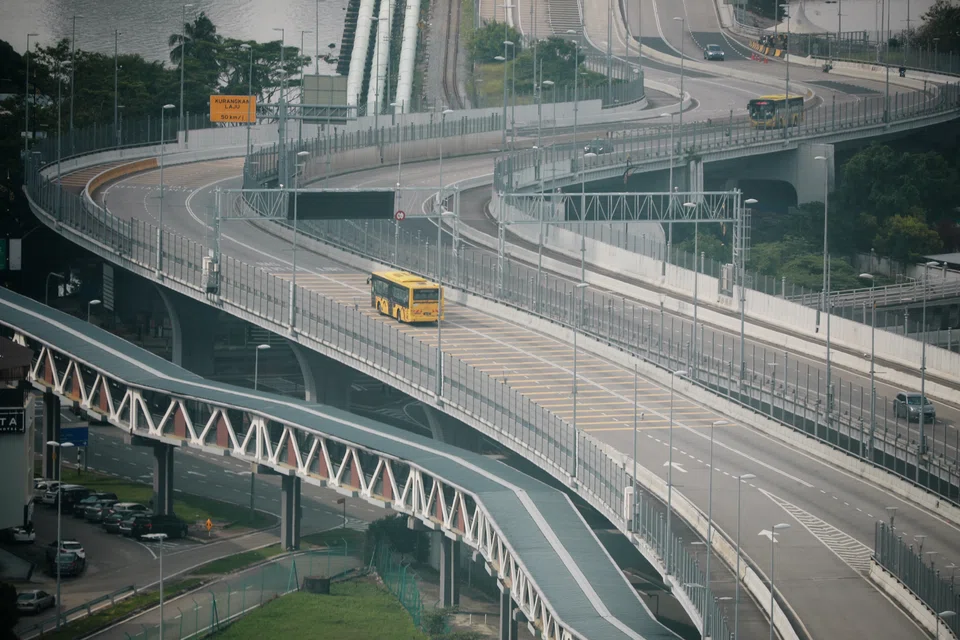
WITH Singapore’s land border now fully reopened, employers are rolling out the welcome mat for the return of Malaysian workers who used to commute here in droves for blue-collar jobs.
While schemes to reduce reliance on foreign labour are under way, “all these efforts have… been only mildly successful”, said Singapore Retailers Association (SRA) executive director Rose Tong, who expects “a few more years” are needed for meaningful change.
The Business Times previously reported that demand for Malaysian workers may be weaker than before the pandemic, especially as employers turned to automation and local staff in the interim.
Even as watchers do not expect the hot demand for Malaysians to hold in the longer run, checks by BT still found that hiring interest remains strong for now.
Singapore Business Federation chief executive Lam Yi Young noted that, with businesses “facing a tight manpower situation as business recovery picks up”, manufacturers and service companies alike are on the prowl for both local and foreign staff.
“The relaxation of border restrictions, especially with Malaysia, is welcomed as it helps facilitate the inflow of foreign employees to complement the local core,” he said.
Business associations indicated that they had been able to mitigate the lack of Malaysian workers by turning to locals during the border closure - but this tactic has its own challenges.
For example, “retail companies turned to employing part-timers in the thousands”, said Tong, while Ryan Chioh, acting president of the Singapore Manufacturing Federation (SMF), remarked that substitution by locals was “not necessarily on a one-to-one replacement basis”.
“SMF members have also reflected that on average, wages have increased by between 10 per cent and 30 percent per employee when compared to pre-pandemic levels,” Chioh added.
Margaret Heng, executive director of the Singapore Hotel Association (SHA), told BT: “As a rule of thumb, SHA member hotels will always try to hire locals first. However, the reality is that given the current tight labour market, we are having a hard time filling many operational positions.”
Employers are also trying to make sure they stay attractive in order to bring in the workers they need.
“As the market continues to open up, we face a lot of competition from other retailers as we try to fill vacancies, so strengthening our employer branding… becomes imperative,” said Naomi Pinkerton, head of human resources at department store chain BHG.
The pressure to hire comes amid a widely acknowledged labour crunch, especially for non-professional, managerial, executive and technical (non-PMET) roles.
Non-PMETs made up 47 per cent of the labour market’s vacancies in 2021, up from 43.3 per cent in 2020 and 41.6 per cent in 2019, according to the latest statistics from the Ministry of Manpower (MOM), which showed job openings hitting a high of 104,200 in September 2021.
Among positions that were open for protracted periods, a rising share were in the manufacturing and construction sectors, while cleaners, sales assistants, waiters were also in demand.
Similarly, the SHA’s Heng said that some hotels are seeing vacancies of up to 80 per cent for housekeepers, with positions also open for room attendants, receptionists and cooks.
As a result of the staff shortage, some hotels are running at occupancy caps as low as 50 per cent, “which does not bode well for recovery due to missed business opportunities”, she said.
“This reflected the closure of borders which temporarily restricted the inflow of migrant workers who are usually hired to fill such roles,” the MOM said in its report. “The shortages are expected to abate when border restrictions ease further.”
But Terence Ho, associate professor at the Lee Kuan Yew School of Public Policy, told BT that the rehiring of returning Malaysians will be uneven across sectors.
“Demand for Malaysian workers is likely to be more resilient in the manufacturing sector where it is harder to attract Singaporeans. Hiring should already be under way,” he said.
That’s despite Chioh noting the difficulty of reskilling returning workers to use the new digital tools that manufacturers may have adopted in the intervening years.
Some services companies seem to have coped with the reduced availability of foreign workers.
Arthur Kiong, the CEO of hotel operator Far East Hospitality, said: “We are indeed seeing more foreign applicants, mainly from Malaysia and China with the reopening of borders.
“However, we are currently focusing on strengthening the Singapore core as much as possible, and will be giving hiring priority to Singaporeans and permanent residents.”
The group last year disclosed that it had cut its share of foreign staff from 35 per cent to 28 per cent during the pandemic, although it did not provide more recent figures when asked.
Pinkerton added that BHG’s headcount is stable against pre-pandemic levels, as the retailer was able to recruit locals through referrals and virtual career fairs, and also snapped up staff from other companies that closed their doors amid the pandemic.
However, SRA's Tong said: “We may see businesses shutter due to lack of available local full-time workers or limit expansion - locally or overseas - due to the lack of trained employees, and also to contain rising business costs.”
And in manufacturing, Chioh warned: “Some businesses are looking to relocate their operations overseas as the local workforce does not appear keen to take on roles such as technicians and production workers. Additionally, manpower costs incurred are higher in Singapore.”
All the same, Ho, a former manpower planning and policy director at the MOM, noted that foreign labour policies - such as a tighter cap on hiring in services and a higher minimum salary for S Pass holders - “will have an impact on the inflow of foreigners” eventually.
“It may take a while for firms to adjust, but over time this will encourage automation, manpower-lean processes and job redesign to attract locals,” he said.
Heng also pointed out: “Whilst it is now easier for Malaysians to cross the Causeway into Singapore, which is a plus for hiring, there are also employees who have decided to return home.”