

Market liquidity could evaporate in response to shocks, IMF warns
It also notes corporate debt in emerging-market economies has quadrupled in the past decade with low interest rates
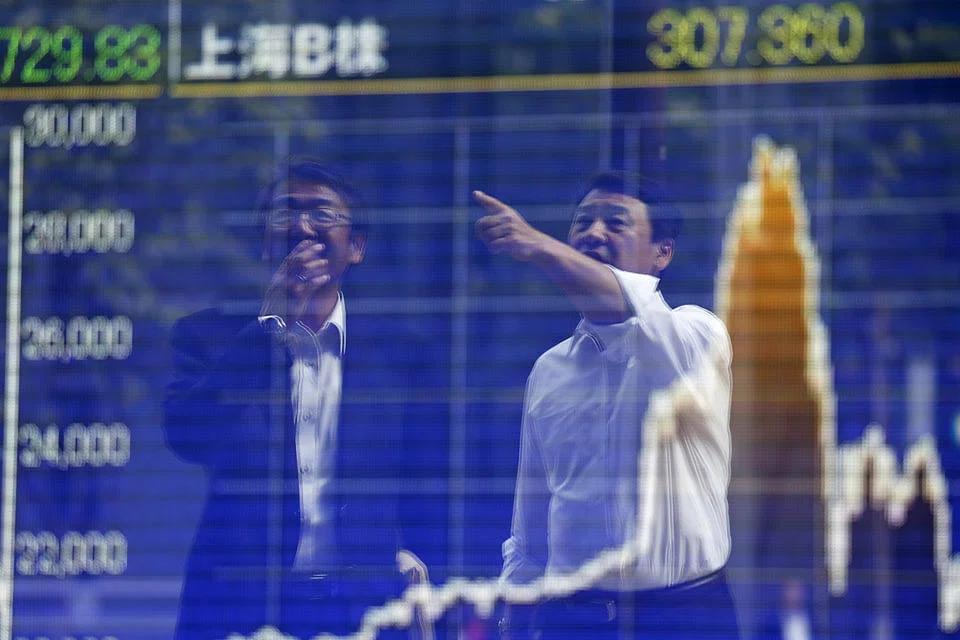
Tokyo
AS global stock markets reeled and currencies gyrated on Tuesday on interest-rate uncertainties and fears of accelerating economic slowdown in China, the International Monetary Fund (IMF) issued a chilling warning that financial-market liquidity could "evaporate in response to shocks".
"Policymakers need to monitor risks and prepare for normalisation of monetary policy" in the United States and elsewhere, the IMF said, while warning that markets could otherwise "freeze up" again as they did in the 2008 global financial crisis.
At the same time, the IMF reported in its latest Global Financial Stability Report that corporate debt in emerging markets - China and Turkey especially - has leapt dramatically as zero or low interest rates have led to a borrowing binge by businesses.
Finance ministers and central bank governors from around the world meeting in the Peruvian capital Lima at the beginning of next month could again find themselves embroiled in dealing with a global financial crisis, some analysts suggested.
Washington-based IMF, among others, has been warning for several years of a possible liquidity crunch in global markets given the sheer volumes of money pouring into financial assets and changes in trading and other structures.
Now, with markets appearing to lose their nerve in the face of the China slowdown and uncertainty over when the US Federal Reserve will begin raising interest rates, what seemed a distant threat is looking more like a clear and present danger.
"In recent years, factors such as investors' higher risk appetite and low interest rates have been masking growing underlying fragilities in market liquidity," Gaston Gelos, chief of the IMF's Global Financial Stability Analysis Division, said on the launch of the report.
The "level of liquidity in financial markets - the ability to buy or sell a large quantity of a financial asset at a low cost in a short time - has not shown a marked decline in most asset classes", the IMF report said. "However, low interest rates may be masking an erosion of its underlying resilience, according to new research by the IMF."
In recent years, the report noted, "investors have been prepared to take more risks for a higher return on investment, while accommodative monetary policies such as low interest rates and bond buying ( quantitative easing) have sustained market liquidity".
But "structural changes such as a less diverse investor base, the proliferation of small bond issues, and banks' retrenchment from trading suggest that once interest rates rise, liquidity will probably decline.
"When markets are illiquid, asset prices become more volatile and less aligned with developments in the economy, and less informative about assets' fundamental values.
"In extreme conditions, a sharp drop in liquidity can threaten financial stability since several asset markets, for example, bond and repo markets can freeze altogether as seen in the global financial crisis."
Structural changes have affected the level of market liquidity in recent times, the IMF noted. For instance, the decline in banks' willingness to bear risks has played a role.
At the same time, "large scale asset purchases by central banks, despite a generally positive effect on market liquidity, have reduced the availability of certain securities".
These impacts are not yet understood fully, the IMF said, while warning that "if financial conditions worsen or investors become weary of a particular asset class or financial market, market liquidity can quickly evaporate.
"Swings in market liquidity in one asset class seem to spill over to other asset classes more frequently, and high-yield and emerging market bonds show some signs of deterioration in market liquidity.
"As spillovers between asset classes increase, it becomes more likely for a liquidity shock in one market to spread to other markets, possibly leading to a shock to the global financial system, as was the case in 2008."
In another worrying development, the IMF noted that corporate borrowing in emerging-market economies "has quadrupled in past decade (with) low interest rates and an investor search for higher returns plays an increasing role".
Low interest rates in advanced economies such as the US, Europe and Japan have encouraged this borrowing, the IMF report said.
"The increase in firms' debt-to-asset ratio, commonly known as leverage, has often included a higher share of foreign-currency liabilities." This "entails risks", it added.
Emerging-market firms have also borrowed against the security of high commodity prices but these prices are now collapsing as demand from the world's second-largest economy, China, contracts.
"Corporate debt of nonfinancial firms across major emerging markets rose sharply from about US$4 trillion in 2003 to well over US$18 trillion in 2014," the IMF report revealed.
"The emerging market corporate debt-to-GDP ratio has meanwhile grown by 25 percentage points in the same period, although with notable differences across countries.
"While estimates of corporate leverage rose markedly in China and in Turkey, corporate indebtedness also rose appreciable in many Latin American countries, including for example, Chile, Brazil, Peru, Mexico, and Colombia."
Data in the IMF report show that Asian countries with the highest levels of corporate debt also include India and Thailand, with South Korea and Indonesia too having significant levels - although not Malaysia.
The composition of emerging-market debt has changed, the report said. "Although bank loans still account for the largest share of corporate debt, the share of bonds has nearly doubled over the last decade, reaching 17 per cent in 2014."
Despite "weaker balance sheets, emerging market firms have managed to issue bonds at lower yields and longer maturities.
"These developments make emerging market economies more vulnerable to a rise in interest rates, dollar appreciation, and an increase in global risk aversion," Mr Gelos noted.
Firms that have borrowed the most stand to endure the sharpest rise in their debt-service costs once interest rates begin to rise in some advanced economies.
At the same time, "local currency depreciations associated with rising policy rates in the advanced economies would make it increasingly difficult for emerging-market firms to service their foreign currency denominated debts if they are not hedged adequately".
TRENDING NOW

He built the Vingroup empire. Now South-east Asia’s richest man is handing some key roles to his sons

32 companies, 6 individuals bag accolades at Singapore Corporate Awards 2026

Can a first-time homebuyer couple earning S$18,000 a month afford a new EC unit?

Floods compound Philippine growth woes from public-works scandal

