

MAS mulls regulating trading of payment token derivatives
It will be allowed on 4 approved exchanges, but may not be suitable for retail investors
Singapore
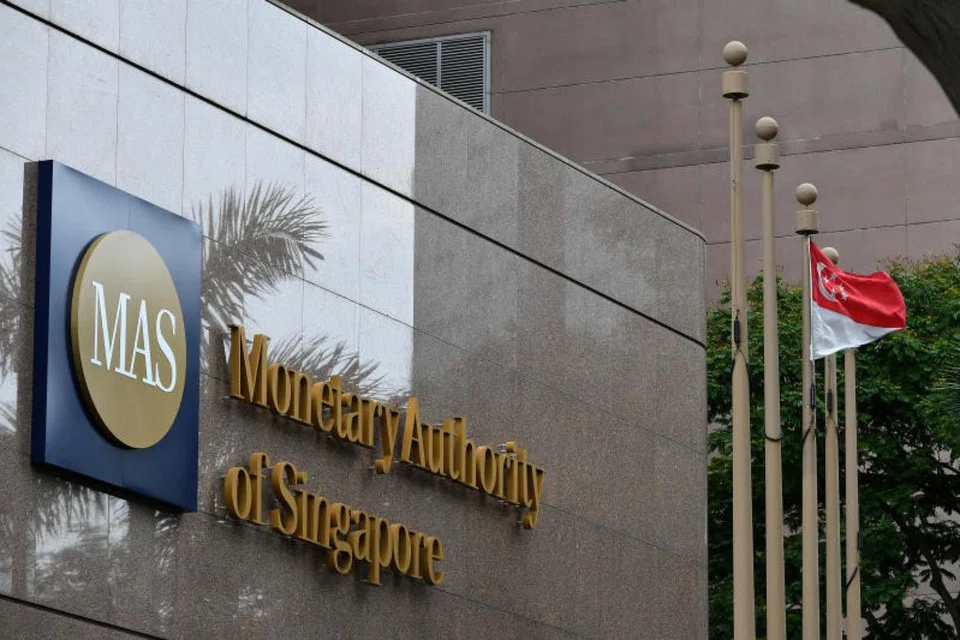
THE Monetary Authority of Singapore (MAS) is seeking to regulate derivatives of payment tokens such as Bitcoin and Ether by allowing trade only on the four approved exchanges in Singapore.
Approved exchanges include Singapore Exchange Derivatives (SGX Derivatives), Asia Pacific Exchange (APEX) and Ice Futures. MAS will be regulating the activity under the Securities and Futures Act.
SGX however, currently has no plans to launch payment token derivatives, it said in an e-mail to The Business Times.
MAS said there is demand from institutional investors for a regulated product to gain and hedge their exposure to these payment tokens, a point also made by market watchers.
"Payment token derivatives occupy a unique space as a potential asset class for sophisticated players to manage risks and cash flows... These derivatives offer more choices for such players to fulfil investment objectives," noted Associate Professor Lawrence Loh of the NUS Business School.
However, the central bank does not view payment token derivatives to be suitable for most retail investors to trade, it stressed in a consultation paper released on Wednesday.
Retail investors should exercise extreme caution when trading in payment tokens and their derivatives, advised MAS. These tokens tend to have little or no intrinsic value, are difficult to value and exhibit high price volatility, said MAS, adding that retail investors could lose the whole amount they put in and more.
David Gerald, founder and chief executive of the Securities Investors Association Singapore, said. "SIAS has been noticing interest from retail investors wanting to participate in these payment tokens," he said, adding that these instruments are risky as they are not very transparent in terms of pricing and ownership.
To underline the risks, MAS is setting a high bar for retail investors.
Come June 30 next year, retail investors will need to fork out more than institutional investors to trade in these derivatives. They will need to pay 1.5 times the standard amount of margin required for contracts offered by the approved exchanges, subjected to a floor of 50 per cent of the contract value.
Take for instance a contract size of one Bitcoin with a notional value of S$10,000. If the margin required for payment token derivatives by the exchange is fixed at 40 per cent of the contract size, institutional investors would need to maintain a margin of S$4,000, but the margin requirement for retail investors will be S$6,000, which is 1.5 times more.
"These safeguards are a strong signal to retail investors to be aware of the risks involved," said Carol Fong, group chief executive of CGS-CIMB Securities in Singapore.
However, with such extreme volatility, some argue that retail investors should be kept away from such instruments completely.
"I can understand MAS wanting to develop our markets - which is a laudable objective - but doing it by putting at risk ordinary retail investors' monies is not the way to go," said NUS associate professor Mak Yuen Teen.
However, the move by MAS to approve exchange trading of payment token derivatives will be a key competitive advantage of the developing decentralised finance industry in Singapore, said Chua Tju Liang, a director at Drew & Napier.
"This move clearly demonstrates MAS's commitment to this space," said Mr Chua, who is also the global general counsel of the Ethereum Foundation.
The central bank will have to strike a balance between being at the forefront of developing markets and protecting the interests of retail investors. Some observers agree that the strategy outlined by MAS is "probably the most appropriate way forward".
"While it will not be practicable to have a total ban on these investors due to difficulty in investor filtering, it is critical that Singapore's financial markets are seen as, and are actually, accessible," said Prof Loh.
OCBC Securities is studying the MAS consultation paper to assess the suitability of including digital tokens derivatives into its product suite, said its managing director Dennis Hong.
TRENDING NOW

Grab CEO’s wife Chloe Tong on life with Anthony Tan and finding her purpose

Income Insurance appoints former Manulife Singapore top man as new CEO

Incidence of civil servants buying property near unannounced MRT stations ‘a concern’, but may not establish misconduct: PSD

Three ex-employees of Envy group join Ng Yu Zhi in bankruptcy

