

May sends Johnson to Labour heartland as terror shapes campaign
London
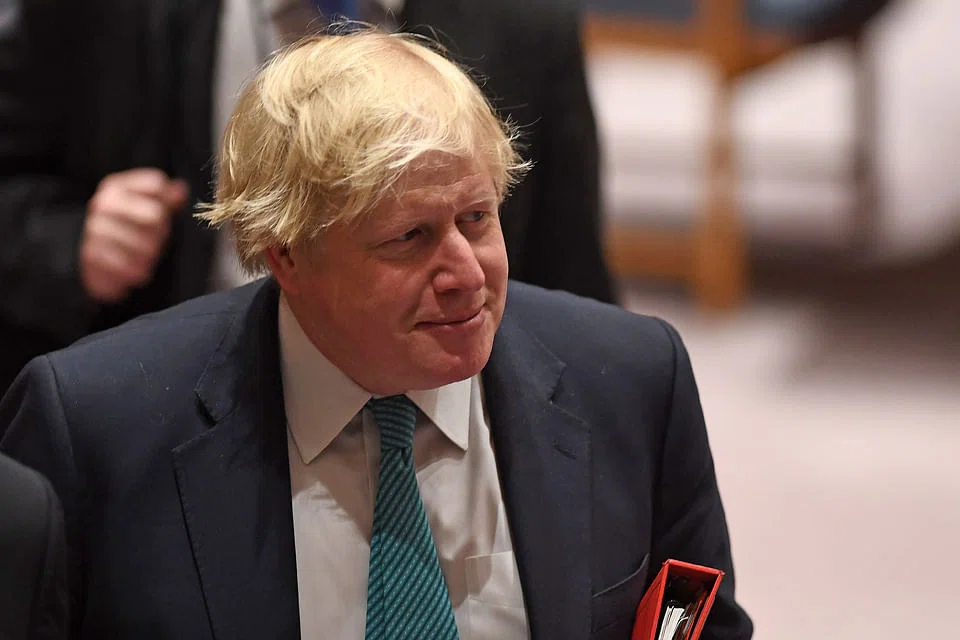
CONSERVATIVE Prime Minister Theresa May will deploy Boris Johnson to the northeast of England in a bid to conquer Brexit-supporting Labour strongholds, even as the fallout from the London terror attacks continues to dominate the campaign.
Mr Johnson, one of the faces of the "Leave" campaign, was expected to say in a Tuesday speech that only Mrs May can "get Brexit right". Labour will aim to shore up its support in working-class areas with a warning that Mrs May's plans to cut winter heating support for the elderly will cause thousands of extra deaths.
"This is the moment to believe in the huge potential of Brexit Britain," Mr Johnson was to say, according to extracts released by the party. "If we are to make the most of that opportunity, then we need the right economic policies and it makes me shudder to think that we could be seriously about to elect" a Labour-led government.
Faced with a dramatic narrowing in their poll lead, the Tories are trying to drag the campaign back to focus on Brexit and Mrs May's leadership. But three days after the London Bridge attack, they continue to face criticism for cutting police numbers, with Mr Johnson batting off questions on Tuesday about how the terrorists slipped from authorities' grasp.
Mr Johnson, a former mayor of London, said that voters were right to ask "how did this person slip through in the way it appears he has" and pledged to intensify efforts to stop foreign powers funding extremists.
Wading into a campaign from which he has been largely absent, London Mayor Sadiq Khan said that it would be harder to thwart terrorist attacks if Mrs May wins the election. The Tories plan £400 million (S$711 million) of cuts to the Metropolitan Police, Mr Khan added.
"Cuts on this scale would make it harder to foil future terrorist attacks on our city and as Mayor of London, I'm simply not willing to stand by and let that happen."
But even as the Conservatives, and particularly former home secretary Mrs May, are slammed for squeezing police budgets, the Labour Party is struggling to convince voters it has the answers on security. Home Affairs spokeswoman Diane Abbott has had a series of slip-ups in television interviews where she has failed to show a grasp of the main issues.
Mrs May, who called the election early when polls pointed to a landslide victory, continues to lead an aggressive campaign to seize Labour seats. That was underlined by a stop on Monday evening in the northern city of Bradford - in a seat her party last won in 1918. She's aiming to persuade those who voted for the UK Independence Party (UKIP) in 2015 to back her this time.
Mr Johnson, tipped to be prime minister after the 2016 Brexit referendum, remains a popular politician who is appealing to UKIP supporters.
A ComRes poll of those who backed UKIP in 2015 for the Tuesday edition of the Sun newspaper found 48 per cent would be backing the Conservatives.
Pollsters are divided on how big the Conservatives' advantage is in the final days of campaigning, with a survey by Survation on Tuesday showing a one-point lead while ICM on Sunday put the prime minister's party 11 points ahead. A projection by YouGov plc suggested Mrs May could even lose her parliamentary majority.
Labour leader Jeremy Corbyn on the other hand spent Monday evening at rallies in the northeast defending constituencies his party won two years ago. He spoke to thousands of supporters in Blyth, where the Labour candidate could be under threat if all UKIP voters switch to the Tories, and Gateshead, where Labour won 57 per cent of the vote in 2015.
Labour is also switching its focus from security toward welfare support for retirees.
The party will highlight Tory plans for the slice of the population that has the highest voter turnout and seek to exploit the chaos over Mrs May's social-care plans in what economy spokesman John McDonnell described as the "biggest attack on pensioners in a generation".
"Removing the winter fuel payments from millions of pensioners could leave thousands of the most vulnerable at even more risk this winter," Mr McDonnell said. "On top of their dementia tax, it means that pensioners in our country will struggle to heat their homes and keep their homes under the Tories." BLOOMBERG
TRENDING NOW
Simba admits exceeding spectrum limits amid failed M1 deal; full-year profits surge 277%

Temasek’s Wan Chee Foong to helm PIL, Lars Kastrup to be board adviser

He built the Vingroup empire. Now South-east Asia’s richest man is handing some key roles to his sons
One-third of Singapore-listed firms at risk in severe AI downturn: MAS

