

May's Brexit offer to EU citizens leaves many cold
London
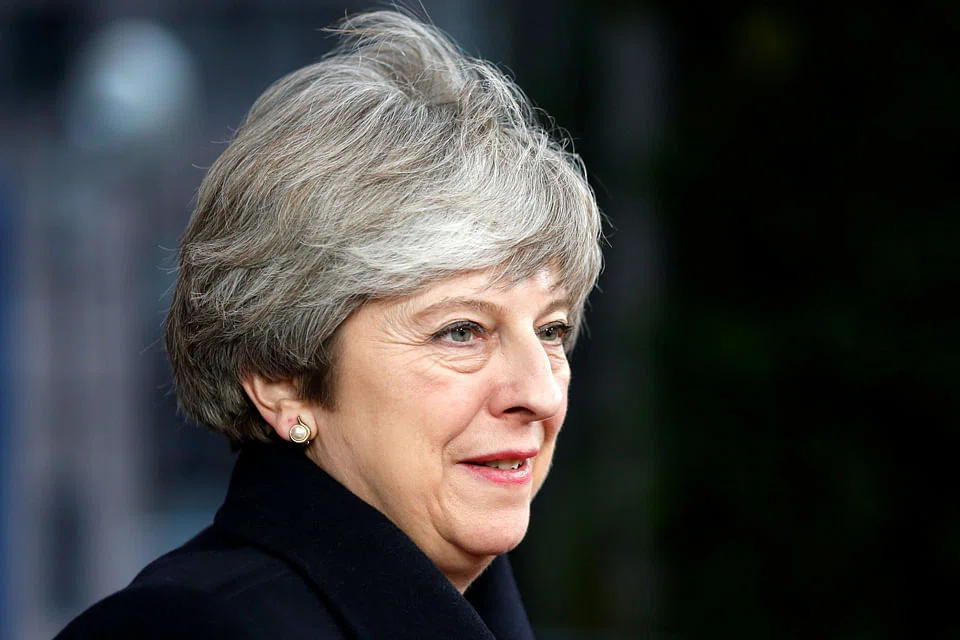
BACK from Brussels with a hard-fought Brexit deal, Prime Minister Theresa May wrote an open letter to the three million citizens of other European Union states living in Britain.
"I know our country would be poorer if you left and I want you to stay," she wrote after striking the initial agreement, which promises to secure their British residency rights after Brexit and allows the negotiations to move onto trade relations.
But for some EU nationals - who have endured uncertainty over their rights since the Brexit vote in June 2016, not to mention an unpleasant feeling that many Britons do not want them around - Mrs May's Dec 8 deal is too little, too late.
It's too late to keep German nurse Daniela Jones in the chronically short-staffed National Health Service (NHS), where she worked for 35 years.
It's too late for French psychotherapist Baya Salmon-Hawk, who after 40 years in Britain has moved to Ireland to remain in the EU.
It's too late for French accountant Nathalie Duran, who is planning early retirement in France because after 31 years as a taxpayer in Britain she objects to being told she has to pay a fee and fill in forms to be granted a new "settled status".
"I will have to regretfully decline your generous offer for settled status and oblige your lovely countrymen's wishes and go home," she wrote on Facebook in a response to Mrs May, laden with irony.
Ms Duran told Reuters that the prime minister's "late outpouring of love" for EU citizens, after years of tough talk on the need to cut immigration, could not mask negative attitudes towards immigrants unleashed by the Brexit vote.
"I think it's turning ugly," said 56-year-old Ms Duran. "It's now OK to say 'go home foreigners'."
EU citizens, particularly those from the poorer eastern member states such as Poland and Romania, have complained of increasing hostility from some Britons.
They find themselves accused of stealing jobs from Britons and driving down wages, even though unemployment is at a four-decade low, or of overburdening health services as patients, even though many help to provide them by working for the NHS.
Official figures show hate crimes in Britain surged by the highest amount on record last year, with the Brexit vote a significant factor.
The impact of Brexit on EU citizens in Britain is a serious concern for sectors of the economy that rely heavily on European workers, such as hospitality, construction, agriculture, care for the elderly and the cherished NHS.
Britain won't leave the bloc until March 2019, but many EU nationals are already voting with their feet. In the 12 months following the referendum, 123,000 of them left Britain, a 29 per cent year-on-year increase.
They were still outnumbered by the 230,000 EU citizens who arrived to live in Britain in the same period, although that figure was down 19 per cent on the previous year.
Not everyone is making plans to go: 28,500 EU citizens applied for British citizenship in the 12 months after the referendum, an 80 per cent year-on-year jump. With personal and professional roots often running deep, many more have applied for permanent residence documents.
UK citizenship would be an option for nurse Jones, 61, who moved to England from Munich just before her 18th birthday. That was in 1974, the year after Britain joined what is now the EU. Today she has a grown-up British son and a British husband. But as a point of principle she cannot see why she should apply for something she never needed in the past. "Despite my enormous love for Britain, I do not feel that I am British," was how she put it in a letter to Ruth Deech, a pro-Brexit member of parliament's House of Lords, sent in February to lobby her on the EU citizens' rights issue.
In a one-line response to the long, impassioned letter, which made clear Ms Jones had worked for 35 years in the state NHS, Ms Deech said she should have applied for UK citizenship. Ms Jones replied it had never been necessary and explained that she was already a dual German and US national through her German mother and her American father, a serviceman in the US army who was posted to Germany in the 1950s.
Ms Deech sent another one-liner: "You sought US citizenship - presumably you could have shown the same commitment to this country." Ms Jones was dismayed by that response, which in her eyes lacked understanding and respect. She began to think she needed to look after her own interests better.
A few months later, she quit her NHS job at a doctors' office in Yateley, a small town south-west of London. She is now re-training as a foot and ear care specialist and plans to work privately.
Ms Deech declined an interview request from Reuters, but said in an e-mailed response to questions that obtaining a British passport "might be a good idea for any EU citizen who is (probably needlessly) concerned".
French national Baya Salmon-Hawk, 61, initially reacted to the Brexit vote by trying to make sure her residency rights were not under threat. Having lived in England for 40 years, had her son there, owned a home, worked in a variety of jobs and paid taxes, she thought that should be straightforward.
But when she made inquiries about a permanent residence permit she had obtained in 1977, she was told this was no longer valid and she would have to re-apply by filling an 85-page form and providing lots of documents, including details of every time she had left the country and returned, stretching back years.
Besides, Ms Salmon-Hawk was struggling to adjust to the new reality. Having believed previously that she was integrated into British society, she felt unwelcome for the first time. REUTERS
TRENDING NOW

Indonesia begins cutting natural gas exports to Singapore from Oct 24: reports

Singapore’s central gas buyer affirms Indonesia’s role as ‘important partner’ amid export review warning

KKR founders among investors buying 42% of Peter Lim’s Valencia; club valued at US$1.4 billion

NEA issues notices to 10 Singapore-based companies, including Wilmar and APP, over haze

