

Mega projects to fuel Singapore's long-term tourism
Sector currently faces challenges from global slowdown, regional casino rivals

Janice Heng
Singapore
SINGAPORE'S two integrated resorts (IRs) have been a roaring success, but there's been no let-up in efforts to keep the nation's tourism momentum going.
Over the next few years, the Mandai eco-tourism hub and Jurong Lake District, and S$9 billion in further commitments by the IRs are among the projects that will continue to excite visitors.
Looking further ahead, the Greater Southern Waterfront development and infrastructure projects such as Changi Terminal 5 and a rail link to Johor Bahru - if not the high speed rail to Kuala Lumpur - "will all drive visitation to Singapore over the next decade and beyond", said Colliers International executive director of valuation and advisory services Govinda Singh.
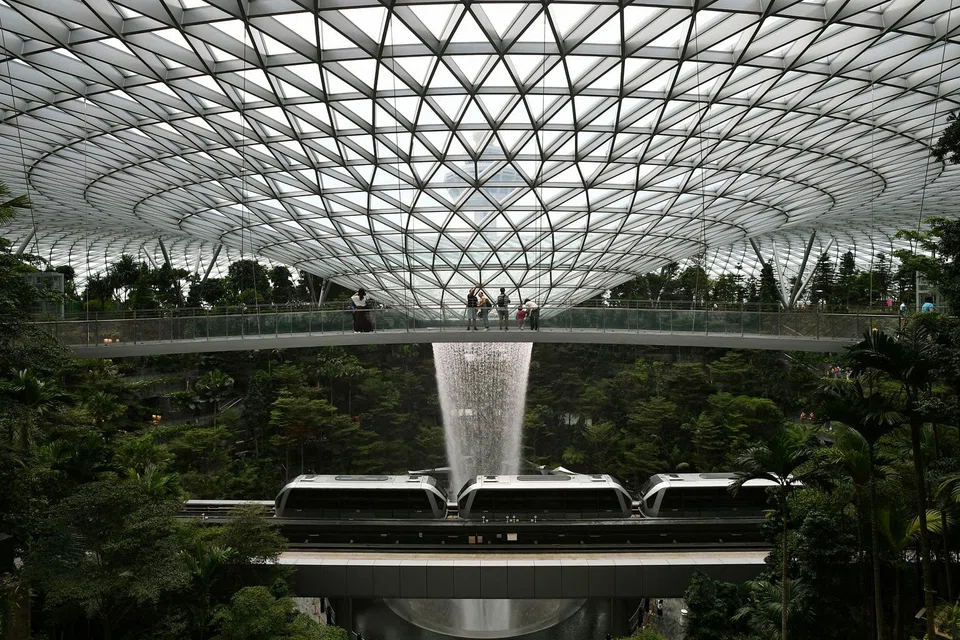
This year's opening of Jewel Changi Airport showed that blockbuster projects are still possible, with the attraction having drawn more than 50 million visitors since April, exceeding its initial target. UOB economist Barnabas Gan expects Jewel to "further drive Singapore's appeal as a tourist and transit destination".
More are in the works for the next few years. Alongside the IRs' redevelopment, projects such as the Mandai eco-tourism hub, due by 2023, and Jurong Lake District's seven-hectare tourism development, due by 2026, can be expected to drive visitor growth including return visits, said Mr Singh.
"If done well, these attractions could play a significant role in increasing the average length of stay in Singapore - something that has not increased since the opening of the two integrated resorts," he added.
Granted, the IRs' success is hard to replicate - and sustain. "Expansion of the two integrated resorts will help sustain tourist interest but will not be as impactful and game-changing as a decade ago when the IRs first opened," said Maybank Kim Eng economists Lee Ju Ye and Chua Hak Bin.
Additionally, there is rising regional competition from casino and resort offerings in nearby markets such as the Philippines, Macau, Vietnam, and soon Japan.
But the biggest challenge to the industry is the global slowdown. Global and external events have historically had a pronounced effect on tourist receipts, which fell 18.3 per cent year-on-year during the global financial crisis and 13.3 per cent in the Asian Financial Crisis, said Mr Gan. With receipts having fallen for three straight quarters as of Q2, a continued slowdown might "prolong the softness of Singapore's tourism industry."
"Singapore is a developed market in the region, and during these times, budget-conscious travellers may head to other developing markets that are seen as more affordable," said Teo Junrong, associate director of CBRE Hotels, international capital markets.
There is also the upcoming blow from tightened foreign labour quotas in the services sector, in January 2020 and 2021.
"Hotels are already running at record capacity. Some high-end dining establishments may struggle to maintain the service quality if there's a manpower crunch," said the Maybank economists, noting that the sector already faces a labour shortage.
Notwithstanding these short-term headwinds, analysts are optimistic for 2020, expecting Singapore to see a continued diversion of leisure and business travellers from Hong Kong.
They also believe the Republic's long-term tourism outlook remains sunny.
In a November report, ANZ economists Krystal Tan and Sanjay Mathur said: " As mainland Chinese tourists move away from Hong Kong and Taiwan to other destinations, the latter are likely to receive a boost in revenues higher than what the arrivals data suggest."
According to ANZ, the per capita spend for mainland China visitors to Singapore is more than 2.5 times that of the average visitor.
Downside risks in 2020 may be mitigated by major MICE (meetings, incentives, conferences, exhibitions) events such as Gamescom Asia and the biennial Singapore Airshow and Food and Hotel Asia, said Mr Singh.
Nor are the downward trends in tourism receipts and per capita spending necessarily cause for alarm.
In hospitality, Singapore's average daily rate (ADR) and occupancy have been among the strongest in Asia Pacific, said Mr Teo. "While we are not a long stay market... we have strong arrival numbers and a well-managed supply situation."
Singapore Tourism Board figures for Q2 showed a decline in accommodation receipts with more visitors staying in lower-tier hotels or with friends and relatives.
But Mr Singh noted that prior to an influx of supply from 2013, the room stock was aimed at the higher end of the market. Despite more low-cost carriers serving Singapore, "most travellers who could afford the air ticket were unable to find a reasonably priced quality room in a central location", he said. With more mid-tier and economy options now available, the size of Singapore's market has broadened.
Mr Teo noted promising trends in hospitality, such as more owners seeking to differentiate themselves.
"We have also observed keen interest from numerous Japanese operators due to the strong Japanese inbound numbers," he added.
To continue growing the sector, Singapore can "work more closely with its neighbouring countries, particularly Indonesia and Malaysia, to promote Asean as a destination, with Singapore as a gateway", suggest the Maybank economists.
TRENDING NOW

He built the Vingroup empire. Now South-east Asia’s richest man is handing some key roles to his sons

Can CDL become a powerhouse in fund management?

Canada is upping oil flows to Asia, but South-east Asia’s refineries aren’t ready to handle them yet
Data centre energy demand from Asean telcos not a ‘big risk’, says industry group

