Mega-trade deals can pave way for bigger pacts: Heng Swee Keat
Amid call to defend globalisation, Singapore minister says the right solution to trade friction is via the WTO

Annabeth Leow
Singapore
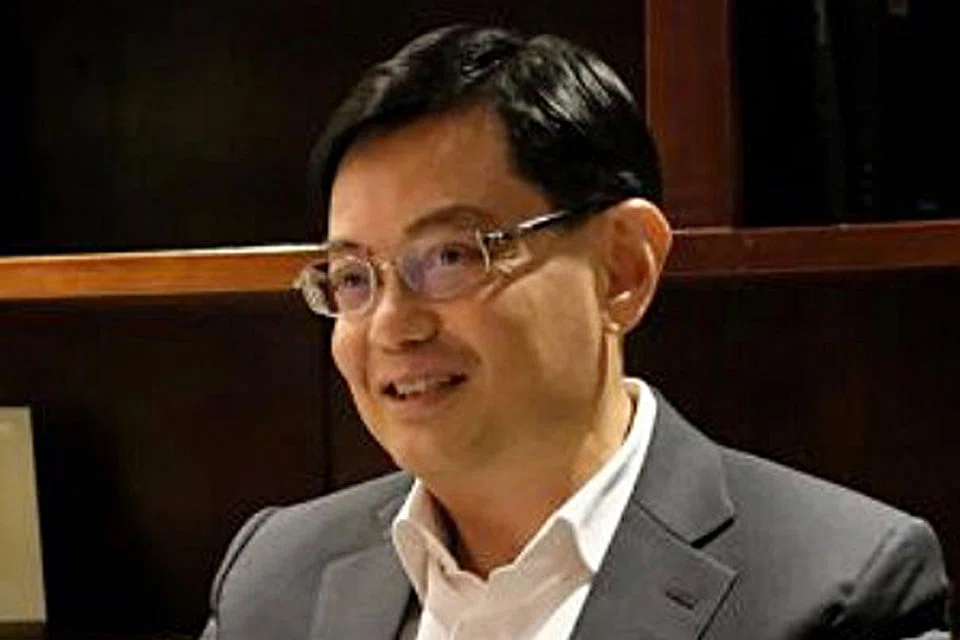
GLOBALISATION needs its defenders, said Finance Minister Heng Swee Keat on Thursday, while calling on countries to embrace broader trade pacts and international mechanisms.
Mega-trade deals like the Regional Comprehensive Economic Partnership (RCEP) can pave the way for even bigger projects, he said, in a dialogue at the Singapore Institute of International Affairs's 11th Asean & Asia Forum.
Hours before the sixth round of RCEP ministerial talks were to begin at the Shangri-La Hotel, Mr Heng said of the 16-nation scheme: "I hope that it does not lead to a fragmentation of the world into major trading blocs. The idea is not that. But, based on our own experience with free trade agreements, regional agreements, bilateral agreements are important building blocks for a broader international agreement."
China's Belt and Road Initiative is also "significant" in its intent and strategic goal, said the minister, who called the pan-Asian development project "a good set of ideas". "What we should do in the region is to welcome investments from all over the world," he added - whether it is from "traditional sources" like the United States and Japan, or new and emerging markets, including within Asean.
"There is a risk that a trade war - or trade frictions, rather - if it escalates, can become very, very destabilising for the entire global economy, and certainly for the Asian region," Mr Heng said. "I do think that the right solution is to make full use of the WTO and solve many of these issues."
He added, referring to the fraught World Trade Organisation trade talks that were launched in the Qatari capital in 2001: "Our hope must continue to be on the WTO, on the Doha route."
The minister also reiterated Singapore leaders' recent public affirmations of a rules-based, multilateral trading system: "I'm not saying that it's the perfect system today . . . but I do think that we can, we must, settle disagreements over a broader forum and not on a bilateral basis."
He said that he was glad that South-east Asia "continues to uphold the importance of regional integration". Building on the pacts that have been made between Asean and other economies, "what we can do next is to really bring together these agreements into the RCEP", he noted.
"The easiest part of trade agreements is on tariffs, because everyone understands it," Mr Heng said, but added that areas such as food safety could also benefit from common standards and reciprocity among member states. "The way forward is to build capacity in our regulatory authority."
Mr Heng repeated an analogy from April and compared both Asean and the wider Asian region to a hawker centre where "each of us specialises in particular areas and the grouping as a whole becomes attractive".
"I feel very strongly that globalisation will need to be defended, and we need to do our best to support that."