

Milan’s Olympic turn exposes strains emerging with city’s boom
The city’s rise has also brought growing pains, including gentrification and higher housing costs
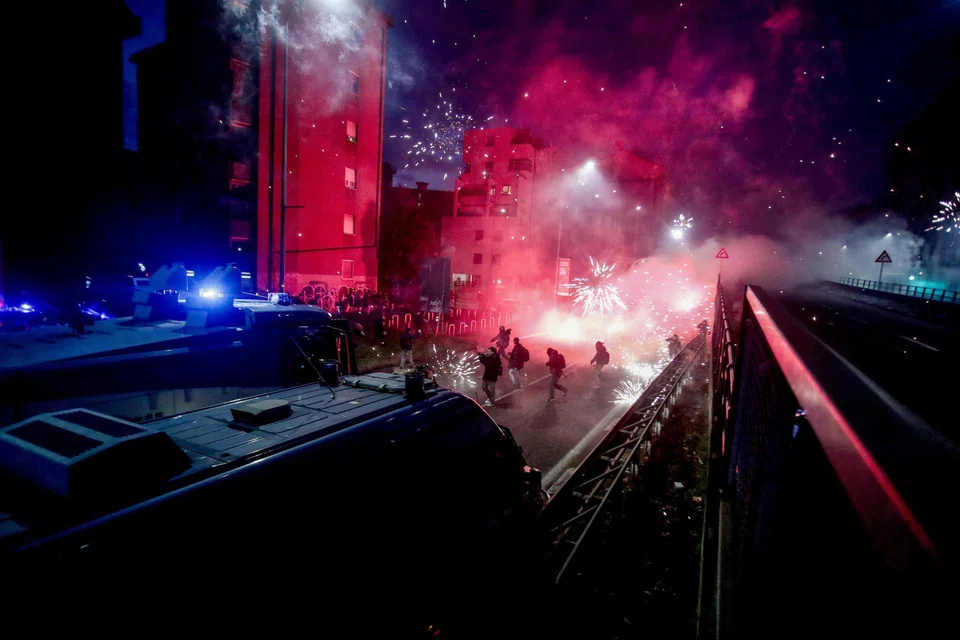
[MILAN] Milan’s role hosting the 2026 Winter Olympics spotlights a decades-long effort to transform Italy’s business capital into a global city on par with London, Paris or New York.
The historically industrial city has undergone nothing short of a renaissance, attracting the lion’s share of the roughly 5,000 wealthy individuals who have moved to Italy using generous fiscal breaks in place since 2017. Top Goldman Sachs Group executive Richard Gnodde and Greg O’Hara, founder of investment firm Certares Management, are among those who now call Milan home.
The influx of talented, well-heeled transplants has accelerated the reshaping the northern Italian city into a vibrant hub. Milan has outpaced New York, London and Amsterdam in gross domestic product growth since 2019, according to the local business board Assolombarda.
Growing business opportunities in Milan prompted independent investment bank Evercore to expand in Italy, hiring top European dealmaker Luigi De Vecchi.
“There’s been tremendous M&A (mergers and acquisitions) activity here,” he said in an interview. “This is probably only the beginning of a wave of deals.”
Yet Milan’s rise has also brought growing pains, including gentrification and higher housing costs – pressures that have come into sharper focus around the Games.
The Olympics are the latest in a series of interventions designed to make Milan a luxury destination for tourists and the rich, while offering little benefit to locals, argues Lucia Tozzi, an urban researcher and author of L’Invenzione di Milano, a critique of the city’s transformation.
“Successive local administrations have made a push to take Milan into the league of big international cities and appeal to a global, wealthier crowd,” Tozzi said. “Milan is a much smaller city compared to London, Paris or New York, and this process has come at a price, in terms of public services and affordability.”
The spiralling cost of housing is one indicator of how Milan’s success is becoming an issue. Long-term residents face stagnant salaries and are being priced out: while total population has risen, the number of people leaving the city increased by a third between 2015 and 2023, according to the Milan city website.

The Games have provided a platform for fears among many Milanese that the city will become even more expensive once the Olympic spotlight fades. A mostly peaceful protest organised by the Comitato Insostenibili Olimpiadi, or Unsustainable Olympics Committee, on Feb 7 ended with clashes between police and demonstrators.
Reinventing the city
Sitting at the centre of a thriving manufacturing region, Milan has been jostling to reinvent itself since the demise of inner city factories, pivoting to services such as fashion, finance and media. While long in the making, this shift has accelerated since the turn of this century.
As Milan converted railyards and former industrial sites into shiny new developments, the city became a regular host of events that helped shape its global status. First came the Salone del Mobile, a furniture fair that began in 1961 which evolved in recent years into the world’s most influential design event, attracting an ever-growing crowd every April.
In 2015, the city organised the World Expo, which became an opportunity to fast-track the regeneration of a large industrial area in the north of the city and showcase Milan’s efforts to shake off its reputation as a work-only city – not a destination, but a place to escape from on weekends.
The Olympics, co-hosted with the mountain resort of Cortina, follow in the same vein. Mayor Giuseppe Sala, who has led the city since 2016 after a stint as CEO of the Expo, has put development and tourism at the top of his agenda. He has framed the Games as a chance to boost visibility for Milan, even as it trails behind more picturesque Rome, Florence and Venice in visitations.
“Milan has a new opportunity to show its ability to manage world-class events and to reaffirm the international reputation,” he said ahead of the Games. With the Olympics, “Milan will consolidate its status as a place to be and a venue suitable for hosting any kind of international event.”
Shrinking wallets
But while the Expo trailblazed Milan’s ascendance, the Olympics follow years of breakneck growth, which risks deepening a rift between the ambitions of Milan’s leaders and those of its residents.
In 2025, Milanese had an average of US$1,235 a month in disposable income after rent, down from US$1,951 in 2012, according to a Deutsche Bank Research Institute study. That is roughly a third of what Parisians can spend and half the level in London.
Residential property prices have risen 53 per cent since 2016, compared with a 4.5 per cent increase in Rome, according to Immobiliare.it Insights, a company owned by the real estate listings group. Rental costs jumped 42 per cent over the same period, versus a 27 per cent gain in the capital, the data show.
Rising demand for high-end homes – partly driven by the influx of rich newcomers and returning Italians, also attracted by a favourable tax regime – spurred a wave of new construction and allegations of corruption to speed up developments.
While a major probe into some of the biggest Milan-based builders has mostly folded, prosecutors are still reviewing whether some officials breached rules to help developers.
To be sure, sustainability has been a priority of the Milano Cortina organisation. Most venues were existing buildings that have been upgraded for the Games. The newly built athletes’ village will be repurposed as dorms to house 1,700 students when sporting events are over, kicking off the regeneration of the Porta Romana railyard area.
And Mayor Sala, while boasting of the city’s growth, has recognised the challenges posed by Milan’s success.
“Milan is a more open, lively, enterprising and contemporary city” than the one that hosted the Expo a decade ago, he said on Feb 4. “But it is also a city where, like other major cities around the world, socio-economic differences have become more acute, and which is seriously addressing housing, environmental and many other challenges.”
The influx of private equity managers and bankers from London and New York becomes tangible in the bars and cafes of Brera, Milan’s elegant, cobbled neighbourhood where English is now arguably more common than Italian.
The changes have not been lost on De Vecchi, the Evercore banker. He worries that locals may be priced out of the city, like what happened in London.
“The Milanese have something very special compared to other places in Italy. They’re very reserved,” De Vecchi said. “This influx of foreigners who are very wealthy – sometimes flashy – could create some kind of backlash.” BLOOMBERG
Decoding Asia newsletter: your guide to navigating Asia in a new global order. Sign up here to get Decoding Asia newsletter. Delivered to your inbox. Free.
Share with us your feedback on BT's products and services
TRENDING NOW

DBS, OCBC, UOB rout lops billions off STI as inflation, rate concerns spook investors

Grab CEO’s wife Chloe Tong on life with Anthony Tan and finding her purpose

OCBC sheds S$8 billion in value as shares close nearly 6% down; analysts cautious on banks

Deal between tycoon friends sparks scrutiny of Philippine power sector

