

From China to the US, caffeine lovers are waking up to the smell of Vietnamese coffee
[HANOI] In late September in Shanghai, Starbucks opened its 6,000th branch in mainland China – a milestone for the US coffee chain as it continues to expand in the world’s second-largest economy.
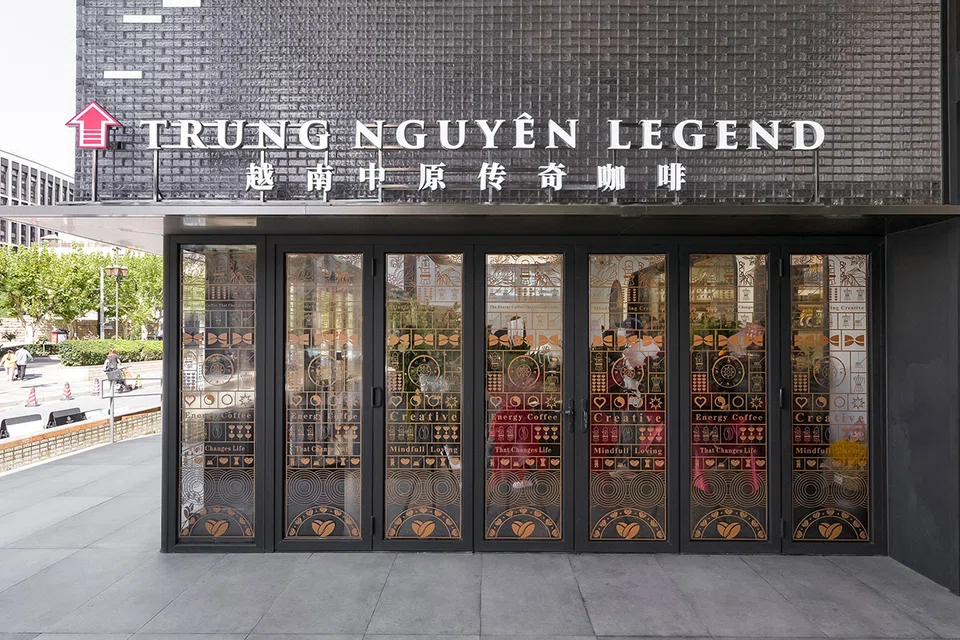
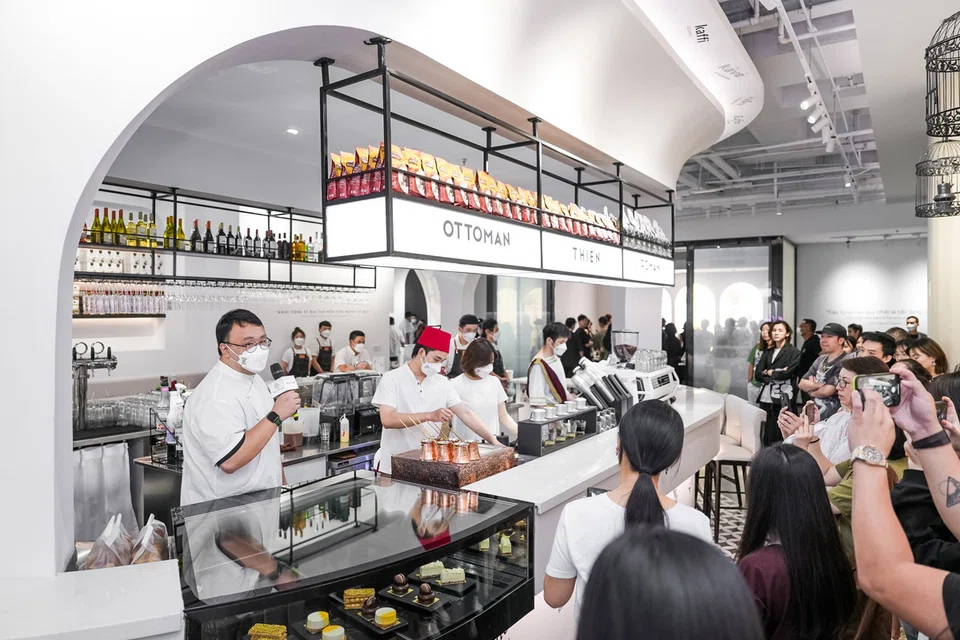
Just a few days earlier, and in the same city, Vietnamese coffee giant Trung Nguyen Legend Group threw open the doors to its first store in China, marking the first step towards its ambitious goal of franchising 1,000 stores in the country over the next five years, the firm told The Business Times.
A drink at Trung Nguyen doesn’t come cheap, by local standards. A latte costs between 28 yuan (S$5.56) and 38 yuan a cup, while Starbucks prices its lattes at between 28 yuan and 34 yuan. In comparison, the average cost of a latte across China’s top five coffee chains was 19.24 yuan in 2021, showed data from the World Coffee Portal.
While Trung Nguyen wants to win the hearts – and wallets – of younger Chinese consumers, its price point suggests that the company wants to compete on the same level as Starbucks, and is eyeing affluent individuals who are willing to pay more for a higher quality of products and services.
Besides its drinks, including the well-known Vietnamese “egg coffee”, Trung Nguyen Legend’s menu at the Shanghai store includes many Vietnamese food items such as banh mi, pho, Hue beef noodles, bun cha and spring rolls.
Trung Nguyen – managed by its chairman Dang Le Nguyen Vu, known in Vietnam as the country’s “Coffee King” – was named as one of the 40 most valuable brands by Forbes Vietnam in 2018.
Data from Mordor Intelligence show that China’s coffee market will grow 10.4 per cent a year from 2022 to 2027. Last year, China was the eighth-largest importer of Vietnamese coffee, up four spots from 12th in 2018. In 2021, Vietnam exported some US$128.4 million worth of coffee to China, an increase of 34 per cent from 2020.
Vietnam is one of the world’s largest exporters of coffee today. The South-east Asian nation’s export volume is second only to Brazil and accounts for around 20 per cent of the world’s total export output in 2021, showed data by the International Coffee Organization.
The most common type of bean that Vietnam produces is robusta. The beans with a bitter and earthy taste are shipped to 80 markets around the world, mostly to major coffee consuming nations such as the US, Germany, Russia, the UK and Japan.


Trung Nguyen is one of Vietnam’s few homegrown trailblazers that have made their mark overseas, thanks to its brand of processed coffee. In China, where Vietnam is the third-largest coffee exporter, Trung Nguyen’s instant coffee brand G7 was placed first in the “instant coffee recommendation” ranking by Chinese brand rating and consulting authority Chnbrand in 2019, and has remained in the top 10 for the last four years.
“Instant coffee is dominating the Chinese market thanks to its convenience,” noted Vietnam’s Agency of Foreign Trade in August. “The development of the economy, the changing lifestyles of people, and the acceptance of customers towards new cultural trends are contributing to the increasing demand for instant coffee in China.”
Trung Nguyen said that, from January to September this year, a total of 800 million cups of its various coffee brands were sold in China. That means that for every 18 cups of coffee sold in China, one is from a Trung Nguyen brand.
“We consider coffee as a cultural, diplomatic and friendship messenger,” said Ly Thanh Hai, the business development director of Greater China at Trung Nguyen Legend Group, of the company’s big push into China. “We are here to enrich and diversify the coffee culture of Vietnam in a country of over a billion people.”
Prior to its expansion in China, Trung Nguyen’s E-Coffee – a chain of smaller stores that sell low- to mid-priced coffee targeting takeaway customers – opened one store in Laos, adding to the 353 outlets it has in Vietnam.
In 2021, TNI King Coffee brand – which has 54 stores in Vietnam – opened its first branch in Anaheim, California, about 10 minutes away from the Disneyland theme park. The company had announced plans to operate 100 TNI King Coffee shops in the US through a franchising model by 2022. Apart from the US, there is one TNI King Coffee branch in Seoul.
Also in 2021, Vietnamese tea and coffee chain Phuc Long also jumped on the international bandwagon as it opened one store in California. In 2018, another chain, Cong Caphe, ventured into South Korea and now runs four stores in Seoul and one in Gyeonggi. It also operates two outlets in Malaysia.
One of Trung Nguyen’s biggest rivals is Highlands Coffee, which runs 544 stores in Vietnam and 33 stores in the Philippines – all run via franchisees – since it broke into that market 10 years ago.
With so much competition out there, Trung Nguyen’s goal of opening a thousand stores in China in the next five years will be closely watched to see if the company can live up to its hype.
Decoding Asia newsletter: your guide to navigating Asia in a new global order. Sign up here to get Decoding Asia newsletter. Delivered to your inbox. Free.
Copyright SPH Media. All rights reserved.






