We want to set the government up for success, says outgoing Sports Hub chief ahead of project handover

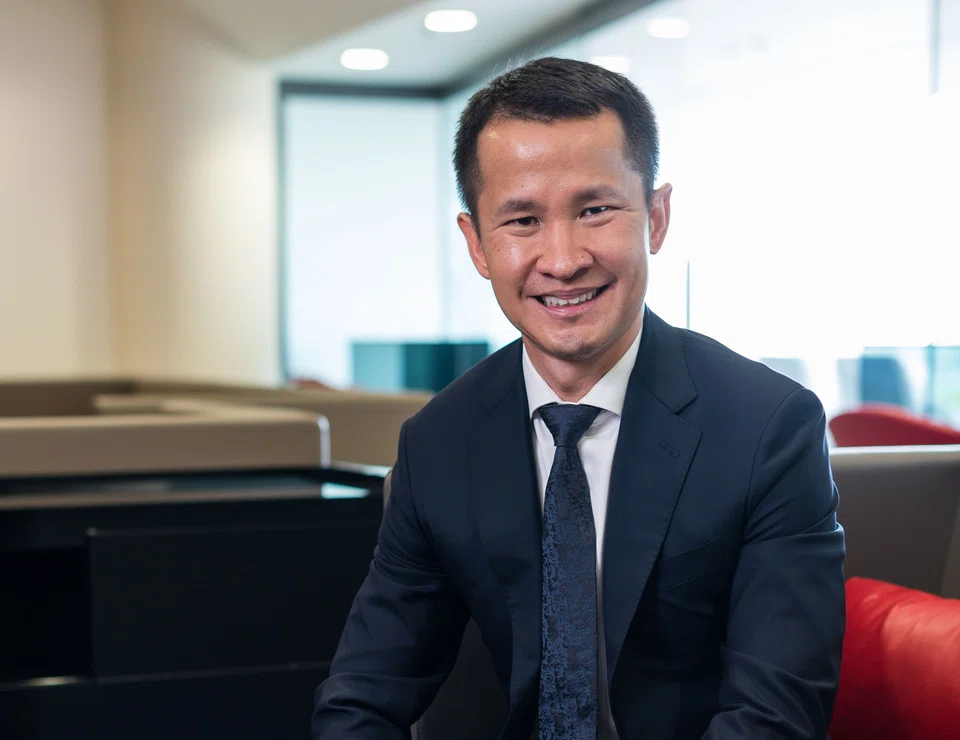
WITH a month to go before the government takes over the ownership and management of the Singapore Sports Hub, there is still plenty of work going on behind the scenes to prepare for a seamless handover, said Lionel Yeo, the outgoing chief executive of the S$1.33 billion facility in Kallang.
High on the to-do list is dealing with over 100 existing contracts that are in force, and working with the new owners Sport Singapore (SportSG) – a statutory board of the Ministry of Culture, Community and Youth – to determine if these should be novated or terminated.
These include more major ones such as those related to sponsorship, facilities management and the Kallang Wave Mall, as well as smaller contracts, like one with a company to provide kayaks and other equipment for the Water Sports Centre.
There is also the matter of ensuring that employees who want to stay on after the Dec 9 handover will have the opportunity to do so. To date, nearly 90 per cent of staff from private sector consortium Sports Hub Pte Ltd (SHPL) and over 95 per cent of partners and vendors will transition to the new entity managing the Sports Hub.
“We’ve been focused on supporting a smooth transition. Quite a lot needs to be done, because it’s a large and complex project,” said Yeo, who revealed to The Business Times that he had “politely declined” SportSG’s invitation to continue working at the new entity as this was not in line with his career plans. He could not say where he was headed next.
Last Friday (Nov 4), it was announced that former Sentosa Development Corporation chief executive Quek Swee Kuan would be the CEO of the new entity from Dec 1. Its new chairman will be Keith Magnus, the chairman of investment banking advisory firm Evercore’s Asia business.
“We want (SportSG) to succeed, and we want to set them up for success,” said Yeo, a 49-year-old who spent 22 years in public service – including six as chief of the Singapore Tourism Board – before leaving in 2018.
After a stint at Grab, he was appointed the Sports Hub’s CEO in February 2020, not long before the coronavirus pandemic forced the entire facility – and much of the rest of the country – into lockdown mode.
The Sports Hub is well known for being run on a public-private-partnership (PPP) model. In 2010, SHPL was engaged under the PPP to design, build, finance and operate the Sports Hub, with this arrangement due to run until 2035.
In June, with the 25-year PPP almost at the halfway mark, SportSG announced that it would terminate the PPP. The news “was not a complete surprise”, said Yeo, as it was always the government’s prerogative to do so, as and when it saw fit, under a provision in the project agreement.
The past few months have seen much chatter about the pros and cons of the PPP model, but Yeo remains proud of its track record and convinced that it has worked out well.
“The PPP is one that is fundamentally an allocation of risk and reward. By that, I mean that when the government elects to go with the PPP model, they are inviting the private sector to come in and bear certain risks – and consequentially, certain rewards,” he said.
“Now the government says it wants to take back the project, (which means) they are more ready to take back some of these risks and rewards. (The Sports Hub) has been running for some years, they’ve had the opportunity to observe and they can benefit from our experiences and lessons,” he added.
Yeo doesn’t quite agree with those who claim that SHPL and its partners are solely focused on events that make money, and not doing enough in terms of community engagement and the grassroots because such activities may not have much commercial value.
“I would caution against an overly simplistic portrayal of the consortium. My shareholders understand that we’re not here to run the project 100 per cent commercially, neither is it 100 per cent on social objectives,” he said.
“We’re here as stewards of a national asset. Yes, we are a commercial entity and we do have to watch the bottom line. But my shareholders fully recognise this also includes – as part of the portfolio of programming activities – non-commercial events.”
He cited the example of the Asean Football Federation Suzuki Cup held in Singapore last December, with the Sports Hub’s 55,000-seater National Stadium staging 16 matches. Attendance, however, was capped at 10,000 people per game due to pandemic-related safe management measures in place then.
Yeo said it was known from the start that, with limited spectator numbers and a short lead time for promotion, the regional football tournament would not add to the bottom line.
“In fact, it was going to take away from the bottom line. But we still felt it was a strategic initiative to pursue, and we wanted to support the Football Association of Singapore and SportSG. To me, it showed that my shareholders had a clear-eyed view that not everything has to be commercially positive,” he said.
As Yeo prepares to take his bow, he does so having weathered two difficult years of the pandemic, and overseeing the Sports Hub’s revival in which sports and entertainment events have returned in droves.
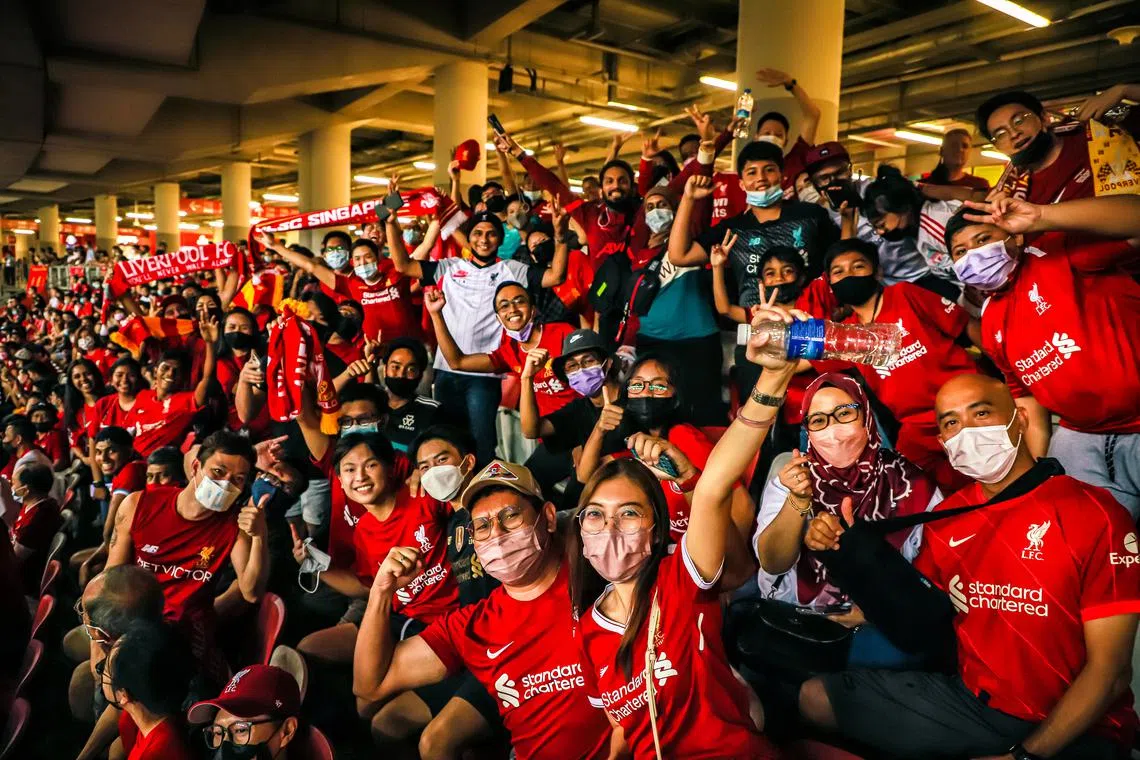
This interview took place on the eve of Mandopop star JJ Lin’s concert at the National Stadium, with 30,000 fans packing the venue. In July, English Premier League club Liverpool were here for a match against Crystal Palace that was attended by nearly 51,000 people.
Last week, the finals of the International Dota 2 Championships – one of the world’s grandest esports tournaments – was played at the Indoor Stadium over two days.
“It’s definitely been challenging, but also fulfilling,” said Yeo when asked to sum up his time as the Sports Hub’s chief. “I’m glad to be able to hand off this important national asset to another good steward. In a way, it gives me the confidence that there is continuity.”