

MOF calls for more private financing for infrastructure
More has to be done to develop infrastructure as an asset class to provide more sustainable funding, says ministry
Singapore
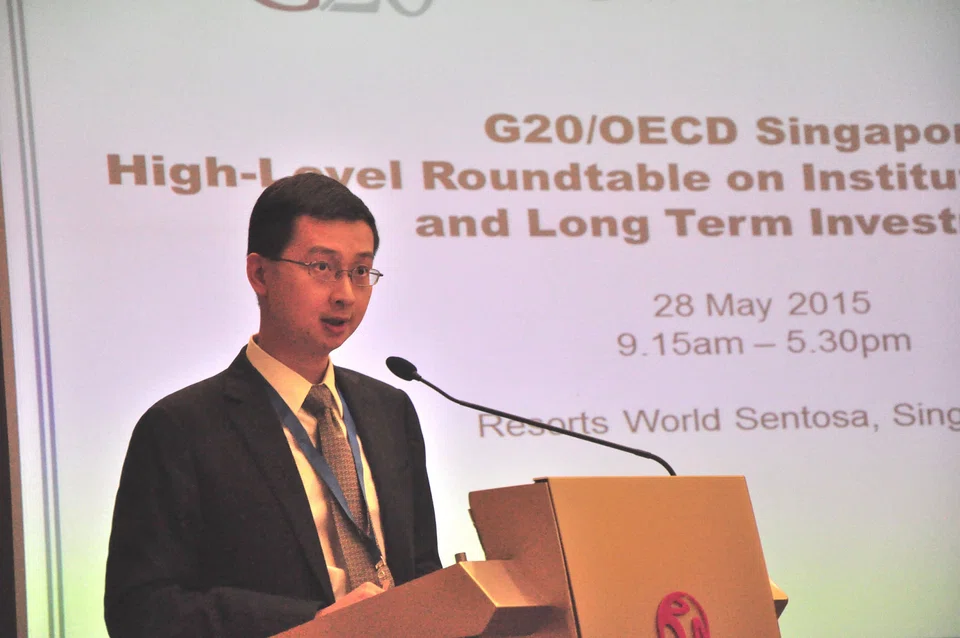
A high-level Ministry of Finance (MOF) official has called for the closing of the financing gap for the development of infrastructure in Asia - by getting the private sector to invest in this area in a bigger way.
MOF deputy secretary Yee Ping Yi said at a G20/OECD roundtable hosted by the ministry: "This is a critical issue for Asia. By 2025, infrastructure needs in Asia are expected to reach US$5.36 trillion annually, and public fiscal resources are not sufficient to meet this demand. Private investments are thus critical in filling the infrastructure gap."
He noted that, apart from conventional bank financing, there was an estimated US$50 trillion in assets held by institutional investors such as pension funds and insurance companies. Today, only 0.8 per cent of these assets are allocated to infrastructure.
He added that with tighter banking liquidity for long-tenor loans under new regulations, more must be done to mobilise the resources of non-bank institutional investors.
To be sure, liquidity and interest in infrastructure are not lacking, he said.
What is lacking is a multi-stakeholder approach to promoting a conducive investment and regulatory environment, and the availability of well-structured, bankable projects which would attract private investment.
The stakeholders include governments, multilateral agencies and private-sector players such as asset managers and institutional investors.
Mr Yee said infrastructure can even be developed into a mainstream asset class, and listed their benefits:
* Diversification: Investments in infrastructure present an opportunity to diversify, given that the returns are typically uncorrelated with those of other asset classes;
* Yields: These are attractive, compared to sovereign or corporate debt, and work as a hedge against inflation;
* Long-haul nature: Infrastructure projects are for the long term, which match the long duration of pension and insurance liabilities.
The G20/OECD Singapore High-Level Roundtable wrapped up four days of meetings attended by infrastructure and investment specialists from all G20 countries, as well as over 200 participants from the public and private sectors and international agencies such as the World Bank, International Monetary Fund and Organisation for Economic Co-operation and Development (OECD). The outcomes of these meetings will guide discussions by national leaders at the G20 Summit in Antalya, Turkey, this November. This is the fifth year Singapore has been invited to the summit.
TRENDING NOW

Nvidia reinstates Jensen Huang as CEO; Trump says move poses no national security risk

Indonesia’s coal tycoon Low Tuck Kwong replaced as Bayan Resources president-director

Nvidia surges 33% after reinstating Jensen Huang, reviving AI trade; stocks soar in US and Europe

Consider lowering homeownership barriers for some non-resident foreigners

