

More growth for China in 2021, but work needed to improve global image
 Add BT as a preferred source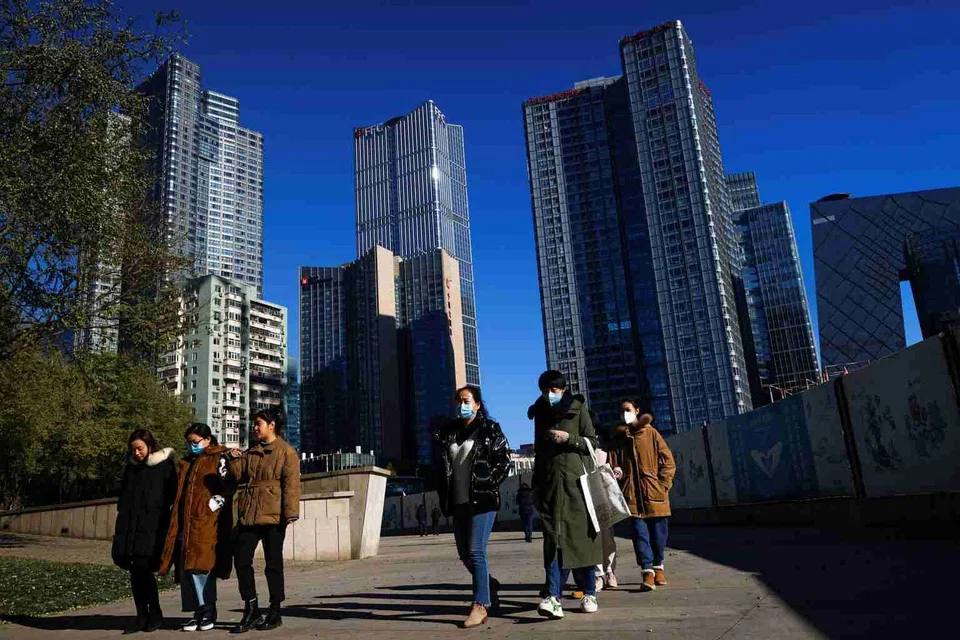
Beijing
BY most accounts, China has come out of the Covid-19 pandemic stronger and more assertive than many other nations around the world. The country's rebound was fuelled by a quick containment of the virus, which allowed companies to reopen and factories to resume production just as the rest of the world was closing down.
However, economists and observers say that structural changes need to be made if China wants to achieve a sustained recovery and avoid falling into a middle-income trap.
Meanwhile, Beijing's image overseas is substantially tarnished as it faces criticism for its original handling of the pandemic and an increasing aggressive diplomatic stance on the international scene. On the economic front, China's V-shaped recovery is expected to continue well into 2021 with the government progressively scaling back its easing measures implemented through 2020. Economists are upbeat on the hard GDP figure.
Recent data show that consumers are once again flocking to shops, restaurants and malls. China's exports have proved particularly resilient with demand for medical and IT-related products high.
As many countries announce the rollout of national vaccine policies, international borders should gradually reopen in the coming months, which will give extra momentum to the Chinese economy.
Navigate Asia in
a new global order
Get the insights delivered to your inbox.
China's strong economic growth will pressure it to further open its borders as investors and business leaders are keen to benefit from the upbeat environment.
Beijing's goal of vaccinating millions before the Chinese New Year holidays in February should help fend off the threat of a second wave and pave the way for a post-Covid era.
"China's economy should continue recovering in 2021, with GDP growth rising to around 8 per cent from about 2 per cent in 2020, led by investment and consumption with a potential upside surprise from exports," said Yifan Hu, chief China economist for UBS.
China's previously announced "dual circulation" policy will place the government's focus on supporting domestic demand, and China has said it will push for more technological independence as the world deglobalises its supply chains.
Fiscal policies are expected to target identified crucial sectors such as semi-conductors, greener growth and the building of smart cities. Nonetheless, the structural challenges that existed pre-Covid have not disappeared. A bond default crisis is simmering with Beijing insisting it will no longer bail out state-owned enterprises systemically.
Zombie companies have been allowed to exist through 2020 to support growth adding even more debt pressure on local governments. A national drive to heavily invest in high-end manufacturing, especially chips, may backfire and result in a surge in non-performing loans.
"The respite may not last for very long and there is not much room for complacency. Markets may become overly bullish at some point in the second half of 2021 by underestimating the lurking challenges and threats," warned Ting Lu, China economist with Nomura.
Internationally, China will have a much-rockier year. It is unlikely the new Biden administration in the US will turn the pressure off on the trade and tech wars launched by outgoing President Donald Trump.
On the contrary, a more complacent administration may even consolidate an anti-China block both in the West and in the Asia-Pacific region, observers say.
"Tensions between the US and China will likely re-escalate as the Biden government starts to focus on the serious challenges from an increasingly assertive China," said Mr Lu.
"This time, the challenge from the US may be more multilateral in the sense that a disgruntled Europe may choose to put on a united front with the US," he added.
In a bid to revamp its image overseas, China has openly said it will participate in the global effort to vaccinate populations against Covid-19. Over 400 million doses have been ordered globally for China's vaccines and the country is gearing up to produce over one billion doses.
Trials for two of its vaccines produced by Sinopharm and Sinovac are entering their final stages, although China is facing some backlash for its lack of transparency with allies like Brazil and Cambodia hostile to a massive rollout of a Chinese vaccine to their populations. In October, Bangladesh refused to co-finance a late-stage Sinovac trial, arguing it had not received free doses that it had been promised.
Decoding Asia newsletter: your guide to navigating Asia in a new global order. Sign up here to get Decoding Asia newsletter. Delivered to your inbox. Free.
Copyright SPH Media. All rights reserved.
TRENDING NOW
Middle East-linked energy supply shocks put Asean Power Grid back in focus

‘We’re not a bubble tea brand’: Chagee aims to double Asia-Pacific footprint to 600 stores by 2027

Meet the women who run one of Singapore’s most trusted hotel brands
Family office for US$12 billion Tetra Pak Fortune exits Hong Kong

