

More people ride the subway in China’s biggest cities as Covid starts to peak
 Add BT as a preferred source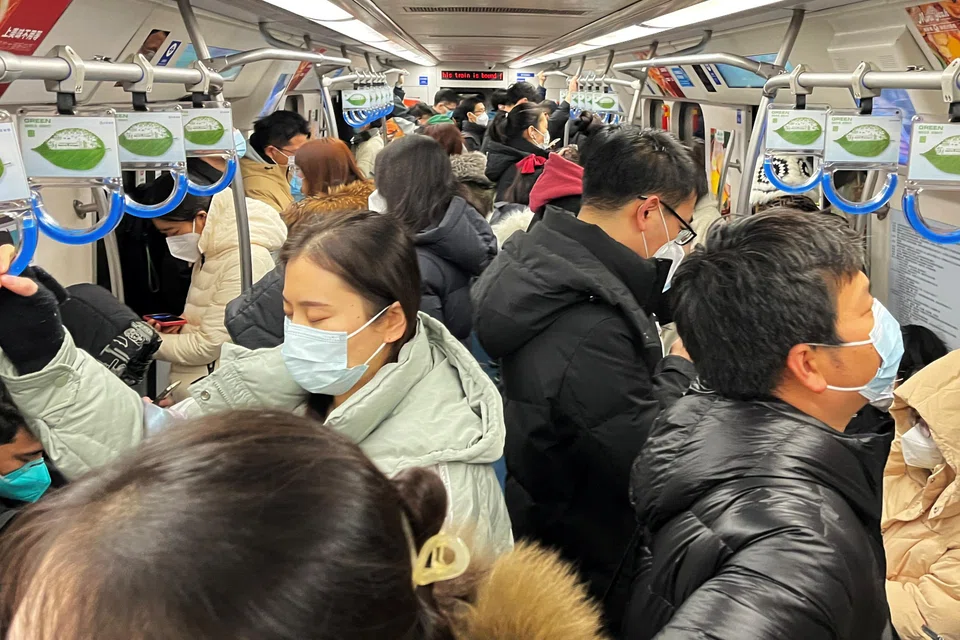
DeeperDive is a beta AI feature. Refer to full articles for the facts.
NEARLY a dozen major Chinese cities have reported recoveries in subway use, a sign that Covid infections may have peaked in some urban areas as an “exit wave”.
More and more people are taking the subway in 11 of China’s biggest cities, with Shanghai, Guangzhou, Shenzhen, and Nanjing among the latest metropolises to report a rebound in trips over the last week.
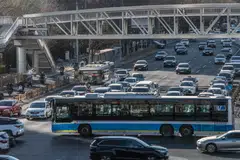
They join places such as Beijing, Zhengzhou and Chongqing, which already began seeing increases in subway usage and traffic congestion after reaching a trough in mid-December.
Covid cases started soaring across the country after the government suddenly dropped movement restrictions and testing requirements in early December. The reopening initially caused a slump in activity as people stayed home sick, or to try and avoid getting sick.
The latest subway data suggested that the worst may be over for some urban areas.
The data supported an official statement released on Sunday (Jan 1) that the Covid outbreak had peaked in the southern manufacturing hub of Guangzhou, where the number of patients at fever clinics had been declining since Dec 23. Last week, health authorities said that infections had peaked in Beijing, Tianjin and Chongqing.
Navigate Asia in
a new global order
Get the insights delivered to your inbox.
China’s reopening has led to a spike in Covid deaths, although exactly how many people have died is unknown as no reliable data is being released. It is also not known how activities are developing in large swathes of the country, especially in the rural areas.
The Hang Seng China Enterprises Index, which tracks Chinese stocks listed in Hong Kong, reversed earlier losses to gain as much as 1.9 per cent on Tuesday. It was on course for its best start to a year since 2018. The onshore yuan also strengthened to a four-month high as traders bet on a further recovery in China’s economy.
The weeks leading up to Chinese New Year, a seven-day public holiday starting from Jan 21, will be an important window for assessing how widespread the rebound in mobility is, as hundreds of millions of Chinese are set to return to their hometowns.

Trips before and after the holiday have plummeted since 2020, when Covid broke out, but the complete removal of domestic travel restrictions means that many more people may try and go home for the break.
Although more people are moving around, they are not spending freely just yet. Moviegoers have slowly been returning to theatres, but the national box office over the three-day New Year public holiday was only 554 million yuan (S$108.3 million). This was 46 per cent down from the 1.02 billion yuan from the same period last year, based on data from online ticketing platform Maoyan Entertainment.
Travel was relatively muted over the holiday too, with the number of trips made little-changed and tourism revenue up just 4 per cent from a year ago, said the Ministry of Culture and Tourism. It added that tourism revenue was just 35 per cent of the levels reached in 2019, while the number of trips stood at just 43 per cent of the figure from that year.
National railway operator China State Railway Group said on Tuesday that it aimed to transport 2.7 billion passengers in 2023. While that would be a 68 per cent jump from the level in 2022, it would be only 3 per cent higher than the 2021 figure. BLOOMBERG
Decoding Asia newsletter: your guide to navigating Asia in a new global order. Sign up here to get Decoding Asia newsletter. Delivered to your inbox. Free.
Share with us your feedback on BT's products and services
TRENDING NOW
Air India asks Tata, Singapore Airlines for funds after US$2.4 billion loss
‘Boring’ is the new black: The stars are aligning for a Singapore stock market revival

From 1MDB to ‘corporate mafia’: Is Malaysia facing a new governance test?
South-east Asian markets account for 8.8% of global capital inflows from 2021 to 2024: report

