

More 'targeted approach' taken to help firms with urgent foreign manpower needs: Tan

Singapore
THE government will adopt a more "targeted approach" to help firms with urgent foreign manpower needs, such as giving flexibilities to businesses which contribute to Singapore's economic priorities and in jobs where there are few locals taking up the roles.
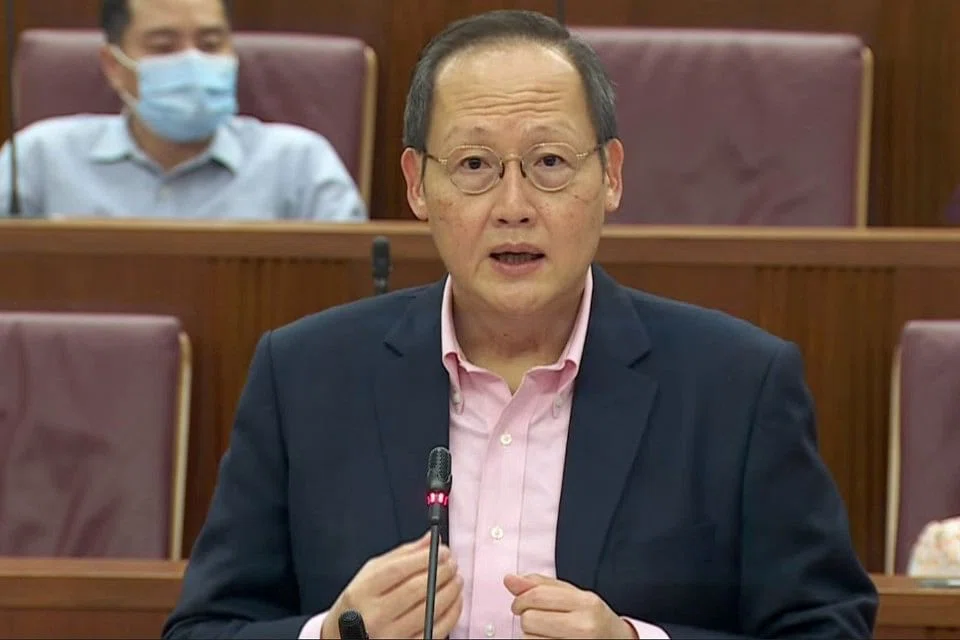
During his ministry's Committee of Supply debate on Friday (Mar 4), Manpower Minister Tan See Leng gave an overview in Parliament on the moves to help businesses struggling with persistent manpower shortages, including giving firms undertaking strategic activities short-term flexibility to bypass foreign worker curbs.
Under the new Manpower for Strategic Economic Priorities (M-SEP) scheme, such firms will be able to hire S Pass and work permit holders beyond the prevailing Dependency Ratio Ceilings - the maximum share of foreign workers in a firm's total workforce - for a limited period of time.
To qualify, they must meet the criteria of "undertaking ambitious investment, innovation, or internationalisation activities" as set by the Ministry of Trade and Industry and other economic agencies.
This includes participating in selected programmes which support Singapore's key economic priorities, such as the Economic Development Board's Research and Innovation Scheme for Companies and Enterprise Singapore's Scale-Up SG programme.
Participating firms must also commit to developing their local workforce.
M-SEP is expected to be launched later this year, and will run for 3 years. The details are now being worked out, said Tan.
To help services and manufacturing firms adjust to the stricter S Pass salary benchmarks, a new list will be introduced allowing such firms to hire work permit holders from non-traditional source countries such as India and the Philippines for specific occupations.
"We recognise that some businesses hire rank-and-file workers on S Passes due to source restrictions for work permit holders," said Tan.
But once higher salaries for S Passes kick in from September this year, their current salaries may not allow them to qualify. The Ministry of Manpower will thus allow services and manufacturing firms to hire some such S Pass holders on work permits.
Currently, the only eligible sources of work permit holders for the manufacturing and services sectors are Malaysia, mainland China, Hong Kong, Macau, South Korea and Taiwan.
This will change after the Non-Traditional Source Occupation List takes effect from Sep 1, 2023, which is when S Pass qualifying salaries for renewal applications are first set to rise.
Manufacturing and services firms will be allowed to hire work permit holders from the non-traditional sources of Bangladesh, India, Myanmar, the Philippines, Sri Lanka and Thailand.
But this applies only to occupations on the list, which include cooks in Indian restaurants; food processing workers; sheet metal workers; welders and flame cutters; metal moulders and core makers; riggers and cable splicers; and structural metal preparers and erectors.
"We will study carefully if more occupations should be added to the list," said Tan.
Work permit holders hired under this list must be higher-skilled ones and will be subject to a quota.
TRENDING NOW

China Investment Corp, PGIM’s 50% stake in Nex mall up for sale; asking about S$1.2 billion

Higher rates, weaker spending: Is the Philippines entering stagflation?

Singapore tech stocks plunge as Nasdaq bloodbath spills into region

OCBC wealth clients turn defensive amid market volatility as Q3 profit rises 3%

