
The narrowing of China’s ‘gateway to Europe’
 Add BT as a preferred source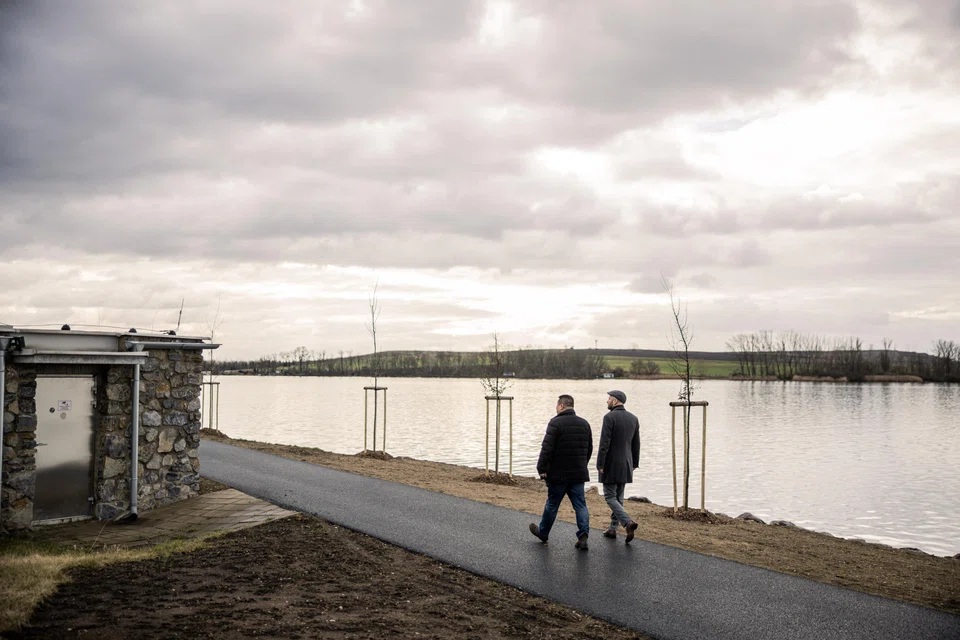
EIGHT years ago, the Czech president, on a visit to Beijing, offered his country as “China’s gateway to Europe”. But the entry ramp for an expected flood of Chinese investment has narrowed to a patch of muddy terrain on the edge of a tiny Czech village.
The land, in the region of South Moravia, was purchased in 2018 by a Chinese real estate company with ambitious plans for a sprawling spa resort and housing development. Getting construction started, however, has been so slow that local farmers now use the Chinese-owned property to grow corn.
Instead of a showcase for a bonanza of Chinese money, the project has become a symbol of the pitfalls of a Chinese overseas-business model that depends on energetic support from foreign government leaders and local officials.
Garnering that support is easier in European countries that have authoritarian, Beijing-friendly leaders, such as Hungary and Serbia. But the same cannot be said of more vibrant democracies, such as the Czech Republic. In such places, Chinese ventures often struggle, stalled by bureaucratic hurdles, pressure from environmental activists and hostile media coverage.
“We came here for business, not charity,” said Edward Xu, head of the stalled spa project for RiseSun, the Chinese company behind the venture. He said the development had been delayed by red tape and a souring of Czech attitudes towards China. Public opinion turned against Xu’s home country as previously supportive officials in the Czech Republic lost their posts, and as China expressed its support for Russia amid the war in Ukraine.
“Everything changed because of the war,” he said. “We just hope the war will be finished as soon as possible.”
Navigate Asia in
a new global order
Get the insights delivered to your inbox.
In a recent interview in Prague, the Czech foreign minister, Jan Lipavsky, said China’s stance on Ukraine had forced a reconsideration of political and economic relations. At the same time, he faulted Beijing for failing to deliver on investment pledges: “Clearly, Chinese investors have not delivered what they promised.”
Philippe Le Corre, a researcher at the Asia Society Policy Institute, said that democratic churn and generational change in countries that China previously looked to as friendly had disrupted once-reliable support in Europe’s formerly communist eastern fringe.
“China, in my view, has lost eastern Europe,” he said. He added that the war in Ukraine had accelerated a decoupling of interests between Beijing and many eastern and central European countries.
“The longer the war in Ukraine goes on, the more they are losing friends,” he noted.
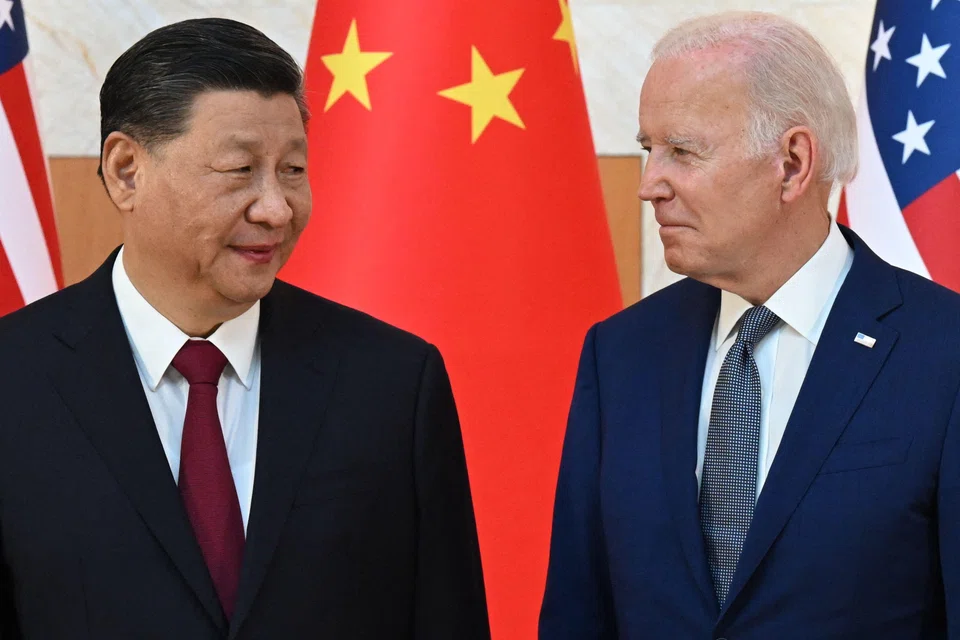
When RiseSun developed its investment plans for South Moravia seven years ago, the region was governed by Michal Hasek, a fervent China supporter. He was also a close political ally of Milos Zeman, the president who visited Beijing in 2015 and declared China’s leader, Xi Jinping, his “best friend”. When Xi visited Prague in 2016, Zeman offered the Czech Republic as “an unsinkable aircraft carrier for Chinese investment expansion”.
Hasek is gone as governor, and with him went a number of promised Chinese-funded ventures. Zeman is on his way out, too, after Czech voters last month elected a new resolutely pro-Western president, Petr Pavel, a retired senior Nato general.
Pavel takes office in March. But he has already infuriated Beijing by speaking with the president of Taiwan and telling Financial Times that China was “not a friendly country” and “not compatible with Western democracies in their strategic goals and principles”.
For Chinese companies, political uncertainty in foreign democracies has often meant headaches. In Montenegro, a Chinese-built highway costing nearly US$1 billion ran into trouble after its main backer, former president Milo Djukanovic, lost his grip on parliament in elections in 2020. This paved the way for his opponents to form a new government that was deeply sceptical of China.
As a result of shifting domestic political winds and disappointment over low levels of Chinese investment, the Czech Republic, Romania and the three Baltic states – Estonia, Latvia and Lithuania – have all largely ditched the idea that deep Chinese pockets offered an easy way to juice economic growth.
Martin Hala, a China expert at Charles University in Prague, said: “People in this region were very starry-eyed about China. Now it is very, very different.”
Disenchantment, building for years, gained momentum from outrage over China’s stance over the war in Ukraine. To fight the Russian invasion, Ukraine has received support, including the delivery of weapons, from the Czech Republic and several other countries in eastern and central Europe.
“Our relationship with China is under revision. A new geopolitical reality has arisen,” said Czech foreign minister Lipavsky. He added a “message to China” – to be “more responsible in international affairs (because) what Russia is doing is a crime of aggression”.
Years of patient diplomatic work by China are unravelling.
In 2012, Beijing persuaded 16 countries in eastern and central Europe, including 11 European Union (EU) members, to join a new, Chinese-led diplomatic and economic bloc, known as the “16+1”. This later became the “17+1” in 2019, with the entry of Greece.
Critics saw this as an effort to create a “Trojan horse” inside the EU. But the club is now down to 14 European members after the exits last year of Estonia and Latvia, both furious over China’s stand on Ukraine, and the 2021 departure of Lithuania. The imminent departure of Zeman as president has opened the possibility that the Czech Republic might now bolt, too.
Lipavsky said that Zeman’s departure offered a “big opportunity” to reorder Czech foreign relations.
Charles University’s Hala noted that the decoupling of Chinese and Czech interests began with the realisation that Chinese investment was “not just free money falling from the sky”. This became clear in 2018, when CEFC China Energy, which had spent more than US$1 billion on deals in the country, began to implode after its boss’ arrest in China.
Beijing’s fortunes suffered a further setback in 2021, when Petr Kellner, a Czech tycoon with extensive business interests in China, was killed in a helicopter accident. His company, PPF, later announced that it wanted to sell its flagship China business, a financial institution called Home Credit, and make Europe its “centre of gravity”.
The stalled real estate and spa project in South Moravia, based in Pasohlavky, a village of about 700 people near the border with Austria, was part of the boom that went bust.
It first took shape after the signing of a 2016 “framework” agreement between South Moravia and the Chinese Development Bank, a state lender tasked with bankrolling infrastructure and other projects linked to China’s Belt and Road initiative.
Hasek, then the region’s governor, promised that the agreement would bring in Chinese companies ready to invest hundreds of millions of dollars. But the current governor, Jan Grolich, said that never happened: “He promised lots of Chinese money, but reality has been absolutely different.”
Today, Grolich noted, the only Chinese investment project in the region is the stalled RiseSun venture. “There is nothing else,” he said.
He added that he would be happy to see closer economic and other ties with China in normal times but, because of the war in Ukraine, “I don’t feel that China is on our side”, and “this changes things”.
For the moment, the Pasohlavky project staggers on.
Five years after buying around 20 hectares of land on the edge of the village for US$21 million, RiseSun received planning permission and is now waiting for a building permit, which could involve yet more long delays. It has also run into unexpected trouble negotiating a deal for water with owners of local thermal springs – vital to the spa resort’s future operation – as well as a gale of negative articles in the local news media.
RiseSun’s annual reports in China show that the company last year raised its estimate of the project’s completion cost to about US$122 million, up from US$85 million in 2020. This is a steep rise, especially considering that Chinese real estate companies are heavily indebted and having trouble with financing ventures.
Project head Xu denied that the privately owned RiseSun faced financial difficulties. He said that the real question was whether Czech officials wanted its spa and real estate project to go ahead in the face of an increasingly hostile public mood.
“Everyone thinks China is bad, that this is about politics and Zeman, that we want to build a casino or a new Great Wall,” he said. “But nobody thinks about why there are no successful Chinese investments.”
Village officials in Pasohlavky, eager to lift the local economy, say they want RiseSun to press on. “For us, hope is still alive,” said deputy mayor Roman Mikulasek. “We do not and cannot accept the possibility that it won’t happen.”
But he conceded that the only construction on the Chinese company’s land so far was a two-mile stretch of road – and that was paid for out of Czech government funds. NYTIMES
Decoding Asia newsletter: your guide to navigating Asia in a new global order. Sign up here to get Decoding Asia newsletter. Delivered to your inbox. Free.
Share with us your feedback on BT's products and services

