

Need for tech boost as sectors transform
Minister says manufacturing will remain important part of S'pore growth story; ways to raise productivity identified

Mindy Tan
Singapore
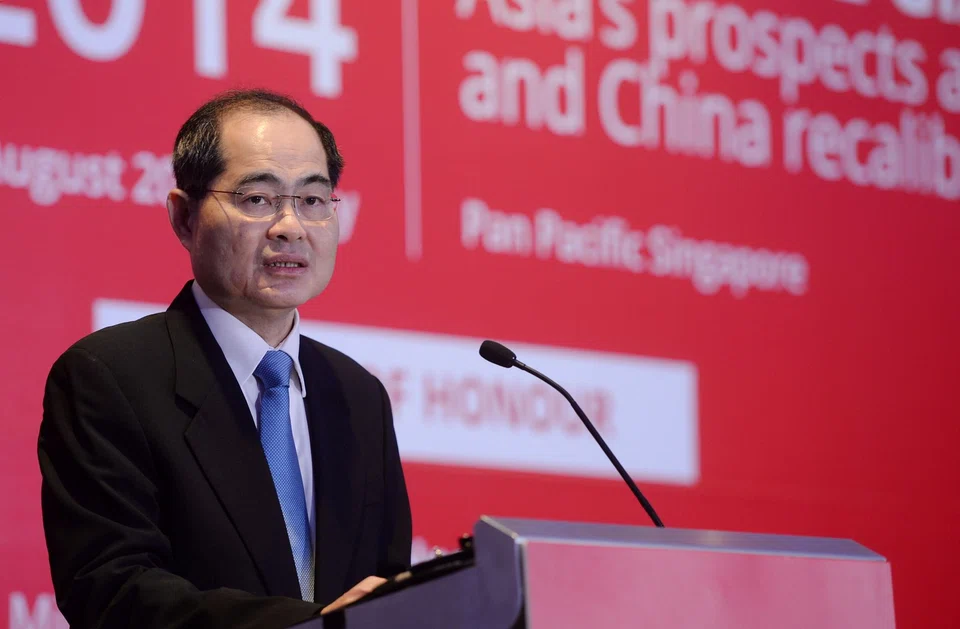
DOMAIN experts with deep specialist know-how are required as sectors transform and morph, said Minister for Trade and Industry Lim Hng Kiang during the Committee of Supply Debate on Friday.
The manufacturing sector, for instance, will continue to be an important part of Singapore's growth story, as it continues to move up the value chain into advanced technology and high-value areas. But it will also require the adoption of disruptive technologies such as 3D printing and advanced robotics which will ultimately drive the creation of new business models and opportunities.
Keeping our workforce highly trained will continue to play a vital role in Singapore's competitiveness, and will provide the manpower necessary to sustain the growth of our future growth sectors, said Mr Lim.
To this end, the Economic Development Board (EDB) will work in partnership with the Ministry of Education and Singapore Workforce Development Agency to encourage companies to build their training capability and expand their training capacity.
Seven pilot sectors - logistics, electronics, biopharmaceuticals, chemicals, precision engineering, marine, and aerospace - have been identified.
EDB will also develop capabilities for the future growth clusters in partnership with industry and Institutes of Higher Learning.
"This will go towards creating on-the-job training programmes with leading companies, anchoring centres of excellence and establishing relevant executive and specialist development programmes," said Mr Lim.
Meanwhile, while productivity growth is mixed across different sectors - overall productivity growth from 2009 to 2014 was 2.5 per cent per year - companies need to continue raising the bar.
Said Senior Minister of State for Trade and Industry Lee Yi Shyan: "Simply put, there are two ways of raising productivity - growing the top line through revenue expansion and market development, or improving efficiency by reducing wastage and optimising processes."
In addition to innovating, companies can also grow their top line through internationalisation. In 2014, International Enterprise Singapore helped 28,000 companies in venturing abroad, compared to 26,000 in 2013. Of these, 4,000 took up the Global Company Partnership grant, while 24,000 took up the Market Readiness Assistance scheme. Eighty per cent of these companies were small and medium enterprises, noted Mr Lee.
The Ministry of Trade and Industry is also working with the industry and unions to develop the Sectorial Manpower Plan for key sectors to identify action plans required for developing the skills required in each sector, said Mr Lee. This will contribute to raising the productivity of Singapore's workforce.
Since embarking on the productivity journey in 2010, a total of S$650 million has been committed to companies through the measures under the National Productivity Council, benefiting about 24,000 companies.
TRENDING NOW

He built the Vingroup empire. Now South-east Asia’s richest man is handing some key roles to his sons

Despite the de-dollarisation debate, demand for dollar liquidity in Asia is growing

Can a first-time homebuyer couple earning S$18,000 a month afford a new EC unit?

Asia needs new energy security architecture

