Netherlands locks down as Omicron spreads 'at lightning speed' in Europe
 Add BT as a preferred source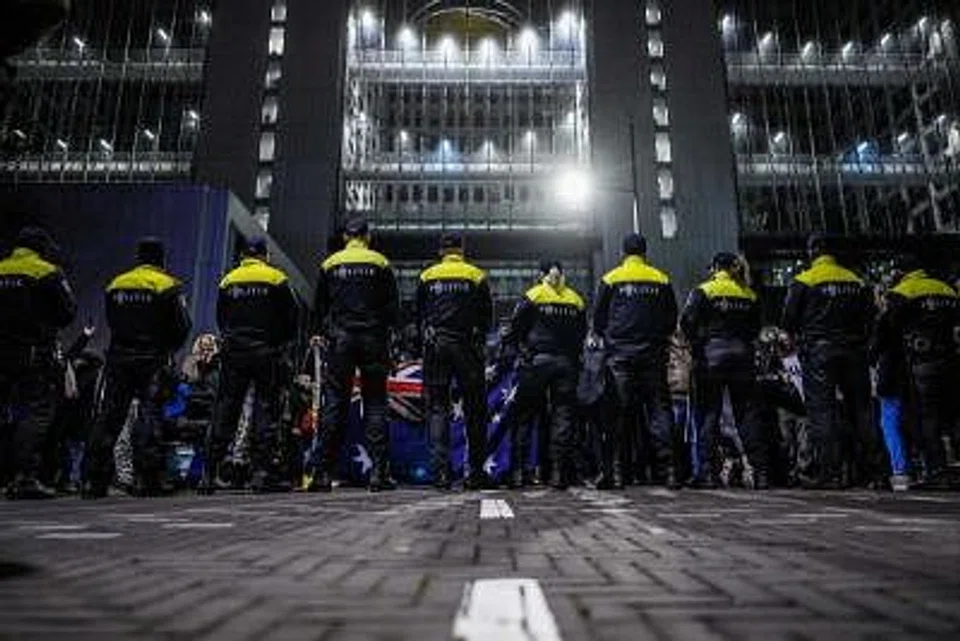
DeeperDive is a beta AI feature. Refer to full articles for the facts.
NATIONS across Europe have been tightening restrictions to prevent the spread of the omicron variant, and on Saturday (Dec 18), the Netherlands became the first European country to announce a full lockdown to fight the variant.
Dutch leaders ordered the closing of all nonessential shops, bars, restaurants, gyms, outdoor sports, cultural venues and schools from Sunday until mid-January.
"It's terrible," Prime Minister Mark Rutte acknowledged Saturday during a televised news conference. "This is terrible for everyone, especially on the eve of the holidays."
Rutte said that a fifth wave of the virus was inevitable because of omicron. "We have to act now to prevent a worst-case scenario," he said. "Without measures, we could be witnessing an uncontrollable situation at the start of January."
The Netherlands, normally a well-organised country, has struggled more than many other wealthy nations to control the virus, and its booster campaign has been relatively slow.
The health minister, Hugo de Jonge, said that efforts to mass-administer booster shots would be drastically increased. "We need this to buy time in order to find out how sick the omicron variant can make us," he said. Researchers are racing to determine whether the variant might have more or less virulence than earlier versions.
Navigate Asia in
a new global order
Get the insights delivered to your inbox.
Official measures against the virus have not always fared well among the Dutch. Anger over the country's partial lockdown and other restrictions set off unruly and sometimes violent protests last month and in January in several cities.
Other European countries have also taken action as they detect omicron in an increasing number of case samples. Some have tightened travel restrictions, while others have closed public venues and cancelled holiday celebrations.
Austria announced tougher entry restrictions for travellers without booster shots. Germany's regional health ministers are pushing for stricter rules for arrivals from Britain. And in Denmark, one of the first countries in Europe to see a surge of the variant, theaters, concert halls and amusement parks have been closed.
With the omicron variant "spreading at lightning speed" in Europe, it will probably become dominant in France by the start of next year, the French prime minister, Jean Castex, has warned.
Ireland imposed an 8 pm curfew on pubs and bars starting Monday, among other new restrictions. Prime Minister Micheál Martin addressed the nation Friday night.
"None of this is easy," the Reuters news agency quoted him as saying. "We are all exhausted with Covid and the restrictions it requires. The twists and turns, the disappointments and the frustrations take a heavy toll on everyone. But it is the reality that we are dealing with."
All countries are looking toward Britain, which has so far been hardest hit in the region, with a total of nearly 25,000 confirmed omicron cases as of Saturday. Britain reported 90,418 new coronavirus cases Saturday - down from a record of just more than 93,000 on Friday.
Compared with the previous week, cases in Britain were up 44.4 per cent. Deaths, which typically lag changes in case numbers, were down by nearly 6 per cent over the same period.
The omicron variant of the coronavirus has been detected in 89 countries, with its case numbers doubling every 1.5 to three days in places with community transmission (not just infections acquired abroad), the World Health Organization has said. NYTIMES
Decoding Asia newsletter: your guide to navigating Asia in a new global order. Sign up here to get Decoding Asia newsletter. Delivered to your inbox. Free.
Share with us your feedback on BT's products and services