
New Anti-Scam Command, stronger public education to combat rising scams: Desmond Tan
 Add BT as a preferred source
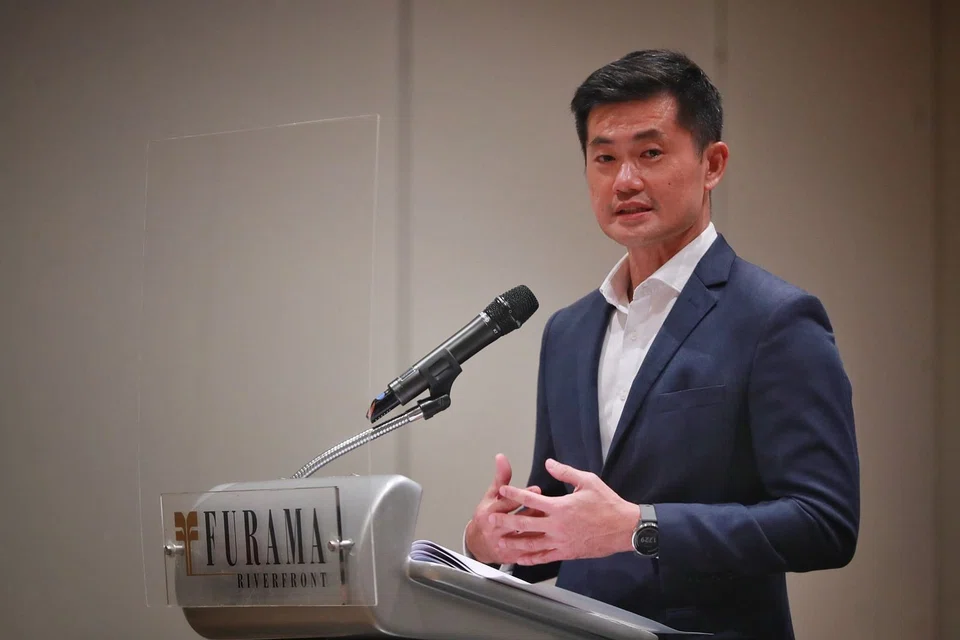
SINGAPORE is strengthening enforcement and public education to combat rising scams in the Republic, said Minister of State for Home Affairs Desmond Tan on Tuesday (Feb 15).
Tan, who chairs the Inter-Ministry Committee on Scams (IMCS), was speaking in Parliament on the government's efforts to combat scams in Singapore.
As part of enforcement efforts, the Singapore Police Force (SPF) will be forming an Anti-Scam Command this year to consolidate expertise in scams across all SPF units, to improve coordination of anti-scam enforcement and investigations.
The Command will also oversee the newly-formed Scam Strike Teams in the SPF's 7 land divisions to take faster action against scams.
Tan noted that the main challenge of enforcement is that a vast majority of scams are perpetrated by scammers based overseas, making such cases difficult to investigate and prosecute.
As a result, the SPF would need to work closely with overseas counterparts to exchange information and conduct joint operations.
Navigate Asia in
a new global order
Get the insights delivered to your inbox.
Additionally, the SPF is also expanding its efforts at the Anti-Scam Centre (ASC), a specialised unit focused on anti-scam interventions and enforcement set up in 2019.
The ASC and the Monetary Authority of Singapore are working with more banks to co-locate their staff at the ASC, to further enhance the ASC's capabilities to freeze accounts and trace the flow of funds.
While recovering monies lost to scams is difficult, Tan said close partnerships with financial institutions can facilitate real-time coordination and intervention.
Speaking on the recent phishing scams at OCBC, Tan said the SPF is investigating the local IP addresses linked to the scam and the owners of the local money mule accounts, and it is also working with Interpol and foreign law enforcement agencies to investigate the beneficiaries of the transferred funds and the scam websites, of which many were hosted by companies based overseas.
As at Feb 13, SPF has frozen 121 local bank accounts and recovered about S$2 million; S$2.2 million of victims' funds have also been traced to 89 overseas bank accounts, he said.
However, Tan also added that enforcement itself is insufficient, and that "the best defence is a discerning public".
Tan said scam victims tend to lack practical knowledge on safe practices, such as being unable to recall specific scam prevention tips and exhibiting poor online hygiene.
He noted that scam victims are of a wide range of ages and that everyone is susceptible, although those aged between 20 and 39 are more susceptible to phishing scams and scams involving jobs, e-commerce and loans, while those aged between 40 and 59 are more common victims of social media impersonation and internet love scams.
As such, the IMCS will scale up targeted outreach, by partnering agencies and stakeholders and leveraging their communications channels to push out anti-scam messages.
These include the Agency for Integrated Care, Ministry of Education, Ministry of Manpower and MoneySense to reach out to seniors, students, migrant workers and professionals; the Association of Banks in Singapore (ABS) to reach out to bank customers; and major e-commerce marketplaces to reach out to platform users.
Currently, the government's initiatives include anti-scam public education campaigns, SPF's partnership with ABS to educate bank customers, and getting banks to train frontline staff to spot signs of scam transactions.
Tan also urged the public to download ScamShield, to filter out scam messages and block scam calls. The app is available on iOS devices, and the Android version will aim to be released in the next few months, he said.
Noting that the police have been trying to cope with increasing workload and expectations, without proportionate increase in manpower, Tan said the SPF would need to review this "untenable" situation where the police are "extremely stretched".
"Combatting scams needs a whole of society effort. Even as SPF steps up enforcement, members of the community still play a vital role," Tan said.
READ MORE:
- Banks, customers to share scam losses; framework to seek views: Wong
- Companies urged to sign up for SMS registry, restrain use of SMS
Decoding Asia newsletter: your guide to navigating Asia in a new global order. Sign up here to get Decoding Asia newsletter. Delivered to your inbox. Free.
Copyright SPH Media. All rights reserved.

