New Japan PM appoints Abenomics proponent as finance minister
Selection aims to wipe off ahead of a general election Ishiba’s public image as a supporter of tighter fiscal and monetary policies, strategist says
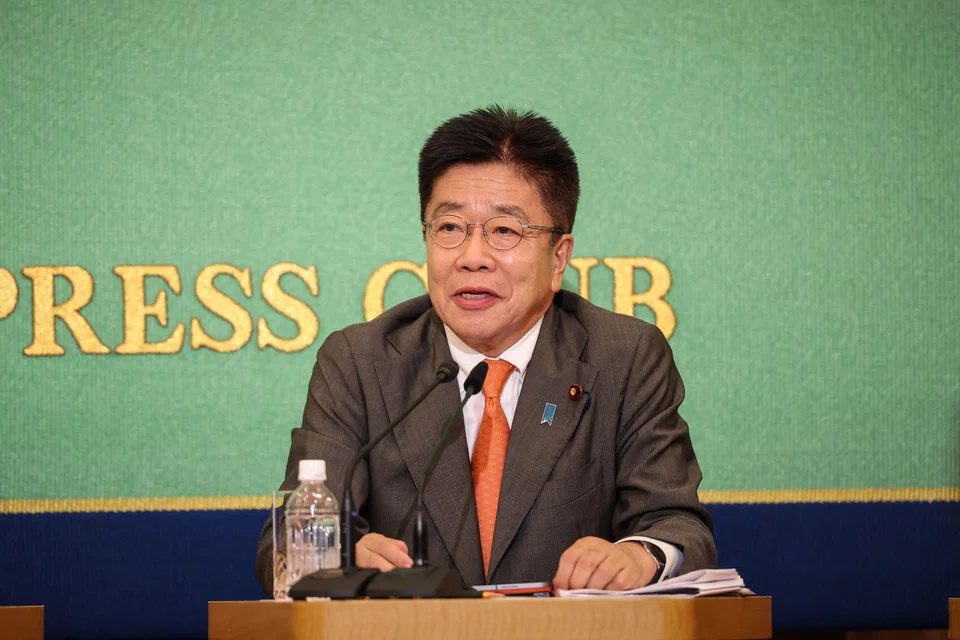
JAPAN’S new leader Shigeru Ishiba appointed a proponent of former premier Shinzo Abe’s “Abenomics” policies as finance minister on Tuesday (Oct 1), in an apparent balancing act to alleviate concerns over the next Cabinet’s economic strategy.
Prime Minister Ishiba named Katsunobu Kato, a finance ministry bureaucrat-turned-lawmaker, to the post as he formed a new government.
This comes as the new premier more than halved the number of women in the cabinet, an indication that increasing female representation in key policymaking positions is likely not one of his top priorities.
The appointment of Kato, 68, who served as health minister and other key positions under the Abe administration to back his expansionary fiscal and monetary policies, comes as Ishiba backpedals on his focus on fiscal discipline and criticism of past aggressive monetary stimulus.
Kato, who was among eight candidates who lost to Ishiba in the ruling Liberal Democratic Party (LDP) leadership race, vowed during his campaign to succeed Abenomics to help double household incomes.
He called for compiling a stimulus package to fund spending to boost domestic investment and revitalise regional economies.
“Japan is on the cusp of emerging from deflation. We shouldn’t stop this drive and instead accelerate it,” he said, adding that the country should focus on boosting wages and capital expenditure.
But Kato is not as explicit as someone such as Sanae Takaichi, another LDP leadership candidate who was beaten by Ishiba in the run-off, in opposing interest rate hikes.
In May, Kato said conditions are falling in place for the Bank of Japan (BOJ) to normalise monetary policy, although he stressed that the central bank must keep a close eye on economic conditions.
His predecessor Shunichi Suzuki described Kato as “very sensible” in his last news conference as finance minister on Tuesday. “As he used to be a finance ministry bureaucrat, he has strong expertise here.”
The selection of Kato to the finance minister post “is probably meant to wipe off Ishiba’s public image associated with tighter fiscal and monetary policies ahead of a general election”, said Daisaku Ueno, chief foreign exchange strategist at Mitsubishi UFJ Morgan Stanley Securities.
Ishiba noted on Monday he will call a general election for Oct 27.
“The news about Kato was a little surprise as Ishiba repeatedly called for a review of Abenomics,” said Nomura Research Institute executive economist Takahide Kiuchi. “But I don’t expect Kato to confront Ishiba on policies as Kato is not someone who would force through his own policy agenda.”
Analysts have added that Ishiba’s economic policies also blurred in recent weeks.
Ishiba floated the idea of higher corporate and investment income taxes during the campaign, though he clarified that higher investment tax levies should be applied only to the rich.
On monetary policy, he said in August that the BOJ was on the “right policy track” by ending negative rates earlier this year, and added that it could boost industrial competitiveness.
But he noted on Sunday that the country’s monetary policy must remain accommodative as a trend.
He also moved his emphasis away from fiscal discipline to show his readiness to deploy fiscal stimulus, countering speculation that he would prioritise fiscal health over economic growth.
“The general election this year and the Upper House section next year makes it hard for Ishiba to adopt tighter fiscal policies in any case,” said Junichi Makino, chief economist at SMBC Nikko Securities.
His support base within the LDP itself is also weak with no backing from a specific fraction, he added. REUTERS, BLOOMBERG
Decoding Asia newsletter: your guide to navigating Asia in a new global order. Sign up here to get Decoding Asia newsletter. Delivered to your inbox. Free.
Share with us your feedback on BT's products and services