

New PM to address 'economic mismanagement' of Abbott's tenure
Sydney
THE well-oiled revolving door of Australian politics, which has cycled through five leaders in as many years, is earning the nation a reputation for instability which, according to at least one government lawmaker, is starting to resemble Italy.
The comparison is made tongue-in-cheek because Canberra is still much kinder to prime ministers than Rome over the longer term, but Australia's business community is not laughing. "In terms of business confidence, what we do need is stability," James Fazzino, chief executive of fertiliser and industrial explosives maker Incitec Pivot Ltd, said on Tuesday, after the nation awoke to yet another prime minister.
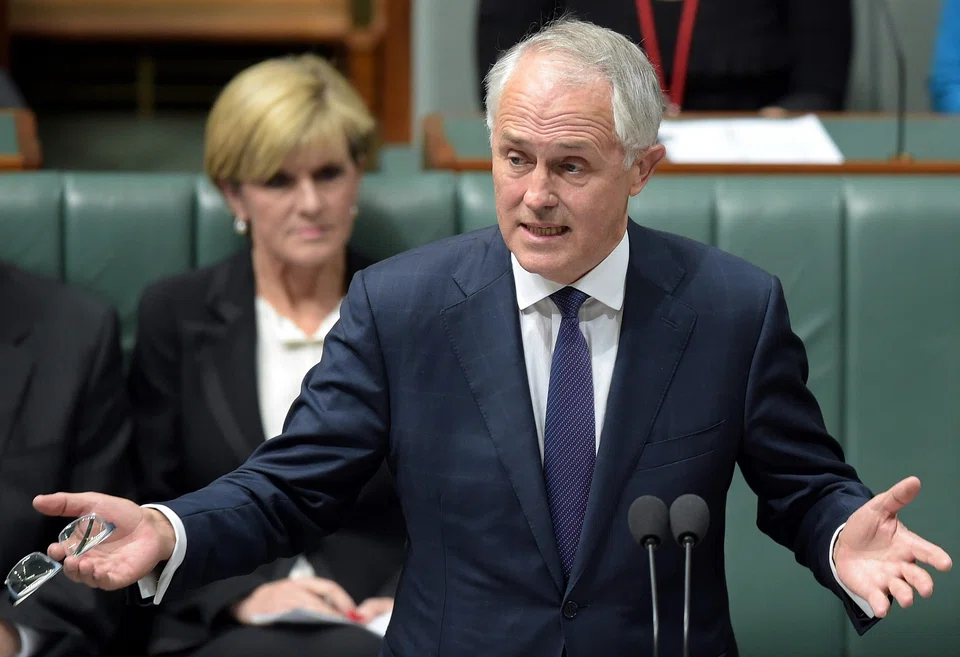
Australia's new leader, Malcolm Turnbull, ousted first-term prime minister Tony Abbott on Monday night after months of dismal poll numbers for the government and a string of troubling economic indicators.
Mr Turnbull, a former investment banker, corporate lawyer and tech entrepreneur, is popular with the business community, but persistent leadership turmoil raises the risk that fortune will finally desert the so-called Lucky Country. The economy has notched up 24 straight years of growth, a record bettered only by the Dutch among developed nations.
Australia has not suffered a recession since 1991, but growth has slowed well below potential. A once-in-a-lifetime mining investment boom has ended and other industries have been unwilling to pick up the slack. "We are mindful that the global economy has faced numerous challenges during this period but we have long argued that confidence is structurally weaker due to the lack of strong national leadership, little focus on much-needed reform to boost long-run growth, and the lack of a clear economic narrative," said Su-Lin Ong, a senior economist at RBC Capital markets.
Business confidence got a big boost when Mr Abbott was elected on a promise of "no surprises" government but a deeply unpopular first budget quickly eroded that. Business has also endured a series of policy U-turns by successive governments on issues including mining taxes, clean energy investment, paid parental leave, defence spending and an emissions trading scheme.
Economic growth slowed to just 2.0 per cent in the second quarter, well below the longer-term average of 3.0-3.25 per cent, and unemployment has crept to 6.3 per cent, around decade highs.
Australia's economy still outpaces many rich nations but many argue that the nation of 24 million people risks squandering its good fortune, given its rich mineral wealth, strong population gains and proximity to fast-growing Asia.
Investment bank Goldman Sachs sees a one-in-three chance of a recession over the coming year, citing a contraction in some key indicators such as real net national disposable income. Low labour productivity, bureaucracy, a lack of economic reform and weak political leadership have angered business and been blamed for contributing to a hollowing-out of manufacturing and cost blowouts on major projects.
Mr Turnbull highlighted economic mismanagement as one of the primary reasons that Mr Abbott had to be replaced. REUTERS
TRENDING NOW

Nvidia reinstates Jensen Huang as CEO; Trump says move poses no national security risk

Beyond the greenback, Vietnam’s big borrowers turn to Asian-currency bonds

Indonesia’s coal tycoon Low Tuck Kwong replaced as Bayan Resources president-director

Six workers file employment claims against Crystal Jade Food Manufacturing

