

New Zealand’s newly sworn-in PM known for his candour, diet and poor dress sense
 Add BT as a preferred source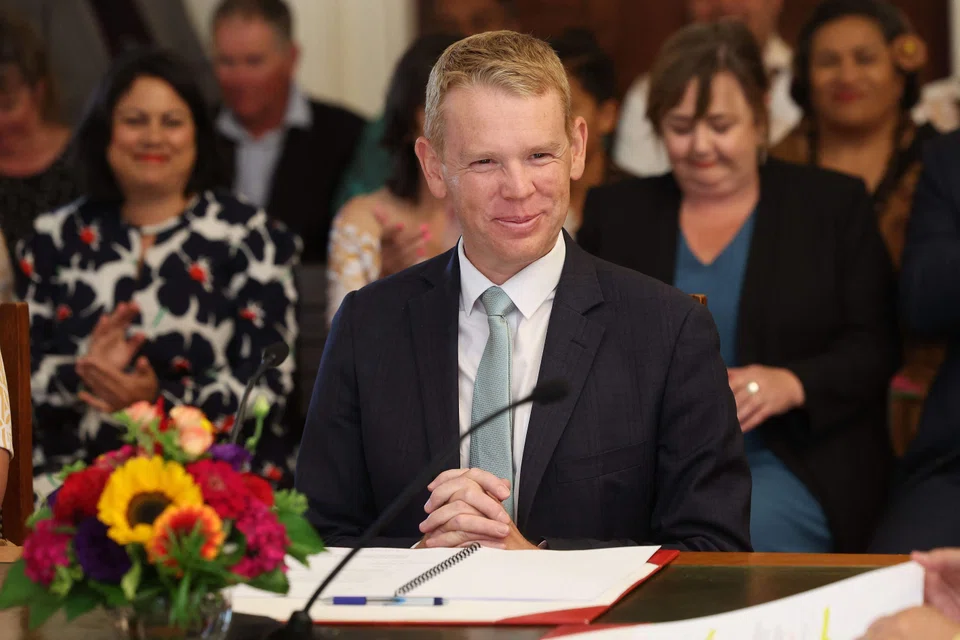
DeeperDive is a beta AI feature. Refer to full articles for the facts.
NEW Zealand’s new prime minister does not draw adoring crowds like his predecessor Jacinda Ardern, but is well known throughout the country for his political nous, poor dress sense and a love of diet Coke.
Chris Hipkins, 44, was officially sworn in on Wednesday (Jan 25) to replace Ardern, his friend of more than 20 years, who resigned last week because she no longer had “enough in the tank”.
The straight-talking Hipkins was the architect of New Zealand’s Covid-19 response, and is widely seen as a personable politician with a safe pair of hands.
“Hopefully, New Zealanders know me as someone who is upfront, doesn’t mind admitting when they’ve made a mistake and can laugh at themselves,” he told reporters after being touted for the role last week.
Hipkins has somewhat mellowed since his early days as a firebrand of student politics.
He was arrested and strip-searched in the late 1990s while protesting proposed reforms to university education.
Navigate Asia in
a new global order
Get the insights delivered to your inbox.
Political commentator Josie Pagani has described Hipkins, with more than 14 years in opposition and government, as “sensible, likeable, tough and capable”.
He will now be tasked with turning around the sagging popularity of Ardern’s Labour government, which has been hampered by a looming recession and a resurgent conservative opposition.
Hipkins won plaudits for his near two-year term as the Covid response minister in a country that shut its borders to keep the coronavirus out, only fully reopening to the outside world in August last year.
Hailing from the working-class Hutt Valley in New Zealand’s North Island, Hipkins has held high-profile portfolios including police and education.
“I think I am relatively upfront, I’m relatively inclusive. People won’t die wondering what I think,” he has said. “My parents came from relatively humble beginnings and worked really hard to provide a good life for my brother and I.”
His diet has drawn the attention of his colleagues, with a former boss once remarking that Hipkins “appears to eat nothing more than sausage rolls and diet Coke”.
Justice Minister Kiri Allan, one of Labour’s senior Maori MPs, who had been considered a potential prime minister herself, has described Hipkins as decisive and an “incredibly strong” leader.
“He is extremely competent, with a track record of delivering for New Zealand as one of our most senior ministers over the past six years,” she said.
Hipkins told journalists he liked cycling, gardening, DIY work and being outdoors, but conceded: “Maybe I don’t have the best fashion sense in parliament.”
Asked whether having a red-haired prime minister would be a historic moment for the country, he said: “I think it was about time we had a ginger at the top.”
The incoming New Zealand leader studied politics and criminology at Victoria University in the capital Wellington and then worked in the industry training sector.
Before becoming an MP in 2008, he worked as a senior adviser to two education ministers and former prime minister Helen Clark.
Although known as a personable and laid-back operator, Hipkins is also capable of playing hard-nosed politics – and was involved in some high-profile spats with Australia’s former conservative government.
In 2021, he accused Australia of “exporting its garbage” to New Zealand – a reference to Canberra’s controversial policy of deporting criminals back to their country of birth.
Hipkins was admonished by Ardern in 2017 after he was accused of orchestrating the resignation of Australia’s then-deputy prime minister Barnaby Joyce.
Information released to Hipkins showed Joyce was a dual citizen of both Australia and New Zealand – which disqualified him from sitting in parliament under Australia’s constitution.
On Wednesday, Singapore Prime Minister Lee Hsien Loong wrote a congratulatory letter to Hipkins as he noted the “deep and longstanding friendship” between their two countries.
“As small and open economies, we share similar views on many issues, such as the importance of free trade and international law,” said PM Lee, adding that there is multi-faceted cooperation across the five pillars of the Singapore-New Zealand Enhanced Partnership, in areas like trade, defence and climate change.
“Our two countries also supported each other strongly during the Covid-19 pandemic, including ensuring that supply chains remain connected and regularly exchanging notes on our experiences,” said PM Lee. “I look forward to working with you to strengthen our excellent bilateral relations, and wish you and your government every success.”
In a separate letter to Ardern, PM Lee wrote that she had steered New Zealand through unprecedented and challenging times, and had led her country with “kindness, compassion and strength through multiple crises” such as the Christchurch attacks, the White Island eruption and the pandemic.
“You have also been an inspiration, especially to women and girls, not just in New Zealand, but across the world. You have demonstrated that empathy and courage can go hand-in-hand in political leadership,” said Mr Lee. AFP
Decoding Asia newsletter: your guide to navigating Asia in a new global order. Sign up here to get Decoding Asia newsletter. Delivered to your inbox. Free.
Share with us your feedback on BT's products and services
TRENDING NOW
Japan stocks look set for new highs in 2025 on earnings, reform

Beijing’s calculated silence on the Iran war

China pips the US if Asean is forced to choose, but analysts warn against reading it like a sports result
Richard Eu on how core values, customers keep Singapore’s TCM chain Eu Yan Sang relevant

