

Next advantage for Asean firms lies in ability to operate amid uncertainty: BT regional survey
The question isn’t whether to go regional, but how fast: BT editor Chen Huifen at the flagship report’s launch

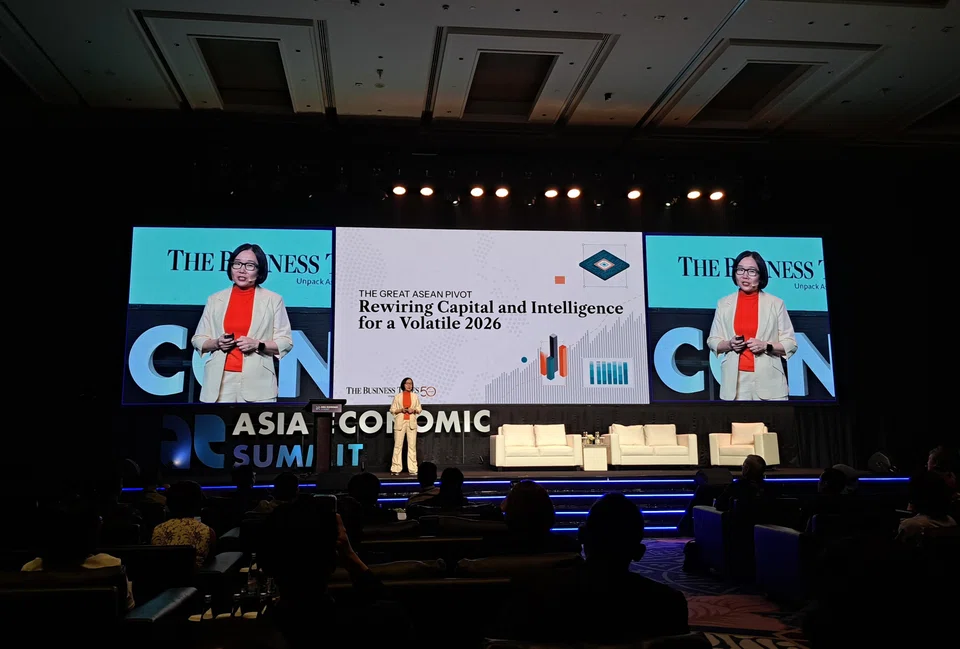
[JAKARTA] Asean is no longer a backup plan, but the primary base for the next phase of growth for businesses, said Chen Huifen, editor of The Business Times, on Wednesday (Jun 17) at the launch of the financial daily’s inaugural Asean Intelligence 2026 report.
“The businesses that will win aren’t the ones waiting for the world to stabilise, (but) the ones that understand that instability is the new operating condition – and they’re building for it,” she said.
The next advantage in Asean does not go to the biggest or the fastest.
Rather, it goes to those who know how to build trust, how to implement integration and act on that knowledge with conviction and patience, noted the editor.
Citing data from the report, Chen pointed out that South-east Asian businesses may be most optimistic about economic offerings in the region and at home, but these markets are also where the widest divide between opportunity and trust exist.
The mismatch is rooted in regulatory uncertainty, uneven enforcement, fragmentation across governance systems, rising costs and intense competition.
For Faye Wongso, founder and chairperson of Kumpul, an ecosystem enabler for economic empowerment through entrepreneurship, this finding stood out.
“If we move forward as a region, we are very powerful... But right now, it’s still quite segregated (when it comes to) regulations, bureaucracy,” she said.
She pointed to Indonesia as an example of such fragmentation, citing the market’s lack of deeptech solutions. Rather than waiting until the country makes a breakthrough, regional collaboration and partnerships could be the way to grow fast, she added.
SEE ALSO








The way Wongso sees it, the report affirms Kumpul’s efforts.
“We’ve been saying that Asean should be seen as a joint force,” she explained, adding that the key is in bridging the gap between opportunity and trust.
Herein exists the durable advantage for regional businesses, said BT’s Chen. The competitive moat of business leaders in South-east Asia lies not solely in capital or technology, but in their ability to operate where others find opaque.
BT commissioned market survey firm Kantar this year to conduct the inaugural regional study that polled, in two waves, more than 500 C-suites and senior business leaders across the Asean-6 economies: Indonesia, Malaysia, the Philippines, Singapore, Thailand and Vietnam.
The study is the first under BT’s Insights series, which publishes such reports up to four times a year, delivering exclusive market intelligence and in-depth data analysis to help businesses stay ahead of trends.
The flagship regional study was launched at the second edition of the Asia Economic Summit organised by English-language technology media company Tech in Asia.
Held at Fairmont Jakarta, this year’s summit was themed “Where South-east Asia’s Economic Decisions Take Shape”.
The day-long private convening of some 250 regional policymakers, business leaders, investors and technology stakeholders aims to align policy intent with investment priorities and execution pathways across South-east Asia.
It featured two ministerial keynote speeches, one of which was delivered by Singapore’s Minister for Digital Development and Information Josephine Teo. She is also the Republic’s minister-in-charge of cybersecurity and the Smart Nation Group.
Indonesia’s Minister of Communication and Digital Affairs Meutya Hafid also gave a keynote address, while Creative Economy Minister Teuku Riefky Harsya spoke at an afternoon panel.
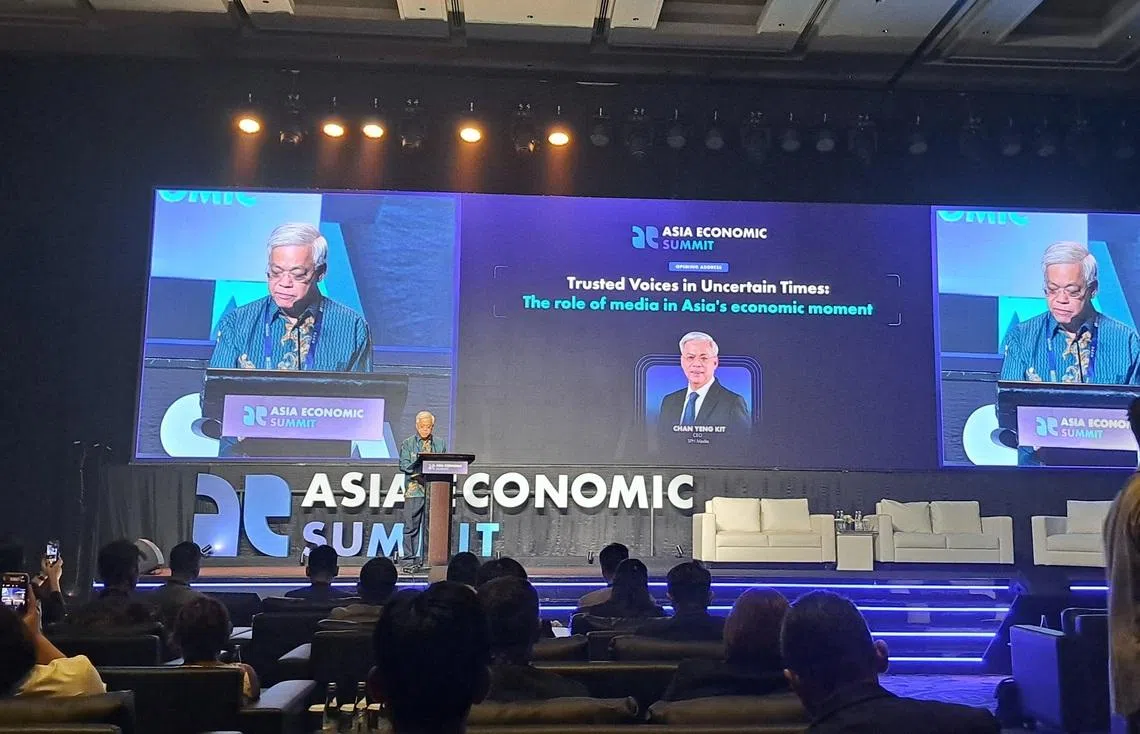
SPH Media CEO Chan Yeng Kit noted in his opening address that South-east Asia sits at the centre of several shifts in today’s global economic order, including rewiring supply chains and protectionism coming back in vogue.
“The question is not whether change is coming; it already has,” he said. “The question is whether we navigate with our hands on the steering wheel.”
On the role of SPH Media in an era defined by rapid shifts in trade, technology and geopolitics, he said that the ability of businesses, investors and governments to make sound decisions depends on access not just to information, but also to the right information, interpreted with context and delivered with integrity. “When the world moves this fast, the media is not merely a chronicler of events. It is a compass.”
Role of AI
The survey polled business leaders on the role of artificial intelligence, the top investment theme across South-east Asia.
Chen raised that around 45 per cent of respondents are “first movers” who move quickly, invest broadly and will take risks to gain competitive advantage.
Some 42 per cent of those surveyed are “pragmatic optimisers”: selective, focused on investment returns and avoiding complexity. A smaller group of about 13 per cent of respondents are “cautious traditionalists”, who prefer stability and incremental improvements.
The study found that Indonesian firms chiefly regard themselves as first movers, with 70 per cent of those polled indicating they are under pressure to transform.
This was one of the findings that stood out to Antares Ventures’ founder and managing partner, Michael Gryseels.
He told BT that he was surprised by the level of enthusiasm in the region around AI adoption, explaining: “To a certain extent, it is counterintuitive because the pressure for productivity is far higher in the West than here.”
He added that the study’s findings served as confirmation of what his deeptech venture capital fund is doing – it invests in the picks and shovels of AI, which will be lifted with growing adoption and demand for data centres.
Capital flows
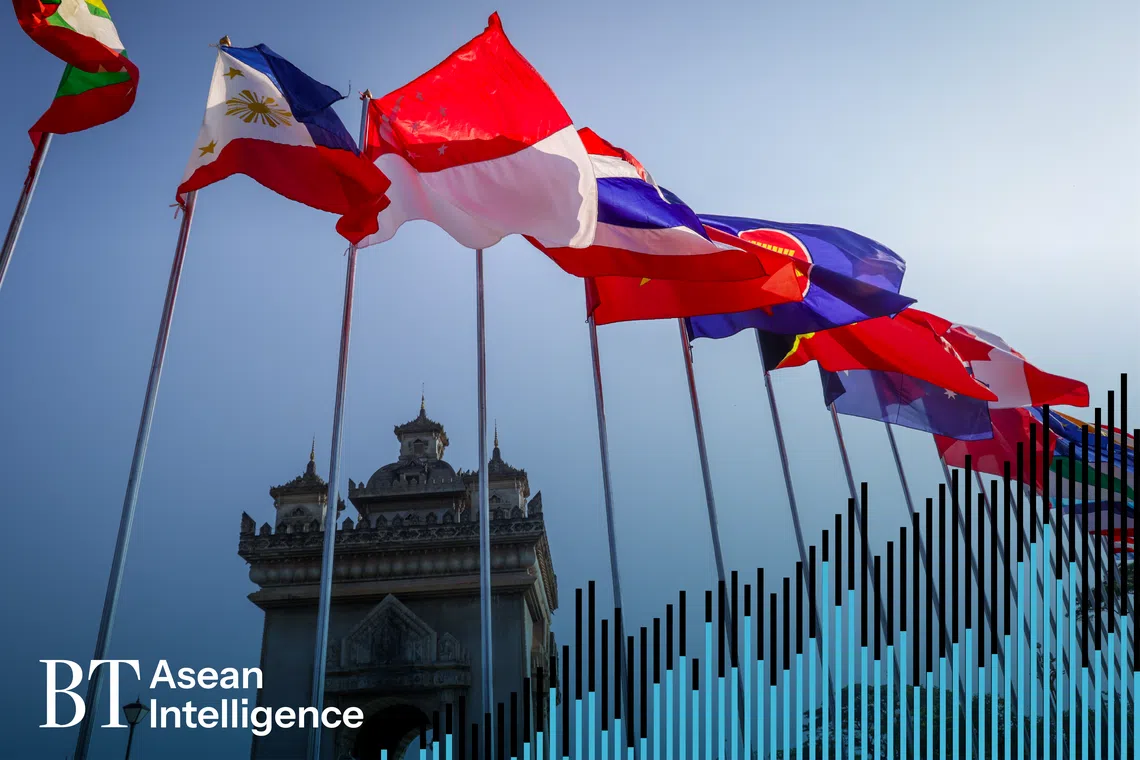
Another highlight of the survey is that an overwhelming majority of businesses polled plan to allocate new capital within Asia, specifically within Asean and their domestic markets.
In particular, Indonesian businesses are among the most committed to regional capital deployment, Chen noted.
Meanwhile, the study found that interest in the US and Europe has slipped down the priority list. China ranks as the third-most preferred destination, especially among Malaysian and Vietnamese businesses.
The globalisation playbook of expanding in the West and chasing the American consumer is quietly being shelved, said the BT editor, with the new default shifting closer to home.
“If you’re allocating capital outside Asia right now, you’re swimming against a powerful regional current,” she concluded.
“The question isn’t whether to go regional – it’s how fast.”
Gain deeper insights into the future of business and be better informed as you navigate what is ahead with The Business Times Insights: Asean Intelligence
About the survey
In 2026, The Business Times commissioned market research firm Kantar to conduct a survey to capture the pulse of leadership across the region.
The first wave of the study, conducted in February 2026, polled 538 business leaders in the Asean-6 economies: Indonesia, Malaysia, the Philippines, Singapore, Thailand and Vietnam.
They are from diverse industries including manufacturing, consumer and retail, healthcare, and financial services. Most of them are in C-suite or senior management roles, or are business owners. About 65 per cent of respondents are from large enterprises, and 35 per cent from small and medium-sized enterprises.
In April 2026, a second, more targeted wave of fieldwork was conducted to gauge the impact of the Middle East conflict on business sentiments. It polled 246 business leaders of a similar high-level profile.
“Our mission is to move beyond the surface-level narrative of regional growth,” said BT editor Chen Huifen.
“By investing in our own proprietary intelligence, we are ensuring that our readers have access to the ground-level truths that external observers might miss. It is about bringing a home-grown perspective to a global audience, and providing the spark to help leaders turn volatility into opportunity.”
Decoding Asia newsletter: your guide to navigating Asia in a new global order. Sign up here to get Decoding Asia newsletter. Delivered to your inbox. Free.
Copyright SPH Media. All rights reserved.
TRENDING NOW

Singapore identifies 7 firms responsible for haze fires, notices issued urging action: Grace Fu

Philippine power giant First Gen rebuffs foreign offers, plans up to US$2.6 billion in expansion
DBS remains analysts’ pick ahead of Q3 earnings after Singapore banks’ share slump

Indonesia imposes US$116 million in fines over manipulation of Sinar Mas, Prajogo-linked stocks

