

Next-gen manufacturing jobs are cutting-edge, not 'dirty, dangerous': Chan Chun Sing
 Add BT as a preferred source
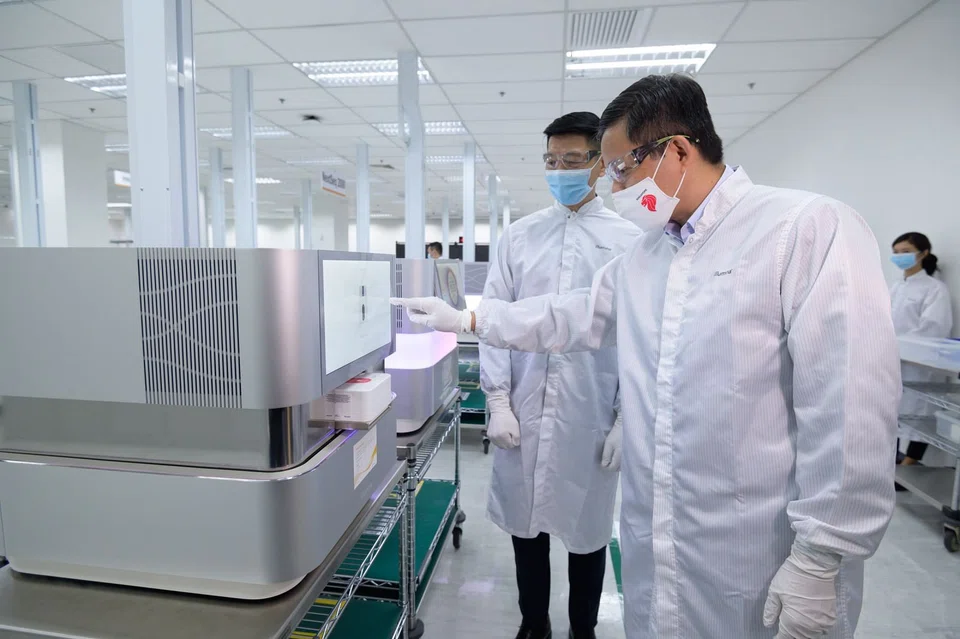
THE impression that manufacturing involves "dirty, dangerous, repetitive" work is entirely passe where next-generation manufacturing plants are concerned, said Trade and Industry Minister Chan Chun Sing on Monday. Instead, he said, advanced manufacturing offers work that is cutting-edge and challenging, and requires cross-disciplinary skills.
Mr Chan was visiting a manufacturing facility in Woodlands owned by Illumina, the international market leader in genomic sequencing. Illumina is an industry giant, estimated to hold a 75 per cent share of the genetic sequencing market worldwide. Since setting up in Singapore in 2008, the Republic has become Illumina's largest manufacturing site globally.
Following a tour of Illumina's production floor, Mr Chan said: "The kind of working environment that a new-generation manufacturing plant is about, is no longer about working in a dirty, dangerous, repetitive environment. In fact, that concept is totally passe."
He added: "What we are seeing now are people who are working at the cutting edge of technology, in cleanrooms. The machines they produce are so high-tech that many people would be very impressed with what we are able to do in Singapore. The kind of consumables they are able to produce, from enzymes to chemicals, are all - if you like - 'secret recipes', of which many are developed in Singapore."
Mr Chan went on to stress that manufacturing jobs being created for Singaporeans are not about "repetitive" work, but involve constantly seeking new solutions and products. This, he said, requires an "agile mindset" and "cross-disciplinary skills", to combine research and development (R&D) with production.
"The kind of challenges that companies like Illumina provide for fellow Singaporeans is indeed at the cutting edge of what anyone in the world can do and want to do," he said.
Last Monday, Mr Chan announced "Manufacturing 2030", a 10-year plan to grow Singapore's manufacturing sector by 50 per cent and maintain its share of about 20 per cent of gross domestic product (GDP) by 2030. Under the 2030 goal, the sector is expected to continue employing about 12 to 15 per cent of Singapore's total workforce, but in higher-skilled roles.
At his Illumina tour this Monday, Mr Chan outlined the government's strategy for Singapore's advanced manufacturing ambitions: to invest in infrastructure, with the Jurong Innovation District as a key locale; to strengthen the research ecosystem; and to embark on Industry 4.0 transformation efforts for small, medium and large enterprises alike.
Mr Chan called Illumina's expansion story in Singapore a "good example" of what Singapore wants to achieve, in its bid to secure niche capabilities in the global value chain. Illumina's Singapore facility now employs over 1,300 workers, including an R&D team of over 100 researchers, scientists and engineers.
Said Derric Lee, vice-president and general manager of Illumina Singapore: "Singapore has built a strong suppliers ecosystem, an excellent talent pool, and an efficient infrastructure to support advanced manufacturing. This has enabled many companies to strive, grow and open up job opportunities in cutting-edge technology companies like Illumina."
Decoding Asia newsletter: your guide to navigating Asia in a new global order. Sign up here to get Decoding Asia newsletter. Delivered to your inbox. Free.
Copyright SPH Media. All rights reserved.
TRENDING NOW

When every phone becomes a satellite phone, what happens to Asia’s telcos?

Lily Ler to step down as CEO of Mapletree Industrial Trust manager

Jardine C&C selling Singapore, Malaysia dealerships to Indonesia’s Chandra Asri for US$221 million gain

How BYD disrupted Singapore’s car market – and why the strategy is turning on itself

