

No special session of Malaysian parliament on Monday says speaker
 Add BT as a preferred source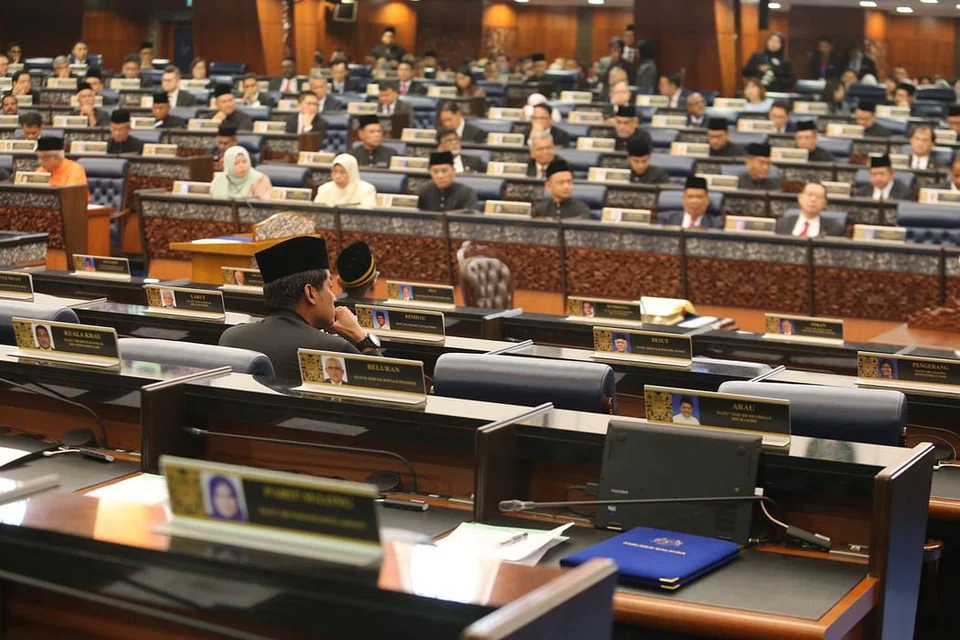
[KUALA LUMPUR] Malaysia's parliament will not hold a special session on Monday to decide on the next prime minister, its speaker said, a day after interim premier Mahathir Mohamad said the legislative body would do so.
The speaker, Mohamad Ariff Md Yusof, said he received a letter for a special session from Dr Mahathir, but the letter did not adhere to parliamentary procedure.
"I also take the position that the need to have a special parliament meeting will be made after receiving an official decree from the king regarding the process of selecting the prime minister," the speaker said in a statement.
"As such, I have decided there will be no special meeting of the House of Representatives on Monday."
Malaysian lawmakers from across the political spectrum blasted Dr Mahathir for calling on parliament to vote on a new leader, saying the move disrespected the country's monarch.
Dr Mahathir said Thursday the king had failed to find a candidate with a clear majority in the 222-member parliament, and an election would be called if lawmakers couldn't decide on a leader in the special meeting. The king had appointed Mahathir as interim prime minister following his surprise resignation this week.
Navigate Asia in
a new global order
Get the insights delivered to your inbox.
Several of Malaysia's biggest political parties have already accused Dr Mahathir of pre-empting the king, who hasn't made a public statement since he started speaking with lawmakers to determine who has a majority in parliament.
The country's sovereign typically plays a ceremonial role in Malaysia's British-style system of government, but has been drawn in further this time to resolve a crisis now in its fifth day. Royals from some of the country's 13 states are also gathering with the king on Friday for a special meeting on the political crisis, the Star newspaper reported.
The backlash raises questions about whether Dr Mahathir, 94, miscalculated in abandoning a coalition that pulled off a shock election win in 2018, taking down a government that ruled consecutively for six decades.
Joining hands with long-time rival Anwar Ibrahim, Dr Mahathir's administration initially sought to usher in a new era of transparency and good governance, and focused efforts on prosecuting former Prime Minister Najib Razak for corruption in the use of state funds.
But an internal battle of power between Dr Mahathir and MrAnwar was never far from the surface. Dr Mahathir repeatedly refused to set a firm date to hand over to Mr Anwar as they agreed prior to the election, increasing tensions that led to the coalition's collapse.
While Mahathir was initially seen as a favorite to form a new coalition, he's been publicly rebuked in the past few days by both his former allies and potential new partners.
Whoever emerges victorious will inherit an economy growing at the slowest pace in a decade, with Mahathir announcing on Thursday a US$4.8 billion stimulus package to counter the impact of the global coronavirus outbreak.
REUTERS,BLOOMBERG
Decoding Asia newsletter: your guide to navigating Asia in a new global order. Sign up here to get Decoding Asia newsletter. Delivered to your inbox. Free.
Share with us your feedback on BT's products and services
TRENDING NOW

‘We’re not a bubble tea brand’: Chagee aims to double Asia-Pacific footprint to 600 stores by 2027

Thai and Vietnamese farmers may stop planting rice because of the Iran war. Here’s why

Middle East-linked energy supply shocks put Asean Power Grid back in focus
As more Asean states turn to Russia for fuel, will Moscow boost its influence in the region?

