North Korea's missile programme faces few hurdles, despite sanctions
 Add BT as a preferred source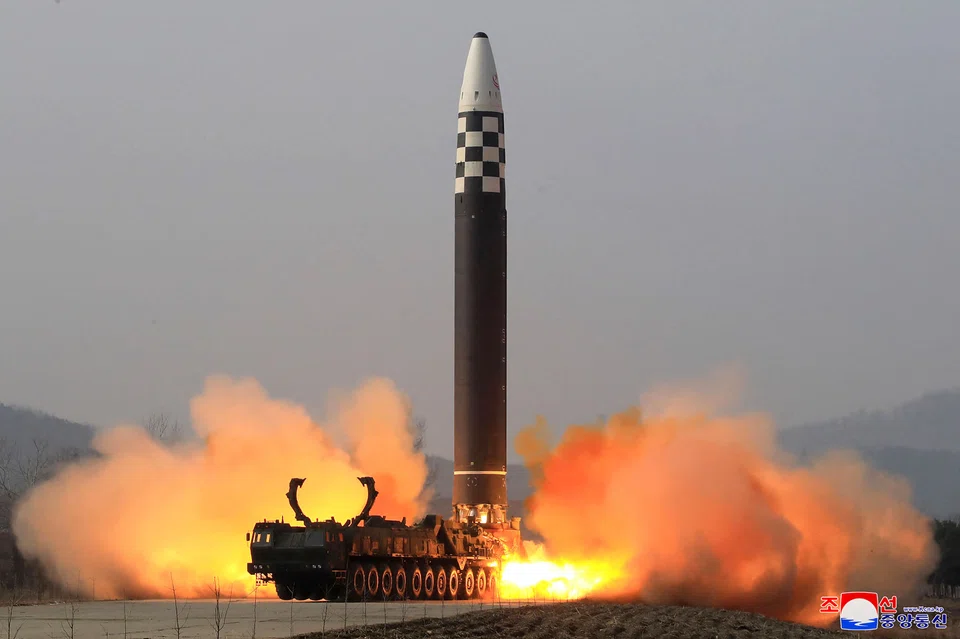
NORTH Korea’s record year of missile launches has shown the country’s willingness to pour resources into producing and deploying more weapons than ever – and sanctions have done little to hinder their development, analysts say.
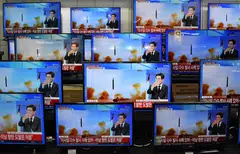
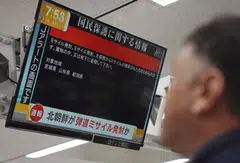
Last week, the country fired more than 80 missiles, including its latest short-range ballistic missiles (SRBMs) and a new variant of intercontinental ballistic missile (ICBM), by far its highest number of launches in such a short period.
Although North Korean weapon costs are not known, ICBMs in other countries can cost tens of millions of dollars, and SRBMs, such as Russia’s Iskander, up to US$3 million.
Analysts said Pyongyang’s willingness to fire such expensive devices into the sea suggests the impoverished country’s missile programme faces few hurdles, despite being banned by United Nations Security Council resolutions.
Mason Richey of Seoul’s Hankuk University of Foreign Studies said that North Korea must have:
- Sufficient stocks of fuel and missiles, including complex machinery such as engines and guidance systems;
- The ability to produce new weapons quickly; or
- The ability to acquire what it needs from abroad.
“Any way you look at it, it underscores how poorly sanctions have performed, and are likely to perform in the future,” he said.
Many of the missile launches in the past few weeks have been SRBMs unveiled in recent years, some of which appear to have been delivered to operational units. North Korean state media showed that older Scud-type missiles were also fired.
“The fireworks indicate that they have those missiles in numbers in stock,” said Markus Schiller, a Europe-based missile expert.
Even the latest SRBMs are several years old, which means that North Korea could have a stockpile, even if it could only build them slowly, he said. Some, such as the KN-25 SRBM, are “definitely designed for production in higher numbers”, he added.
The scope of foreign assistance to North Korea’s missile programme is hotly debated.
South Korea may uncover new clues as to how North Korean missiles are made when it analyses the debris it recovered from an SRBM that fell offshore last week.
When South Korea gathered remnants of North Korean Unha space launch rockets in 2012, it said it found components from Britain, Switzerland, the US, China, and the former Soviet Union.
Analysts and sanctions experts say North Korea continues to rely on materials and other inputs from overseas.
“Russia and China are where most of the overseas North Korean ballistic missile procurement agents are based,” said Hugh Griffiths, a former coordinator for a UN panel of experts that monitors sanctions on North Korea, and now an independent sanctions consultant.
A US government advisory said that among the technology and materials most sought by North Korea were multi-axle heavy vehicles to transport and launch ballistic missiles; steel, aluminium, and speciality materials containing titanium; carbon fibre and filament winders for making lightweight rockets; and solid propellant, including aluminium powder and ammonium perchlorate.
“To obtain these components, North Korea uses an extensive overseas network of procurement agents, including officials who operate from North Korean diplomatic missions or trade offices, as well as third-country nationals and foreign companies,” the advisory said.
North Korea wants to import some 100 tonnes of solid propellant by 2030, according to the advisory. Griffiths said other materials are small, nondescript and easy to smuggle.
“They could be shipped in some instances, using fast parcel operators like DHL,” he said.
This year, the US sanctioned what it called “a network of Russia-based individuals and entities complicit in helping North Korea procure components for its unlawful ballistic missile systems”, including a North Korean diplomat in Moscow.
It also named networks of North Koreans and companies based in Belarus and China.
In responses to the UN, Russia said it did not have any information on allegations of illicit work, while China said it had investigated the claims, and found no evidence. REUTERS
Decoding Asia newsletter: your guide to navigating Asia in a new global order. Sign up here to get Decoding Asia newsletter. Delivered to your inbox. Free.
Share with us your feedback on BT's products and services