

Not all employers need to cut wages to save jobs: Josephine Teo on NWC guideline

Janice Heng
Singapore
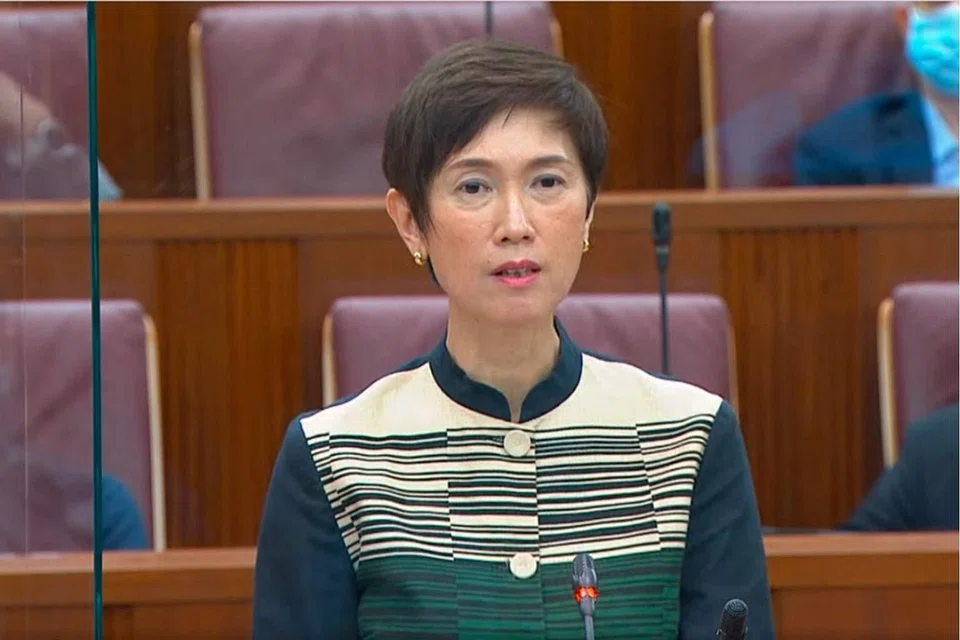
THE National Wages Council (NWC) expects wage adjustments in the next 12 months to vary across sectors and firms, as not every employer will need to cut wages to save jobs, said Manpower Minister Josephine Teo in Parliament on Tuesday.
She was responding to West Coast Member of Parliament Foo Mee Har, who had asked about wage cuts in the next 12 months, given that NWC supplementary guidelines on Oct 16 said that employers can consider temporarily cutting workers' basic pay, if necessary, to avoid retrenchments.
The supplementary guidelines encouraged employers and employees to work together to minimise retrenchments, noted Mrs Teo.
Not all employers will need to cut wages, as some have seen no reduction in demand, while others have already adjusted wage levels or non-wage costs in line with earlier guidelines issued in March.
"The NWC also expects that employers will deliberate carefully whether to proceed with a wage cut," she said. Employers know that "unwarranted wage cuts" make them less attractive to talent, she added.
The NWC has set out a roadmap for wage restoration, with employers to quickly restore wage cuts when business conditions allow, she said. The supplementary guidelines also recommend that for workers earning below S$1,400, employers should freeze rather than cut wages if this is needed to avoid retrenchment.
Ms Foo then raised the concern that the NWC guidelines give too much discretion to employers, and might send a signal which results in "more widespread wage cuts than necessary". She asked how to guard against the potential of abuse.
In reply, Mrs Teo said that the NWC has to consider the opposite risk of being too prescriptive.
She noted that the NWC had deliberated on whether to have sector-specific guidelines, prescribing a range of adjustments that would be applicable on a sectoral basis.
But "after intense deliberation", the conclusion was that even sectoral guidelines would be "too one-size-fits-all", as even firms in the same sector have been hit to different degrees.
In a separate reply to Bukit Panjang MP Liang Eng Hwa and Workers' Party MP for Sengkang Jamus Lim, Senior Minister of State for Manpower Zaqy Mohamad gave details of low-wage workers and Workfare Income Supplement recipients.
He noted that the International Labour Organization's definition of earnings includes contributions of employees to social security and pension schemes, and Singapore considers income to include Central Provident Fund (CPF) contributions and Workfare payouts.
Including Workfare and CPF contributions, about 30,000 Singaporean full-time employees receive less than S$1,300 per month, as do 22,000 self-employed persons.
They include office clerks, food and beverage workers, cleaners, and shop salespersons. Half of them are in households where the per capita household income is above S$1,300, implying that they are not the primary breadwinners, said Mr Zaqy.
From the launch of Workfare in 2007 till 2019, over S$6.8 billion has been disbursed to 890,000 workers.
In the past three years, an average of 400,000 workers receive Workfare annually. Of these, 11 per cent are aged 35 to 44, 21 per cent are aged 45 to 54, and 18 per cent are aged 55 to 59. The remainder, or just under half of all recipients, are 60 and above.
During the same period, the average Workfare payout received annually was about S$1,560, while the maximum was S$3,600.






