

'Not clear' if US will join RCEP; Commerce Secretary Ross says he is sceptical
He also says the Trans-Pacific Partnership will increase the US' trade deficit and 'was never going to happen'
 Add BT as a preferred source
Singapore
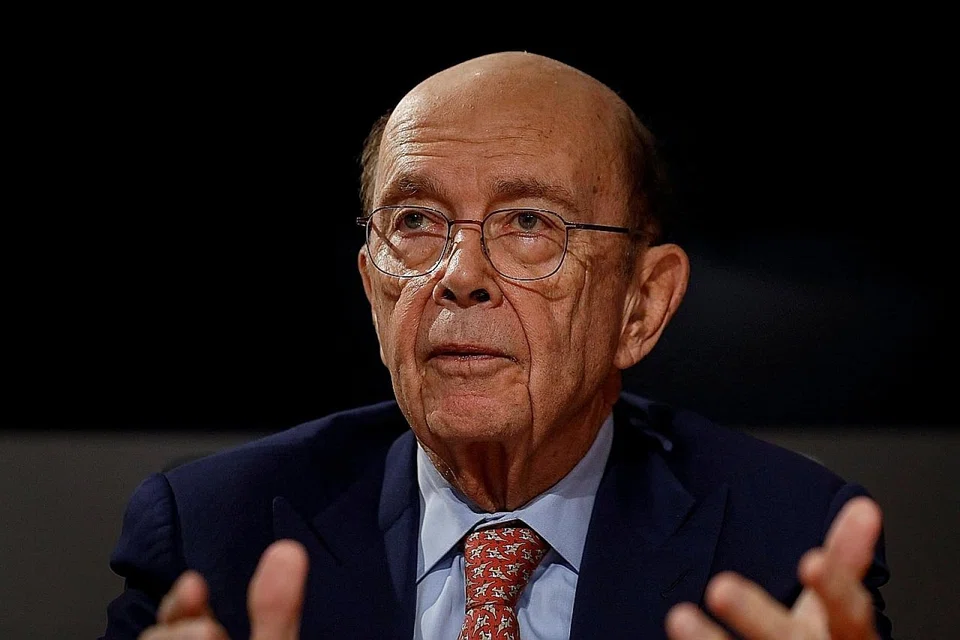
UNITED States Secretary of Commerce Wilbur Ross professed scepticism on Tuesday on the Regional Comprehensive Economic Partnership (RCEP), but acknowledged its significance and left the matter open-ended as to whether he thought the US should or would come on board.
He said the Trans-Pacific Partnership (TPP) would have increased the US' trade deficit, and "was never going to happen" regardless if Donald Trump or Hilary Clinton had won the 2016 US presidential election.
"At this point, the real issue is RCEP, not the TPP," he said. "And it is not clear whether the US would want to become part of an expanded RCEP, because we do not know what the terms and conditions relating to us would be."
Mr Ross was speaking at the 2020 Milken Institute Asia Summit, taking place in Singapore's Marina Bay Sands from Dec 8-10. About 1,100 global leaders and executives are expected to attend the hybrid online-physical event.
Delivering opening remarks for the event, Minister for Trade and Industry Chan Chun Sing said Singapore would continue working with like-minded partners to uphold an "open and inclusive global architecture".
Navigate Asia in
a new global order
Get the insights delivered to your inbox.
The need for an interconnected and interdependent world economy, he said, had become "even more pressing" during Covid-19.
Speaking shortly after Mr Chan, Mr Ross - who last month called RCEP a "low-grade treaty" in an interview with Bloomberg - spoke supportively of trade and diplomatic relations between the US and the Indo-Pacific region, but was candid on the shortcomings he perceived in the landmark trade agreement.
He said the agreement stopped short of dealing with "the most sensitive issues of state-owned enterprises, subsidies, protection of intellectual property and equal market access".
"The RCEP trade barrier reductions phase in gradually over many years and are very, very complex. For example, the China section alone is 1,600 pages.
"I might note that India is not a signatory - a major, but perhaps only temporary omission.
"The Rules of Origin section is far weaker, both arithmetically and structurally, than the similar rules of origin in the US-Mexico-Canada agreement."
Nevertheless, Mr Ross noted that the agreement was a significant one. "Trade among the participants in Asia is already a higher percentage of total trade than trade among Latin American and African nations," he said. "It is essential that we continue to encourage freer and fairer trade everywhere, while protecting our national security and our economic interests."
At a press conference last month, US President-elect Joe Biden was asked if the US would join RCEP. Mr Biden replied that while he could not discuss specifics because "there's only one president at a time", the US needed to align itself with other democracies, "so that we can set the rules of the road instead of having China and others dictate outcomes because they are the only game in town".
Mr Biden pledged to release details of his trade agenda on Jan 21, the day after his inauguration.
Decoding Asia newsletter: your guide to navigating Asia in a new global order. Sign up here to get Decoding Asia newsletter. Delivered to your inbox. Free.
Copyright SPH Media. All rights reserved.
TRENDING NOW

‘We’re not a bubble tea brand’: Chagee aims to double Asia-Pacific footprint to 600 stores by 2027

Thai and Vietnamese farmers may stop planting rice because of the Iran war. Here’s why

Middle East-linked energy supply shocks put Asean Power Grid back in focus
As more Asean states turn to Russia for fuel, will Moscow boost its influence in the region?

