NTUC on big drive to draw more PMEs to unions

Singapore
THE National Trades Union Congress (NTUC) is making a big push to speak up for more professionals, managers and executives (PMEs) in Singapore, a group that the labour movement says is under-represented as far as union membership is concerned.
A PME taskforce set up last October by the NTUC and the Singapore National Employers Federation has already reached out to some 8,000 PMEs, who have indicated that their main concerns are job security and a lack of employment opportunities.
The taskforce will release its findings and recommendations on enhancing the support for PMEs later this year.
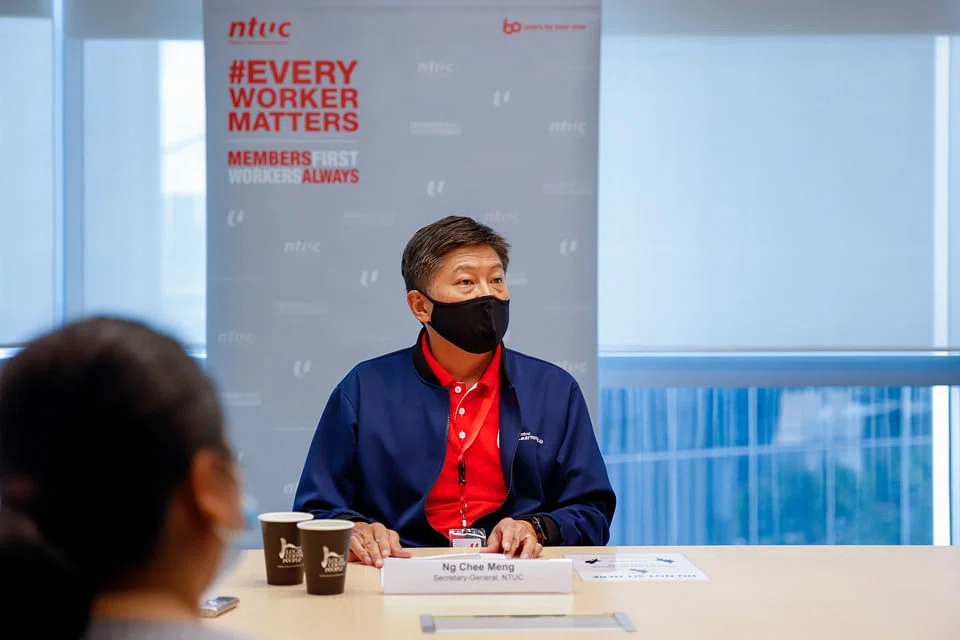
Speaking to the media on Thursday, labour chief Ng Chee Meng said these concerns seem "more dire" for the mature PMEs - those aged 40 and above - as they cite their advanced age as the key reason or main disadvantage for their current plight.
Although PMEs currently form the majority - about six in 10 - of Singapore's workforce, only about 10 to 15 per cent of them are union members.
Based on a Milieu survey conducted in March this year involving 1,000 PMEs (75 per cent of whom were non-union members), 88 per cent of them said they perceived the role of trade unions as being important or becoming more important.
Nearly nine in 10 said they wanted an organisation to speak up for them and the problems they faced.
However, some 58 per cent were not familiar with what NTUC did; 43.2 per cent did not think they were able to or were unsure if they could join unions.
"There is so much more that NTUC hopes and wants to do for our PMEs, especially the mature ones, in terms of speaking up for them and helping them in their employment and employability. We need to act fast, and act now," Mr Ng said.
One way in which the labour movement could help PMEs is to have the unions work closer with human-resource practitioners to improve HR standards, to ensure fair employment and greater job security.
One idea that surfaced during the task force's discussions with PMEs is to "ring-fence" certain jobs, such as in HR, to let local PMEs have the first bite, said Mr Ng.
The labour movement is "looking seriously" into how to refine this suggestion, and work towards a way to protect Singaporean PME jobs "where we have the skills". This, however, needs to be done carefully, said Mr Ng.
"We have to be very selective and careful to make sure that we do not deprive ourselves of the best talent that can bring value to Singapore, but at the same time, to take care of our local teams. That balance is a difficult one, but we need to try to do it," he said.
Apart from PMEs, the NTUC is also stepping up its support for lower-wage workers, a group that it described as its "top priority". It will also do more to help those in the gig economy.
Mr Ng, together with NTUC president Mary Liew, wrote in their May Day Message on Thursday that the growing gig economy has made the labour movement pay greater attention to the needs of freelancers and self-employed people, particularly in the inadequacy of training opportunities as well as savings for healthcare and retirement.
While it is uncommon for a labour movement to help this group of workers, NTUC has stepped in to represent them, provide them with greater work-related protection and career progression, and look after their needs, said Mr Ng and Ms Liew.
The NTUC has worked with the government to provide these workers with financial and training assistance, via initiatives like the Self-Employed Person Income Relief Scheme and the NTUC Training Fund, to tide them over the pandemic.
In addition to safeguarding workers in unionised firms, Mr Ng and Ms Liew also stressed the need to protect workers in small and medium-sized enterprises (SMEs). The NTUC currently has more than 300 SMEs and associations in its fold.
"We will intensify our efforts to reach out to more so that their workers have greater access to employment and employability assistance, and eventually benefit from better wages, welfare and work prospects," they said.
Giving an update on NTUC's ongoing membership drive, Mr Ng said that the labour movement will likely reach the one million mark later this year, with plans to increase the base further to 1.5 million by 2030.