

Oil rises as Saudi Arabia extends cuts again
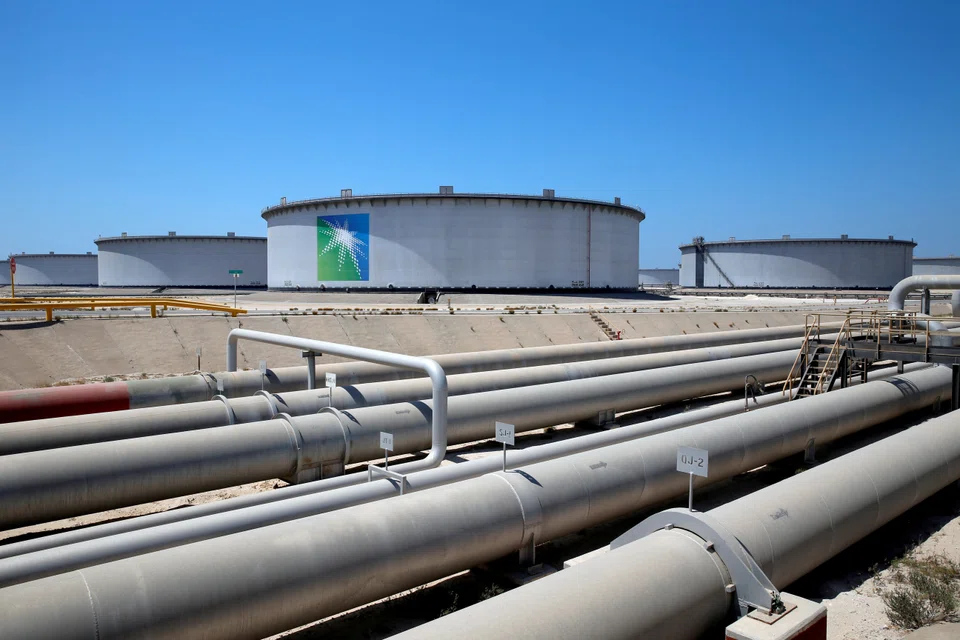
SAUDI Arabia announced on Thursday (Aug 3) it is extending a voluntary oil production cut of one million barrels per day for another month, keeping up its campaign to prop up prices.
Brent Crude futures were up 42 US cents to US$83.62 a barrel by 1328 GMT, while US West Texas Intermediate crude was 47 US cents higher at US$79.96.
“Saudi Arabia will extend the voluntary cut of one million barrels per day... for another month to include the month of September,” the energy ministry said in a statement.
The cut, which first took effect for July, could be further prolonged or even deepened, the energy ministry added.
The move leaves daily production by the world’s biggest crude exporter at approximately nine million bpd.
The “voluntary cut comes to reinforce the precautionary efforts made by Opec Plus countries with the aim of supporting the stability and balance of oil markets,” the energy ministry said.
Announcing the cut following a June meeting of the 23-nation Opec+ alliance, which also includes Russia, Saudi Energy Minister Prince Abdulaziz Salman noted that it was potentially “extendable”.
It followed a decision in April by several Opec+ members to slash production voluntarily by more than one million bpd – a surprise move that briefly buttressed prices but failed to bring about lasting recovery.
Oil producers are grappling with falling prices and high market volatility, reflecting continued fallout from the Russian invasion of Ukraine and China’s faltering economic recovery.
Saudi Arabia is counting on high oil prices to fund an ambitious reform agenda that could shift its economy away from fossil fuels.
Analysts say the kingdom needs oil to be priced at around US$80 per barrel to balance its budget.
There are signs recent supply cuts are starting to have the desired effect, with oil prices “strengthening”, the Riyadh-based firm Jadwa Investment said in a report published on Tuesday.
“Brent was trading at around US$85 (per barrel) in late July, up by some US$10 (per barrel) from the beginning of the month,” Jadwa said.
“Sour crudes, which dominate Saudi Arabia’s output, are especially in vogue. Meanwhile, there are hopes that US demand will be stronger than expected, with many anticipating a ‘soft landing’ for the US economy rather than a recession.”
Yet Jamie Ingram, senior editor at the Middle East Economic Survey (MEES), told AFP that Riyadh “will want to see an extended period of higher prices before bringing volumes back on to the market”.
He added: “Concerns over the Chinese economy are also hanging over oil markets.”
Oil giant Saudi Aramco, the jewel of the kingdom’s economy, said it recorded profits totalling US$161.1 billion last year, allowing Riyadh to notch up its first annual budget surplus in nearly a decade.
But with the spiking oil prices that resulted from Russia’s invasion of Ukraine last year now a thing of the past, Saudi oil activities contracted 4.2 per cent year-on-year in the second quarter, according to preliminary data published on Monday by the kingdom’s General Authority for Statistics.
Non-oil activities grew by 5.5 per cent during the same period, resulting in overall GDP growth of 1.1 per cent, the authority said. AFP, REUTERS
Decoding Asia newsletter: your guide to navigating Asia in a new global order. Sign up here to get Decoding Asia newsletter. Delivered to your inbox. Free.
Share with us your feedback on BT's products and services
TRENDING NOW
World’s largest offshore wind platform by Seatrium consortium on track to be completed by 2028

Is stamp collecting enjoying an analogue revival or are its best days over?

GovTech retrenches another 38 staff in second round of layoffs

MBS adjusted property Ebitda falls 20.6% in Q3 with fewer high-roller visits, weaker hold

