

Pakistan parliament elects Sharif PM; Khan MPs quit en masse
 Add BT as a preferred source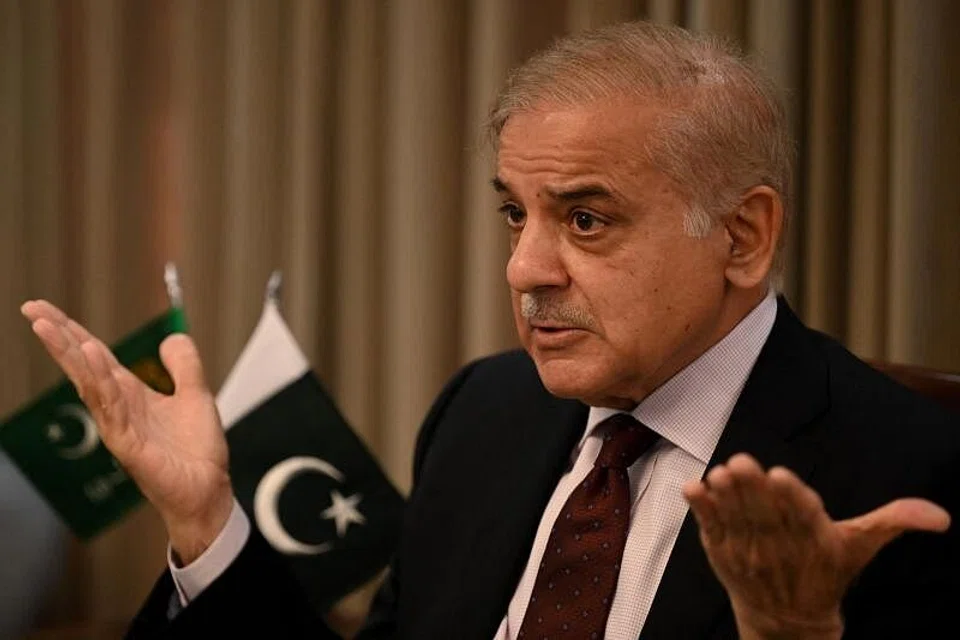
DeeperDive is a beta AI feature. Refer to full articles for the facts.
[ISLAMABAD] Pakistan's Parliament chose a more Western-friendly politician, Shehbaz Sharif, as prime minister on Monday (Apr 11), completing the ousting of predecessor Imran Khan in a political crisis that has sparked street protests and a mass resignation of lawmakers.
His election brings to a close a week-long constitutional confrontation that reached its climax on Sunday when Khan lost a no-confidence vote, although the nuclear-armed nation is likely to remain prone to political and economic turbulence.
Sharif, 70, who has a reputation domestically as an effective administrator more than as a politician, is the younger brother of three-time prime minister Nawaz Sharif.
Analysts say Shehbaz, unlike Nawaz, enjoys amicable relations with Pakistan's military, which traditionally controls foreign and defence policy in the country of 220 million people.
After the vote, Sharif vowed to tackle an economic malaise that has sent the rupee to an all-time low; and the central bank last week implement the biggest hike in interest rates in decades.
"If we have to save the sinking boat, what we all need is hard work, and unity, unity and unity," he said in his maiden speech to Parliament.
Navigate Asia in
a new global order
Get the insights delivered to your inbox.
"We are beginning a new era of development today." Just minutes before the vote, legislators from Khan's party resigned en masse from the lower house of Parliament in protest at the expected formation of a government by his political foes.
"We are announcing we are all resigning," Shah Mahmood Qureshi, former foreign minister and vice president of Khan's party, told the assembly. The mass resignations will require fresh by-elections in well over 100 seats.
Khan's Pakistan Tehreek-e-Insaf (PTI) party had submitted papers nominating Qureshi as its candidate for prime minister.
The younger Sharif emerged as the leader of a united opposition to topple Khan, a former cricket star who has claimed that the United States was behind his downfall, which Washington has denied.
Sharif said in an interview last week good relations with the United States were critical for Pakistan for better or for worse, in stark contrast to Khan's prickly ties to Washington.
In his maiden speech, he also spoke of improving relations with neighbours India and China.
"We want good relations with India, but a durable peace can't be possible without Kashmir's solution," he said, referring to the contested Himalayan territory the countries have fought several wars over.
He said his government will speed up construction of the US$60 billion China-Pakistan Economic Corridor (CPEC) - a part of Beijing's Belt and Road Initiative.
No elected prime minister has completed a full term in the nuclear-armed nation since it won independence from colonial power Great Britain in 1947, though Khan is the first to be removed by a no-confidence vote.
The military has ruled the country of 220 million people for almost half its nearly 75-year history. It viewed Khan and his conservative agenda favourably when he won election in 2018.
But that support waned after a falling-out over the appointment of military intelligence chief and economic troubles that last week led to the largest interest rate rise in decades.
Khan remained defiant following his defeat in parliament. Thousands of his supporters in several cities held protests against his ousting that went on until Monday's early hours.
Ousted in a no-confidence vote by the same assembly in the early hours of Sunday, he told reporters on Monday on the prospect of Shehbaz Sharif being elected: "There can't be any bigger insult to this country."
REUTERS
Decoding Asia newsletter: your guide to navigating Asia in a new global order. Sign up here to get Decoding Asia newsletter. Delivered to your inbox. Free.
Copyright SPH Media. All rights reserved.
TRENDING NOW
Singaporeans can now buy record amount of yen per Singdollar

Beijing’s calculated silence on the Iran war

China pips the US if Asean is forced to choose, but analysts warn against reading it like a sports result

StarHub hands Ensign InfoSecurity control back to Temasek in S$115 million deal, books S$200 million gain

