

Palm oil under near-term pressure as rising stocks outweigh El Nino fears
Malaysian officials expect stocks to rise above August’s eight-month high of 2.82 million metric tonnes
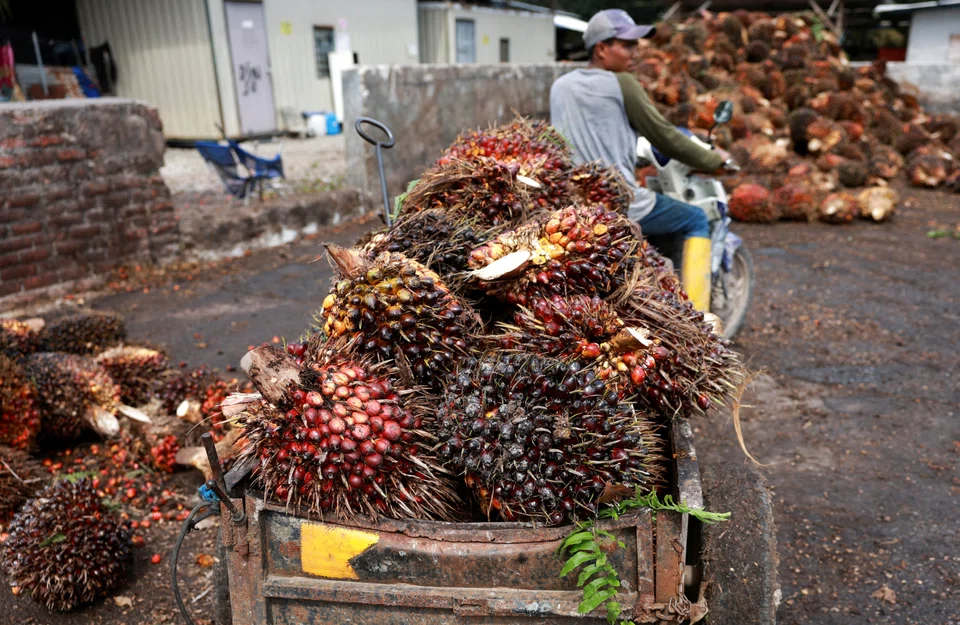
[KUALA LUMPUR] Palm oil prices are poised to remain under pressure, as rising inventories in Malaysia and sluggish buying by the world’s biggest importer India weigh on the market and the impact of El Nino has yet to be felt, industry officials told Reuters.
Malaysia, the world’s second-biggest producer, has been receiving below-normal rainfall due to El Nino, but palm oil output rose month on month in September.
The officials expect stocks to rise above an eight-month high of 2.82 million metric tonnes recorded in August.
“Malaysian stocks are likely to rise above three million metric tonnes by the end of this month, putting pressure on prices,” said Tajgir Rahman, general manager, trading and procurement at International Foodstuffs, known as IFFCO.
Stock level could spur selling
Malaysian monthly inventories have exceeded the three-million-tonne mark only five times to date.
The last time stocks did so in December 2025, Malaysian futures fell to around 4,000 ringgit (US$980) a tonne, lower than the current price of 4,780 ringgit.
Inventories have risen because of slower exports and higher production in September, one of the peak production months, said Roslin Azmy Hassan, CEO of the Malaysian Palm Oil Association.
Cargo surveyor data showed that Malaysia’s palm oil exports in the first 20 days of this month fell by as much as a quarter from the same period a month earlier.
The officials said stocks would start easing from around October, as production declines.


“How quickly stocks come down will depend on demand from key markets, particularly India and China,” Roslin said.
Palm oil imports by India, the world’s biggest vegetable oil importer, are likely to decline from October after the country bought aggressively in August and September, said Sandeep Bajoria, Sunvin Group CEO, a vegetable oil brokerage.
Palm oil’s discount to rival soy oil and sunflower oil has narrowed, prompting Indian buyers to trim palm oil purchases and favour other oils, said a New Delhi-based dealer with a global trade house.
This year’s El Nino is exceptionally strong, meteorologists have said.
The impact of the resultant drier weather in Malaysia, however, has yet to be felt, as palm yields typically respond to weather conditions with a lag.
The impact could be clear from mid-2027.
Rahman of IFFCO predicted the near-term downside risks were limited, and prices would rise as soon as production declines are apparent and exports rise. REUTERS
Decoding Asia newsletter: your guide to navigating Asia in a new global order. Sign up here to get Decoding Asia newsletter. Delivered to your inbox. Free.
Share with us your feedback on BT's products and services
TRENDING NOW

Once staunchly pro-China, Malaysian Chinese businesses are now distancing themselves from Beijing

Looking beyond looming CEO succession, should UOB potentially pursue a transformative merger?

Could stablecoins be the future of money?

Grab CEO’s wife Chloe Tong on life with Anthony Tan and finding her purpose

