PBOC’s rising focus on overnight rate spurs talk of policy shift
This change towards meticulous liquidity management helps the central bank align more with the US Federal Reserve
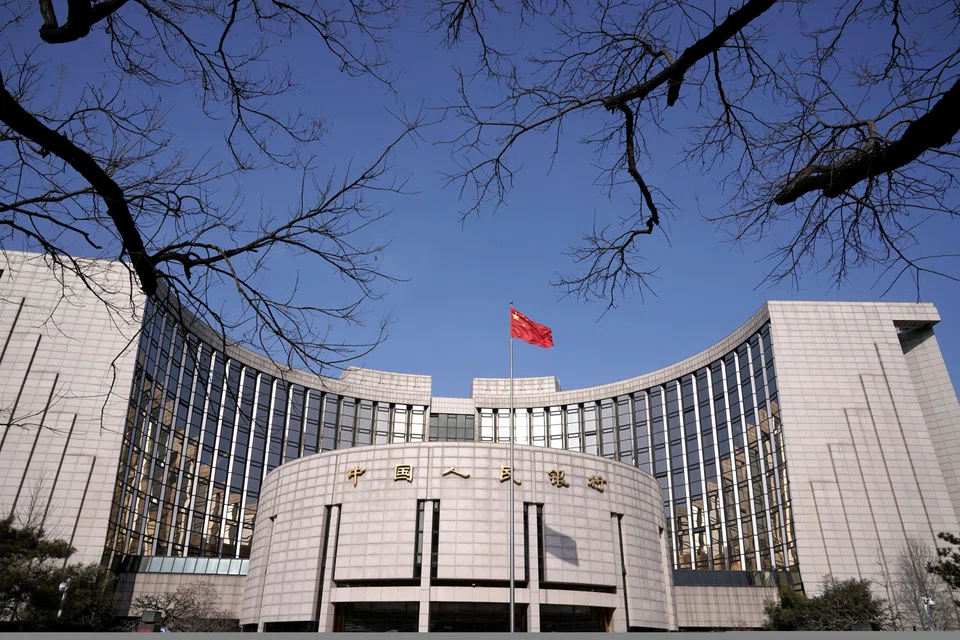
[BEIJING] The Chinese central bank’s heightened focus on the overnight money market rate is fuelling speculation that it may eventually move towards adopting this tenor as its primary policy target.
The People’s Bank of China (PBOC) re-ordered its monthly report published on Wednesday (Feb 11), by moving money market conditions to the first section before bonds, a structure unseen in at least two decades.
It also added an analysis of the interest rate levels of pledged bond repurchases, highlighting the comparison of the overnight repo cost to its seven-day reverse repo rate.
That echoed the PBOC’s pledge in another quarterly report released on Tuesday, that it will “guide short-term money market rates to trend more closely around the policy rate in a smooth manner”.
The new focus aligns with an overhaul that began in 2024, when the PBOC pivoted towards the seven-day reverse repo as its primary policy lever.
Analysts are now debating if this was a transitional step towards an even shorter tenor regime, where the overnight rate could eventually replace the seven-day rate as the definitive anchor for Chinese monetary policy.
Ding Shuang, economist at Standard Chartered, said: “I would not rule out the possibility to eventually shift to an overnight reverse repo rate as the policy rate.
“Keeping market rates closer to the policy rate seems necessary to move towards a narrower corridor, and vice versa.”
The overnight interbank repo rate was within 10 basis points of the policy rate in 56 per cent of the trading sessions last year, based on the PBOC report.



The volume-weighted average rate of all the overnight pledged bond repurchases among depository institutions was 1.46 per cent in 2025, 19 basis points lower than the year before, said the report.
The policy rate was trimmed by only 10 basis points over that period, indicating that liquidity management has helped to keep borrowing costs low.
With markets already functioning efficiently, it is unclear if the PBOC will once again revamp its monetary policy instruments. A near-term implication of its focus on money market tools could just be to reduce market volatility, and improve policy transmission.
“Monetary support this year may mainly take the form of keeping liquidity sufficient by reserve ratio cuts, re-lending and regular purchases of government bonds,” Ding added. StanChart forecasts the PBOC to deliver only one rate cut of 10 basis points this year.
This shift towards meticulous liquidity management, with short-term rates rather than blunt rate adjustments, is also helping the PBOC align more with the operational style of the US Federal Reserve.
Sun Binbin, analyst at Caitong Securities, said that theoretically once the overnight repo becomes a key target of rate management, the PBOC could consider conducting reverse repo of the overnight tenor in the future. This is to form a new overnight policy rate, like most major central banks abroad.
Analysts led by Wen Bin at China Minsheng Banking’s research unit said that the monetary policy implementation can potentially be more effective, if the PBOC targets the overnight rate instead of the seven-day one.
They added that it is because the trading size of overnight repo deals is significant. BLOOMBERG
Decoding Asia newsletter: your guide to navigating Asia in a new global order. Sign up here to get Decoding Asia newsletter. Delivered to your inbox. Free.
Share with us your feedback on BT's products and services