

Philippine nickel-mining group rejects proposed tax on ore exports
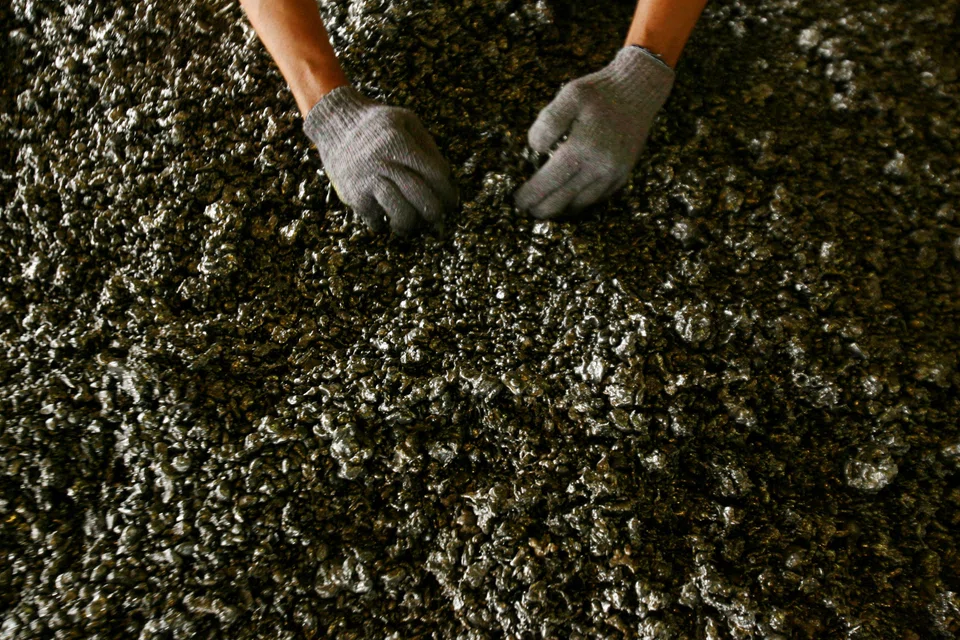
THE head of the Philippine nickel-mining industry on Tuesday (Jan 31) warned that the government’s plan to impose a tax of up to 10 per cent on nickel-ore exports could force local producers to close up shop.
“The initial proposal in the House of Representatives was 10 per cent. That will kill the industry,” said Dante Bravo, president of the Philippine Nickel Industry Association.
“We need to be heard, so the government will understand our side,” he added. He is also the president of mining company Global Ferronickel Holdings.
The government of the world’s second-biggest nickel-ore supplier is looking at taxing exports of the material to encourage local miners to invest in local processing, instead of just selling raw ore. Nickel ore is used in making stainless steel and batteries for electric vehicles.
Environment and natural resources secretary Antonia Yulo Loyzaga, whose department also oversees the mining sector, has said that “there’s a range of actions, including a progressive look at taxing exports” of raw nickel.
The government intends to follow in the footsteps of Indonesia, where a ban on nickel-ore exports has attracted massive investments into processing plants. Indonesia wants to replicate the policy for other metals, including tin.
But comparing the Philippines to Indonesia is flawed because the latter has more reserves to support local mineral-processing investments, Bravo said.
The Philippines has 34 operating nickel mines and exports most of its nickel ore to China, and some to Japan. But it has only two nickel-processing plants, both of which are partly owned by the country’s biggest ore producer, Nickel Asia.
Nickel Asia is partly owned by Sumitomo Metal Mining.

China, the world’s top nickel consumer, imported 33.23 million tonnes of nickel ore and concentrate from the Philippines last year, Chinese customs data showed. That accounted for 83 per cent of its total imports of 40.02 million tonnes.
“Given the lion’s share of ore supply from the Philippines, an export tax would result in higher costs for producers in China,” a Chinese trader said. “But it would take a while for the tax to come into effect, if it ever gets approved.”
The proposed tax on mineral-ore exports is part of a larger plan to establish a new fiscal regime for the industry to boost government revenue.
A pending legislative bill proposes royalty payments of 3 per cent on the gross output of large-scale miners, a margin-based windfall tax, on top of other taxes. REUTERS
Decoding Asia newsletter: your guide to navigating Asia in a new global order. Sign up here to get Decoding Asia newsletter. Delivered to your inbox. Free.
Share with us your feedback on BT's products and services
TRENDING NOW

Grab CEO’s wife Chloe Tong on life with Anthony Tan and finding her purpose
8 public officers referred to police over property buys near unannounced MRT stations: Chan Chun Sing

DBS tops trades in smaller board lots on debut of revised SGX framework

Deal between tycoon friends sparks scrutiny of Philippine power sector

