

Philippine presidential polls: Marcos’ son heads for landslide win
 Add BT as a preferred source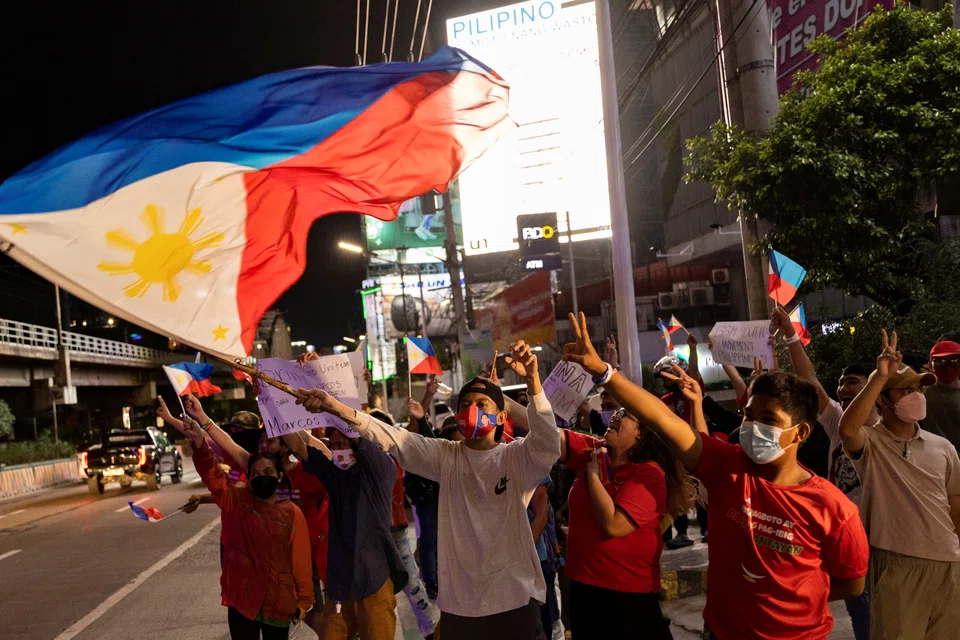
DeeperDive is a beta AI feature. Refer to full articles for the facts.
FERDINAND Marcos Jr is poised for a landslide victory in the Philippines presidential election, bringing his family back to power in Manila 36 years after his dictator father fled the country.
With 76 per cent of the election returns counted, the former senator won 24.6 million votes, or 59.4 per cent of the total votes cast for president. His closest rival, Vice-President Leni Robredo got 11.7 million votes, or 28.3 per cent.
“The counting is not over. A lot of people are saying the fight is over, but it’s not. Let’s wait until the 100 per cent of votes have been counted and the victory is very clear before we celebrate,” Marcos Jr said in a televised speech.
While both major candidates pledged to revive the economy and boost employment, the 64-year-old drew on the support of voters comfortable with the strong-man rule of outgoing President Rodrigo Duterte. His daughter, Davao City Mayor Sara Duterte, joined up as Marcos Jr’s running mate and was leading her closest rival by an even bigger margin.
Marcos Jr’s victory would bring a measure of continuity to the South-east Asian nation of 110 million people, along with big questions about how he will rule. Although he has pledged to carry on with Duterte’s policies, it is uncertain how he’ll handle a decades-long investigation into his family’s wealth as well as ties with the US and China.
Dean of the Ateneo School of Government Ronald Mendoza said a strong mandate means the commission tasked to go after the Marcos family wealth could get scrapped. “It could also mean further populist policies,” he added.
Navigate Asia in
a new global order
Get the insights delivered to your inbox.
The iShares MSCI Philippines ETF dropped 1.7 per cent in US hours. Markets were closed on Monday for the elections.
Marcos Jr is poised to inherit an economy forecast to grow at one of the fastest rates in South-east Asia this year, after the pandemic reduced household incomes as tourists stayed away and remittances from foreign labour dried up. Inflation is also surging at one of the fastest paces in Asia as food and fuel prices soar in the wake of Russia’s invasion of Ukraine.
“The markets will be steady, but would be waiting to see who will be the respective appointees in the economic cluster of government,” said Ruben Carlo Asuncion, chief economist in Union Bank of the Philippines.

“These people should be highly skilled, independent thinkers, and largely respected by their peers. If this happens, I think the huge mandate will be put to very good use,” Asuncion added.
Marcos Jr told CNN Philippines in a pre-election interview that several personalities are “auditioning” to become part of the crucial economic team. “I take note of everybody, there are recommendations. You just have to trust your instincts. It’s necessary to have some working experience with that person,” he said.
A Bloomberg survey in March found that Philippine investors were lukewarm toward a Marcos Jr presidency and preferred Robredo, who had a similar economic strategy but emphasised good governance. In the final weeks of the campaign, Robredo drew hundreds of thousands of supporters to hear her speak, suggesting she had some momentum heading into election day.
But polls consistently showed Marcos Jr with a double-digit lead, thanks in part to alliances with most governors and influential local clans around the country. He also built a social media presence that presented a rosy picture of his father’s dictatorship to the youth, who make up a third of the eligible voters and were not born when the elder Marcos was in power.
Marcos Jr faces legal hurdles in the form of disqualification cases, which all cite his conviction nearly 30 years ago for failing to file tax returns and are likely to reach the top court after the elections. The Commission of Elections will hear four petitions a day after Monday’s elections and Marcos Jr’s camp is confident these cases will be dismissed.
The new president will be sworn in on June 30 for a six-year term.
Entering politics in the 1980s during his father’s rule, Marcos Jr became vice-governor of his home province north of Manila at the age of 23. He later on became the governor, and won a seat in Congress a year after their family returned from exile in the US in 1991.
He was criticised for being absent from Ilocos Norte, but he and subsequent Marcos family governors relied on capable administrators to run the province, which is among the least poor regions in the Philippines.
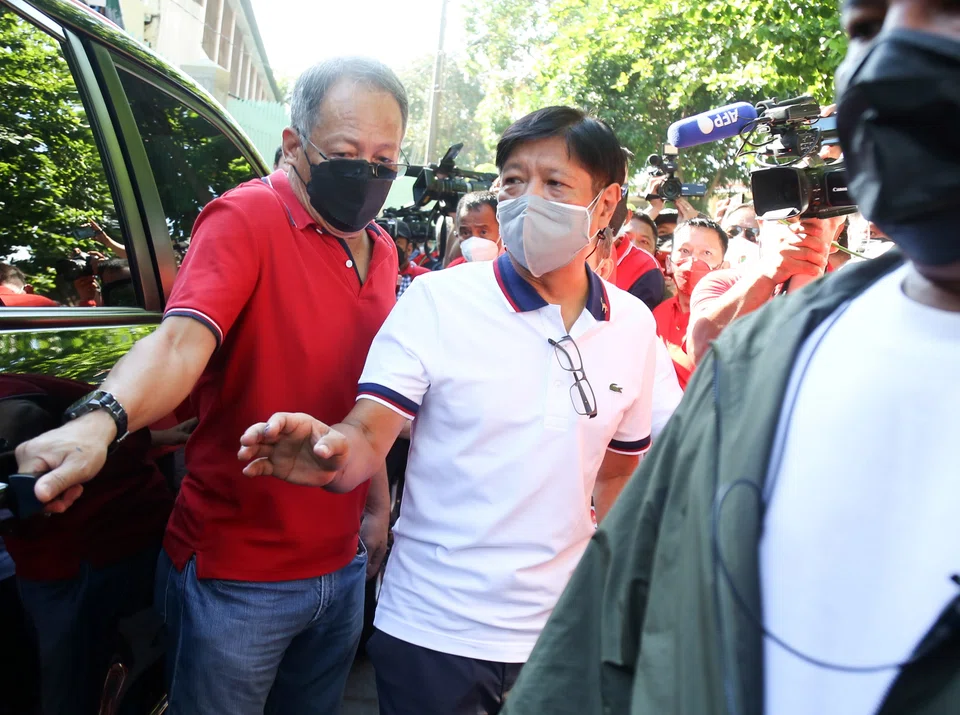
Marcos, 64, was reported to be in the capital region late on Monday, monitoring the transmission of the ballots. Earlier on Monday, he cast his ballot in his home province of Ilocos Norte, surrounded by bodyguards and accompanied by family members, including his son, who is running for congress.
Nobel Laureate Maria Ressa warned that a win for Ferdinand Marcos Jr in the Philippine presidential poll will show the continued potency of misinformation campaigns that could have implications in the US and Brazilian elections this year.
“This is a global information ecosystem. Like in 2016, we were the first domino to fall, followed by Brexit, Trump, Bolsonaro - well here you go again. Brazil has elections in October, the US has elections in November. So if we fall, stay tuned, it’s coming for you,” she said.
Over 60 per cent of the country’s 110 million people are eligible to vote for 18,000 positions, from president to town councillor. Marcos is likely to have been buoyed by the support of many younger Filipinos born after the 1986 revolution, having launched a massive social media offensive in an upbeat campaign that has carried undertones of historical revisionism.
His supporters have dismissed narratives of plunder, cronyism and brutality under the martial law of his late father as lies peddled by opponents, presenting what his critics say is a different version of history. The Marcos camp has denied running misinformation campaigns.
Despite its fall from grace, the Marcos family returned from exile in the 1990s and has since been a powerful force in politics, retaining its influence with vast wealth and far-reaching connections. Marcos has steered clear of debates and has campaigned on a message of optimism and unity.
BLOOMBERG, REUTERS
Decoding Asia newsletter: your guide to navigating Asia in a new global order. Sign up here to get Decoding Asia newsletter. Delivered to your inbox. Free.
Share with us your feedback on BT's products and services
TRENDING NOW
Singaporeans can now buy record amount of yen per Singdollar

Beijing’s calculated silence on the Iran war

China pips the US if Asean is forced to choose, but analysts warn against reading it like a sports result

StarHub hands Ensign InfoSecurity control back to Temasek in S$115 million deal, books S$200 million gain

