Philippines grants US greater access to bases amid China concerns
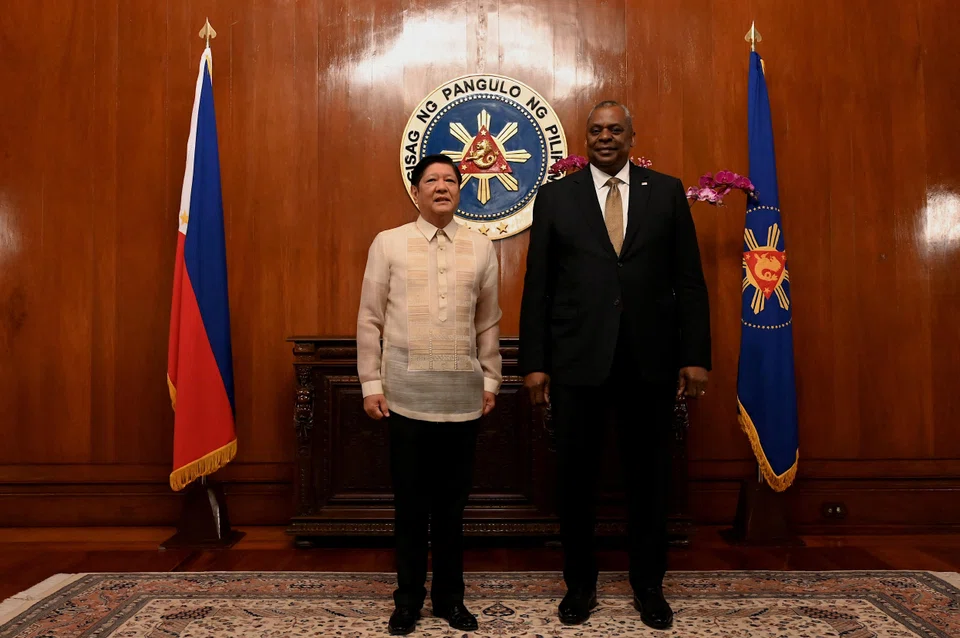
THE Philippines has granted the United States expanded access to its military bases, the defence chiefs of both countries said on Thursday (Feb 2), amid mounting concern over China’s increasing assertiveness in the disputed South China Sea and tensions over Taiwan.
Washington would be given access to four more locations under the 2014 Enhanced Defence Cooperation Agreement (EDCA), US Defence Secretary Lloyd Austin and Philippine Defence Secretary Carlito Galvez said in a joint news conference.
Austin was in the Philippines for talks, as Washington seeks to extend its security options in the country as part of its efforts to deter moves by China against self-ruled Taiwan. He described Manila’s decision as a “big deal”, as he and his counterpart reaffirmed their commitment to bolstering their countries’ alliance.
“Our alliance makes both of our democracies more secure, and helps to uphold a free and open Indo-Pacific,” said Austin, whose visit follows US Vice-President Kamala Harris’ trip to the Philippines in November last year, which included a stop at Palawan in the South China Sea.
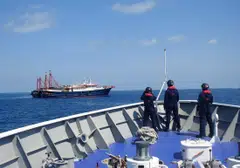
“We discussed concrete actions to address destabilising activities in the waters surrounding the Philippines, including the West Philippine Sea, and we remain committed to strengthening our mutual capacities to resist armed attack,” he said.
“That’s just part of our efforts to modernise our alliance. And these efforts are especially important as the People’s Republic of China continues to advance its illegitimate claims in the West Philippine Sea.”
The additional locations under the EDCA raise the number of military bases accessible to the US to nine, and Washington has announced that it is allocating more than US$82 million towards infrastructure investments at the existing sites.
The EDCA allows US access to Philippine military bases for joint training, pre-positioning of equipment, and the building of facilities such as runways, fuel storage and military housing. However, it does not grant the US a permanent presence.
Austin and Galvez did not say where the new locations would be. The former Philippine military chief had said that the US had requested access to bases on the northern land mass of Luzon, the part of the Philippines closest to Taiwan, and on the island of Palawan, facing the disputed Spratly Islands in the South China Sea.
There was no immediate comment from the Chinese embassy in Manila.
Outside the military headquarters, dozens of protesters opposed to the US maintaining a military presence in the country chanted anti-US slogans, and called for the EDCA to be scrapped.
Before meeting his counterpart, Austin met with Philippine President Ferdinand Marcos Jr at the presidential palace on Thursday, where he assured the South-east Asian leader that “we stand ready to help you in any way we can”.
Ties between the US and the Philippines, its former colony, were soured by predecessor Rodrigo Duterte’s overtures towards China, his famous anti-US rhetoric, and threats to downgrade their military ties.
But Marcos has met with US President Joe Biden twice since his landslide victory in the elections last year, and has reiterated that he cannot see a future for his country without its long-time ally.
“I have always said – it seems to me, that the future of the Philippines, and for that matter the Asia-Pacific, will always have to involve the US,” he told Austin. REUTERS
Decoding Asia newsletter: your guide to navigating Asia in a new global order. Sign up here to get Decoding Asia newsletter. Delivered to your inbox. Free.
Share with us your feedback on BT's products and services