Philippines signals more rate hikes, FX moves to defend peso
 Add BT as a preferred source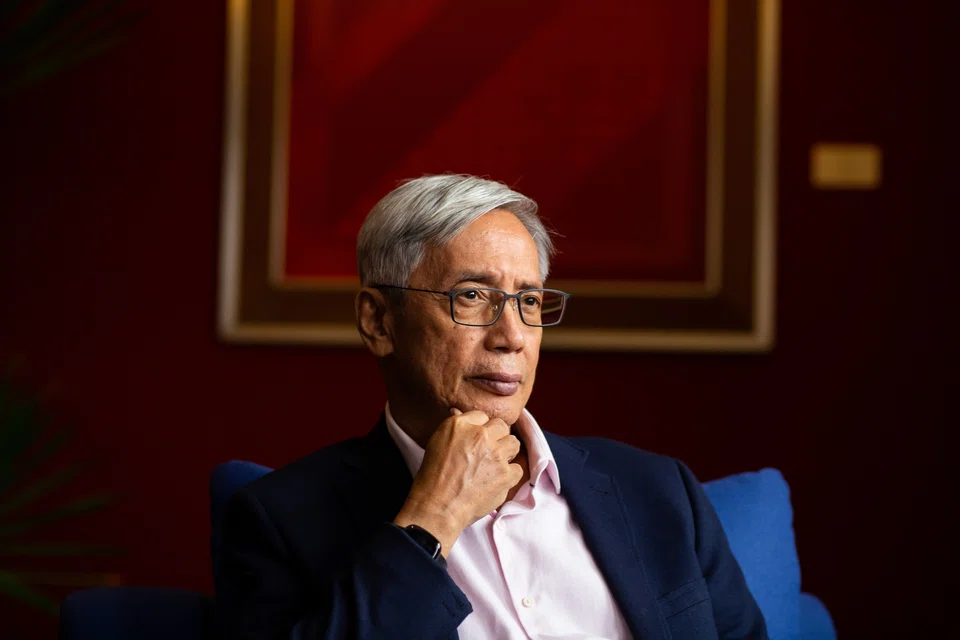
THE Philippine central bank signalled it will resort to more interest-rate hikes depending on the Federal Reserve’s action, while also considering proactive market interventions to curb currency losses.
“Strong dollar is requiring us to have bigger policy rate increases,” governor Felipe Medalla said in an interview from New York with Bloomberg Television’s Shery Ahn and David Ingles after delivering a half-point increase. “Clearly the Fed’s policies have affected our choices. We don’t want to match the Fed, at the same time we have to respond.”
The Philippines was one of 3 South-east Asian nations to raise borrowing costs Thursday (Sep 22), with cumulative hikes by Bangko Sentral ng Pilipinas (BSP) touching 225 basis points so far this year.
Besides the policy rate, Medalla said the central bank has the option of actively intervening to support the peso, which fell to a record low this week amid an exceptionally strong US dollar. The Fed’s hawkish rhetoric on controlling inflation has piled pressure on Asian currencies, including the Japanese yen, while economies facing a current-account deficit are particularly vulnerable to a sell-off.
“We have been quite active this week,” Medalla said on the BSP’s intervention in the foreign exchange market, adding that the moves will possibly be even more active in the coming days.
“We clearly are intervening in the forex market. One approach is to intervene more strongly because the volatility is actually now much higher,” the governor said. The other approach is to reduce local currency liquidity by borrowing more from the central bank’s weekly auctions so there will be less peso to chase dollars, he said.
The peso rose as much as 0.3 per cent in Friday trading to 58.30 per US dollar.
Medalla sees inflation returning within its 2-4 per cent goal next year, saying it will be possibly closer to 3 per cent than 4 per cent.
While elevated price growth is weighing on consumption, the economy is still seen as among Asia’s bright spots, suggesting space to further tighten monetary policy.
Philippine economic managers have been joining President Ferdinand Marcos Jr in international trips this month, in part to woo investors. Earlier this week, Marcos touted the Philippines as “vibrant economy”, as his government gears for an “A” credit rating in the medium-term. BLOOMBERG
Decoding Asia newsletter: your guide to navigating Asia in a new global order. Sign up here to get Decoding Asia newsletter. Delivered to your inbox. Free.
Share with us your feedback on BT's products and services