

PM Sanae Takaichi’s win primes Japan stocks for gains, damps yen and bonds
The benchmark Topix index closed at a record high on Feb 6
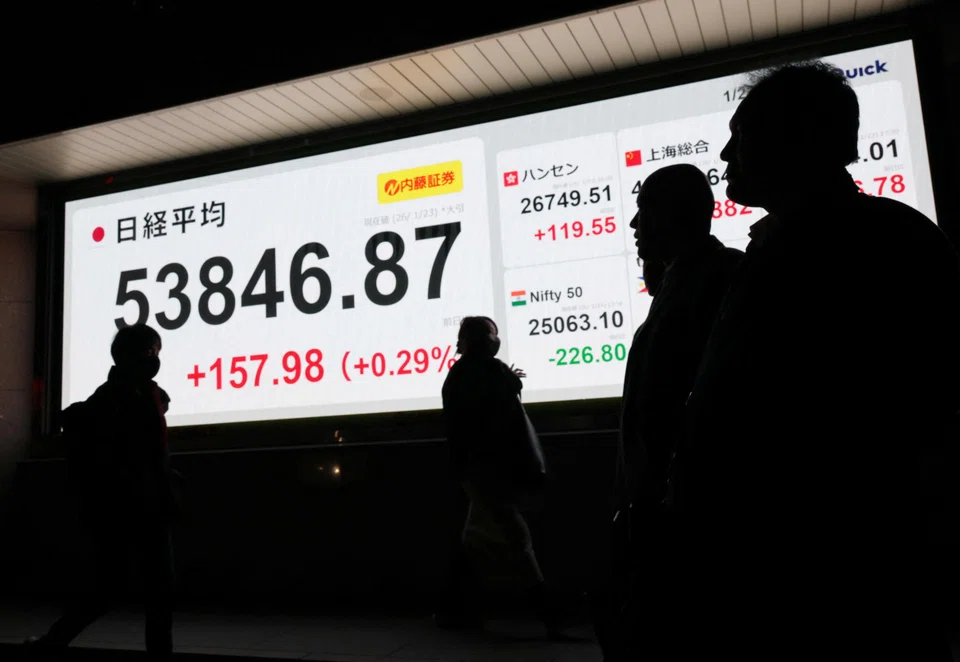
JAPAN’S stock market is poised to extend its rally while the nation’s currency and bonds are vulnerable to further declines after a strong showing by Prime Minister Sanae Takaichi’s Liberal Democratic Party (LDP) in Sunday’s (Feb 8) lower house election.
Local media reported the LDP had secured a majority in the lower house. Public broadcaster NHK forecast that the ruling coalition may take two-thirds of the seats, a result that exceeds what some investors had positioned for in recent weeks.
“Overall, the election results are welcome news for the Nikkei given the clear outcome and clearer political path for Takaichi’s stimulus policies,” said Tim Waterer, chief market analyst at KCM Trade. “The yen could be further pressured however with the LDP’s fiscal stimulus plans effectively given the ‘green light’.”
The benchmark Topix index, which closed at a record high on Friday, has rallied more than 8 per cent this year, while a global measure of developed-market equities eked out a gain of just around 2 per cent, on expectations that higher spending advocated by Takaichi will fuel economic growth.
The yen retreated 1.6 per cent last week to 157.22 to the dollar, leaving it within reach of a zone around 160 versus the greenback that has previously drawn Japanese authorities into the market to defend the currency.
“This is a very strong result for the LDP, although not entirely unexpected by markets,” said Goh Rong Ren, a fixed income portfolio manager at Eastspring Investments. “Both JGB yields and the yen have been consolidating over the past couple of weeks into the election, so the outcome should now allow markets to re-engage existing trends.”
Many investors pointed to the likelihood of the so-called Takaichi trades dominating market focus Monday. One contrarian to be tested is the danger that Takaichi doing so well means she may in fact feel less pressure to deliver stimulus.
In stocks, the most obvious areas to watch are sectors such as defence and nuclear energy, which dovetail with Takaichi’s investment agenda for the nation.
“Japanese equities are poised to rally from this victory,” said Gerald Gan, chief investment officer at Singapore-based Reed Capital Partners. “Sectors that Sanae Takaichi wishes to boost spending such as military, AI (artificial intelligence) and semiconductors will likely be the biggest beneficiaries.”

The yen’s weakness has been a double-edged sword for Japan, on the one hand raising profits for the country’s exporters, but on the other squeezing the budgets of ordinary households.
Its steady slump since Takaichi took over the LDP leadership in September was briefly checked late last month amid signs that US and Japanese authorities may unite to shore up the currency. That’s been undone in recent weeks amid mixed signals from both sides.
“Comments from Takaichi suggesting she does welcome the weakness of the yen in terms of boosting Japanese external competitiveness,” said Chris Scicluna, head of economic research at Daiwa Capital Markets Europe. “That kind of ambiguity is not particularly helpful for the yen and it could well be that we’ll be testing that the 159, 160 mark in the coming days.”
As votes were being counted, Takaichi said she was quoted out of context regarding the benefits of a weak yen and reiterates that she wants to build an economy that can withstand currency fluctuations.
Japanese government bonds – which plunged in January and sent waves through global markets – are at risk of further selling.
Global money managers including Schroders and JP Morgan Asset Management headed into election underweight JGBs, particularly at the super-long end. Takaichi’s proposal to temporarily cut the sales tax on food and renewed concerns over Japan’s fiscal sustainability were among key drivers of the sell-off, alongside poor liquidity.
Despite the concerns, bonds performed somewhat better last week, reducing upward pressure on yields, particularly super-long yields.
One contrarian view to be tested is the danger that Takaichi has done so well she may in fact feel less pressure to deliver stimulus.
“While this result heightens tension for bond market participants, the LDP’s landslide victory could give Prime Minister Takaichi the political leeway to listen to the bond market’s concerns,” said Masanari Takada, quantitative and derivatives strategist at JPMorgan Securities Japan.
That said, overnight index swaps and yields on short-dated bonds have been adjusting to views that the Bank of Japan may increase interest rates by its April meeting. A 25-basis-point move by the central bank is 75 per cent priced in for that gathering, and fully priced in by June. BLOOMBERG
Decoding Asia newsletter: your guide to navigating Asia in a new global order. Sign up here to get Decoding Asia newsletter. Delivered to your inbox. Free.
Share with us your feedback on BT's products and services






