

Pope Leo warns AI should be prevented from ‘dominating humanity’
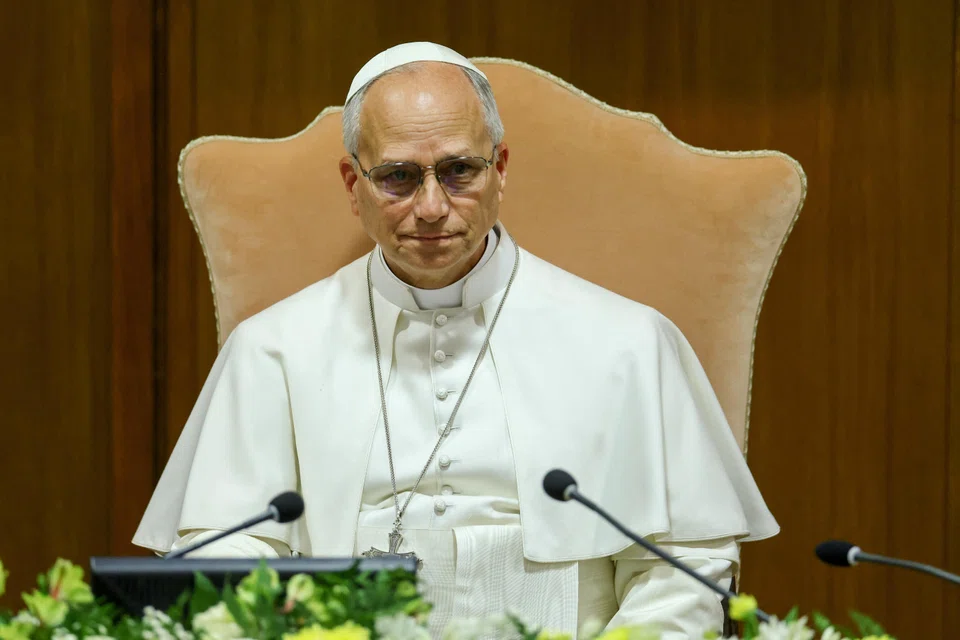
POPE Leo XIV said artificial intelligence should be “disarmed” to protect humanity from its dangers, adding his voice to a heated debate over the extent to which governments should regulate a technology that is reshaping the world.
In a landmark address to the Catholic Church, the pope called for making AI more “human-friendly” and freeing it from monopolistic control, shifting away from using it to achieve geopolitical or commercial gains.
“To disarm means discrediting the assumption that technical power automatically confers the right to govern,” the pope said on Monday in his new encyclical to the faithful. “To disarm does not mean rejecting technology, but preventing it from dominating humanity.”
By wading so publicly on the need to protect humans in the age of AI, the first American pope in history has potentially put himself on a collision course with US President Donald Trump, who favors deregulation of the rapidly-evolving technology to maintain a competitive edge against China.
The 70-year-old pope is adding his voice to furious debate over how far AI models should be constrained amid fears about their potential to wreak havoc on the banking system, to select targets for military attacks and eventually to replace humans in vast swathes of decision making.
The release of the document called Magnifica humanitas, which means magnificent humanity in Latin, marks the pontiff’s most consequential act since becoming the head of the world’s 1.4 billion Catholics a year ago.
Encyclicals, as these letters are known, are a way for popes to provide moral guidance on the biggest challenges of their times, including hot-button issues like climate change and migration.
A mathematician by training, Leo also warned specifically about the dangers of using computing in warfare and losing track of the moral considerations, saying “no algorithm can make war morally acceptable.”
“AI does not remove the intrinsic inhumanity of conflict, indeed it can only bring about conflict more quickly and render it more impersonal,” the pope said. He warned against the possibility that some “may consider armed conflict as an effective way of diverting attention from domestic problems and a cynical tool for managing difficulties.”
SEE ALSO

His comments come as the unveiling of Mythos, an artificial intelligence tool by Anthropic PBC that can identify unknown flaws in IT systems, has triggered anxiety across the globe over the past months.
In raising the alarm on the risks of unregulated AI, it’s telling that the Vatican extended an invitation to Anthropic’s co-founder Christopher Olah, an expert of machine learning.
The maker of the popular Claude chatbot has clashed with the Trump administration over the use of its technology for war and surveillance.
Vice-President JD Vance, a Catholic convert who is close to Silicon Valley billionaire Peter Thiel — an early investor in OpenAI — hinted at the brewing tension. Recently, Leo and Trump sparred over the pope’s opposition to the war in Iran.
“I think when the the leader of the world’s largest Christian denomination speaks on an issue like that, it’s certainly going to have some influence, and I’m sure it’ll contain a lot of insights,” Vance said at a press briefing on May 19. “Some of which I’ll probably agree with, some of which I may not.”
Thiel was in Rome earlier this year for some much-publicised closed-door lectures on the anti-christ. In response, Vatican adviser Father Paolo Benanti attacked Thiel’s libertarian views in an op-ed calling them “a sustained act of heresy.”
The Roman Catholic Church has been increasingly vocal about its concerns on AI, making the case that the powerful tool requires rules to protect human dignity and the common good.
For Leo, his clear inspiration is Pope Leo XIII, who guided the Church during the first industrial revolution and wrote the Rerum Novarum encyclical. Not only did the current pope choose Leo as his name to honour his 19th century predecessor, he is drawing a direct line between the disruption that machine-driven mass production unleashed on workers then to what AI is doing to workers today.
The pope “wants to make sure that what happens with AI is not just based on economics, not just based on how rich a bunch of billionaires can become, and that there are guardrails on it and how it is used,” said Father Thomas Reese, a senior analyst and catholic scholar in an interview.
From reports of chatbots steering users toward suicide to the apocalyptic predictions of mass unemployment, the topic of AI is divisive and emotional.
Still, Leo’s style is more understated than that of Pope Francis, who made a historic address to Group of Seven leaders back in 2024 where he warned them not to lose control of AI.
“Today, among the goods that are universally intended for everyone, we must also include new forms of property, such as patents, algorithms, digital platforms, technological infrastructure and data,” the pope wrote.
The danger, he says, is when technology “begins to dictate what matters and what can be discarded,” reducing “human beings to mere cogs in a system driven toward ever greater efficiency.” BLOOMBERG
Decoding Asia newsletter: your guide to navigating Asia in a new global order. Sign up here to get Decoding Asia newsletter. Delivered to your inbox. Free.
Share with us your feedback on BT's products and services
TRENDING NOW

DBS, OCBC, UOB rout lops billions off STI as inflation, rate concerns spook investors

Grab CEO’s wife Chloe Tong on life with Anthony Tan and finding her purpose

OCBC sheds S$8 billion in value as shares close nearly 6% down; analysts cautious on banks
Deal between tycoon friends sparks scrutiny of Philippine power sector

