Post-Brexit deal, sterling's rally expected to moderate in 2021
Singapore
AS the sterling pound (GBP) settles to more sensible levels following Christmas eve's Brexit deal, analysts largely agree that the pound's rally in the lead-up to the deal signing cannot be sustained, and any appreciation next year will be milder.
Stephen Yeo, forex manager at Phillip Futures, believes the GBP/USD could reach a monthly high of around 1.40 in the long term, while the pound has the potential to climb near 1.8250 against the Singapore dollar (SGD) on vaccine developments, free trade agreements and a weak greenback.
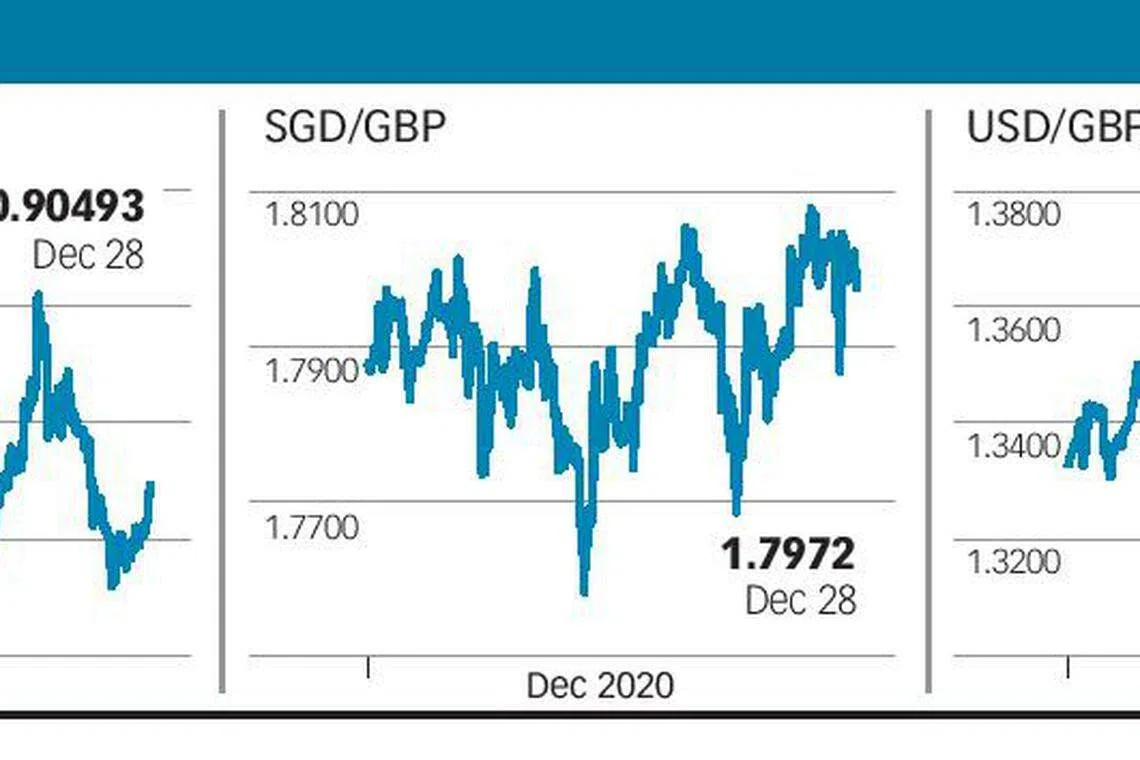
At about 6.15pm on Monday, the GBP/USD was at 1.3542. The currency pair had seen huge swings and hit more than 1.36 in the two weeks preceding the deal signing, while the euro and SGD depreciated against the strong pound. But following Dec 24, the trends have reversed. At 6.15pm, the GBP was 1.7972 against the SGD, versus a month-long peak of 1.8079 on Dec 24.
Conversely, Jeffrey Halley, senior market analyst at Oanda, noting the general expectation that the United Kingdom (UK) will underperform versus the eurozone under the new regime at least initially, said that the EUR/GBP could fall to 0.8600 over the coming months after a period of sideways trading. As for the GBP/USD, he believes it could rise to a range between 1.4500 and 1.5000.
The SGD, like other Asian currencies, should appreciate against the dollar in 2021. Juxtaposed against a similarly appreciating sterling, he thinks the GBP/SGD could move modestly higher to 1.8300 in the second quarter.
There are different levels of bullishness, and bearishness, for the post-Brexit UK.
Some, like Mr Yeo, point to the muted retail sales over the Christmas season amid the lockdown, which could cause businesses to potentially shutter. This is aggravated by a spike in Covid-19 cases in the first few weeks of December, and growing support for Scottish independence, all of which could weaken the pound.
"More government stimulus is definitely needed and very likely we would see that happening early next year," Mr Yeo noted.
Axi chief global market strategist Stephen Innes agreed, observing that the pound does not appear to have priced in the economic reality that the UK will face next year.
"Even with a Brexit trade deal, trade barriers will rise in 2021 compared to the current status quo. Indeed, this requires a weaker trade-weighted GBP to offset lower competitiveness, which could eventually trigger a greater policy response from the government and the Bank of England.
"The UK's cyclical growth outlook will be key in determining investor confidence in the UK. An element of strong faith is crucial for a currency that runs a sizable external deficit and around 30 per cent foreign ownership in domestic bond markets," he said.
He added that the GBP has strengthened against the dollar mostly because of the latter's weakness, but compared to its G-10 peers, the GBP has broadly underperformed, and the underperformance is likely to continue in 2021.
His was probably the most pessimistic estimates of those The Business Times interviewed. "I expect the pound to trade sideways at around 1.25 to 1.35 to the dollar, hampered by EUR/GBP pushing into the mid-90s," he said. At about 6.15pm on Monday, the EUR/GBP was at 0.90493.
On the other hand, Mr Halley from Oanda believes that the GBP has seen a longer-term structural low against both the euro and greenback. He is confident that the imminent approval and administration of the AstraZeneca/Oxford University vaccine will minimise Covid-19's impact on the pound.
He also feels that the Brexit trade deal will not materially impact the UK's future growth, as long as it remains broadly aligned with European rules on several fronts - "something that I do not expect them to find arduous to comply with".
Meanwhile, the pause in the four-day rally of the GBP/EUR was not so much reflective of sentiment as it was likely due to portfolio and hedge fund managers taking and locking in profits before the year-end holiday, amid low liquidity market conditions.
Margaret Yang, DailyFX strategist, said. "A deal is better than a no-deal. However, the divorce process still creates significant disruption and complication for businesses, trades and talent movements between the UK and the EU single market. The market's focus will probably shift from Brexit towards pandemic control. The medium-term trend for GBP/EUR remains biased towards bearishness."
With the Brexit wrangling and the US$900 billion stimulus deal now past, Mr Innes said there is a sense of relief that the respective worst-case scenarios have been avoided, and gives investors an opportunity to renew their focus on 2021.
"Even if the latest Covid-19 variant wave persists, the major central banks remain committed to keeping financial conditions easy for months to come. Meanwhile, the vaccine narrative remains the key to unlocking the biggest rally doors, but it is difficult for prices to fully reflect all these far in advance," he added.