Pound sterling surge: Calm before the Brexit storm?
Uncertainties ahead as new administration would not try to negotiate a trade deal with the EU beyond 2020

London
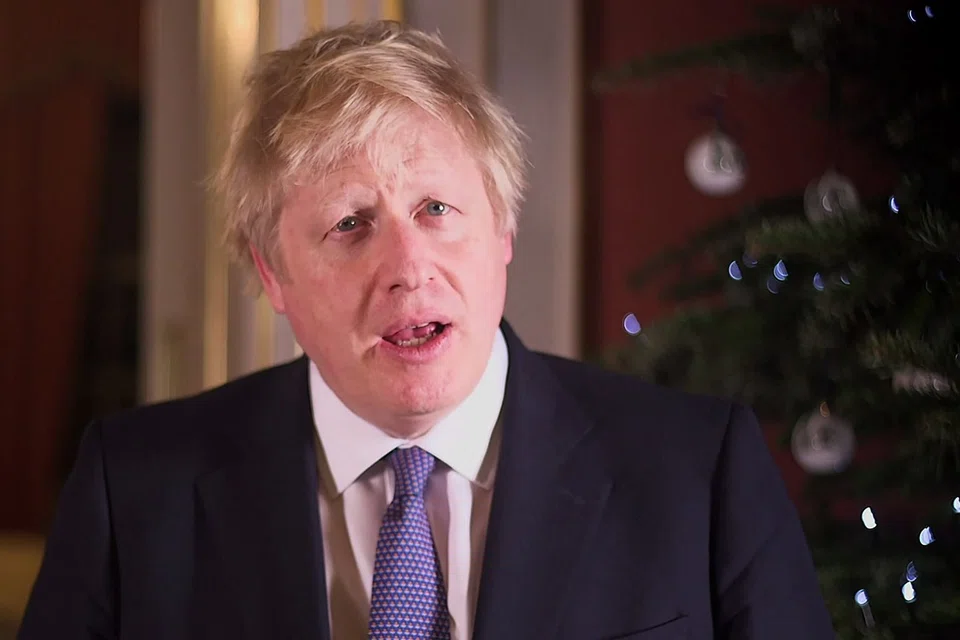
BRITISH Prime Minister Boris Johnson's convincing electoral win has set a path forward for British businesses in the short term. At a minimum, there is now some certainty that the UK will leave the European Union (EU) - and soon.
In particular, analysts said, the outlook for small caps has improved on the back of expectations for greater domestic certainty on multiple fronts. Companies can now move forward on decisions involving resources, creating employment and economic opportunities.
Confirmation of the Conservative's Parliamentary majority, the largest since 1987, was followed by a strengthening of the pound to its 19-month high. The FTSE 100, too, saw significant gains.
"A Conservative majority resolves the political uncertainty in the UK with a Eurosceptic party. This may help boost confidence and economic performance in the short term - something that has been affecting UK plc following the country's decision to exit the European Union," said Richard Burrett, chief sustainability officer at private equity investment manager Earth Capital.
That being said, some of that early euphoria is fading, as the new administration signalled it would not try to negotiate a trade deal with the EU beyond 2020. If an agreement cannot be reached, the result will be a no-deal Brexit.
As Mr Johnson attempts to secure the best deal possible for the country, investors will need to be prepared for a fair amount of uncertainty.
Jill Rutter, senior research fellow at The UK in a Changing Europe, an academic think tank on Brexit, points out that the Conservative manifesto contains merely a commitment to get Brexit done.
The manifesto is clear only on what the UK will not be, Ms Rutter said. It will not be part of the European customs union, for instance, or under the European Court of Justice.
"The manifesto is much less clear on what comes next," she added. "This all suggests a low level of ambition for a future deal, one that our modelling suggests would result in quite a severe economic hit."
Her colleague Jonathan Portes said the government's withdrawal agreement offers businesses certainty "only in the short-term, and only by comparison to the chaos of no deal".
This is because Johnson's proposal suggests a fairly hard Brexit, with a much more distant economic relationship with the EU.
"That will lead to significant trade barriers considerable economic damage to the UK," he said. This is particularly so for the UK's all-important service sector, which makes up 80 per cent of the economy.
Mr Portes, who is senior fellow of The UK in a Changing Europe, noted that although manufacturers may be relatively insulated, leaving the EU's single market will create substantial new barriers for UK services companies.
"This includes not just the City and financial services, but a whole range of sectors from broadcasting to transport," he added.
Daniel Morris, senior investment strategist at BNP Paribas Asset Management, has similar concerns.
"We focus so much on the customs union, but goods trade is a small part of the UK economy," he said. Meanwhile, there has been relatively little discussion about services.
"We really haven't progressed all that much from where we were six months ago in terms of uncertainty with the relationship between the UK and the EU," he added.
Mr Morris, who had been sceptical of the knee-jerk optimism leading up to and just following the election, believes it will be difficult for the pound to strengthen from current levels.
The short-term certainty that Britain is getting a Brexit will soon be replaced by tough negotiation talks, and both history and Johnson's rhetoric suggest that these negotiations will go to the very end.
This, in turn, muddies the outlook for equities.
"UK equities either outperform or underperform relative to Europe depending on what's happening in the currency. That's going to continue to be the case," said Mr Morris. "It's hard for a lot of optimism to come to the market."
For some assets, however, the outlook may be improving.
Nick Pemberton, a partner of commercial investment at property consultancy Allsop, said that Mr Johnson's large majority removed a significant overhang in the form of a fear of a hung Parliament.
Investors are now looking forward to at least some stability.
"What we are seeing from a lot of our Asian clients, in speaking to them, has been concern about the instability of the currency more than anything else. It's less about the relative value of the pound versus other currencies. Hopefully, the result of the election should bring a much more stable exchange rate," he said.
In the last year, sentiment on London's property market has been weak. Allsop's data shows £20 billion (S$35.4 billion) of investment deals for all of 2018, but just £10.7 billion in 2019 to-date.
Investors have been rushing to close deals in recent weeks as the outcome of the election became clearer. Allsop expects the year to close off with £13 billion worth of deals.
Mr Pemberton is hopeful that the optimism will continue and that the prospects for commercial property remain good, despite the difficulties that lie ahead for trade negotiations.
The UK, and London in particular, remains a popular business location given its famed education system and the many attractions of London life, such as restaurants and West End entertainment.
"If you speak to your banker, given a choice of working in London or somewhere like Geneva, they all want to stay in London," Mr Pemberton said.
Yields for prime London property remain as good as or better than for prime property in comparable European cities such as Paris.
His optimism is echoed by Martin Kaye, CEO of real estate investor, developer and manager Millennium Group, who specialises in advising Asian investors looking to put money in core cities around the world.
He said he had been advising clients to hold off on property investments due to the uncertainty, and to invest in the pound instead.
"The pound has gone down and that depreciation has got to a stage where the pound is cheap," he said. "Now that there is some certainty, we expect with the continuing leasing strength and the weight of capital that persists that the market will have a strong period."
Most Asian investors buying UK property of late have been buying what are known as Core and Core+ income producing assets in London.
These are properties with stable income streams as they have weighted average unexpired lease terms of more than five to eight years.
Such assets should continue to be safe investments as they are less affected by Brexit negotiations, Mr Kaye said. In particular, demand for student accommodation continues to be strong.
The market for add value and opportunistic investments, on the other hand, is mixed.
Properties under development that are being completed from now until 2021 face greater risks, but those completing post-2021 remain competitive as they will begin generating income just as negotiations are completed and the UK economy gets back on track.
Until the Brexit deal is done, investors should keep a close eye on Johnson's team. In particular, they should pay attention to its negotiation stance, its investments into public infrastructure and services, and any efforts to improve the business environment.
BNP Paribas' Mr Morris said a more flexible negotiation stance will be a positive for investors, as it would make it more likely that the UK retains a close relationship with the EU.
Meanwhile, astute government spending will be necessary to make up for the loss in trade links with the EU.
"Although there will be a negative impact from Brexit, there are lots of things the government could do domestically," said Mr Portes of The UK in a Changing Europe.
He would like to see a reversal of cuts in public services made over the years, and increased investment in services such as healthcare and education.
Mr Burrett of Earth Capital thinks the new government can "be expected to create an appealing environment for foreign businesses now the country can no longer depend on its preferred hub status in the single market."
So as UK pulls away from Europe, it is hoped the UK will, in turn, open itself to the rest of the world.