
Powell set to rebuff pressure on Fed as finance chiefs meet
 Add BT as a preferred source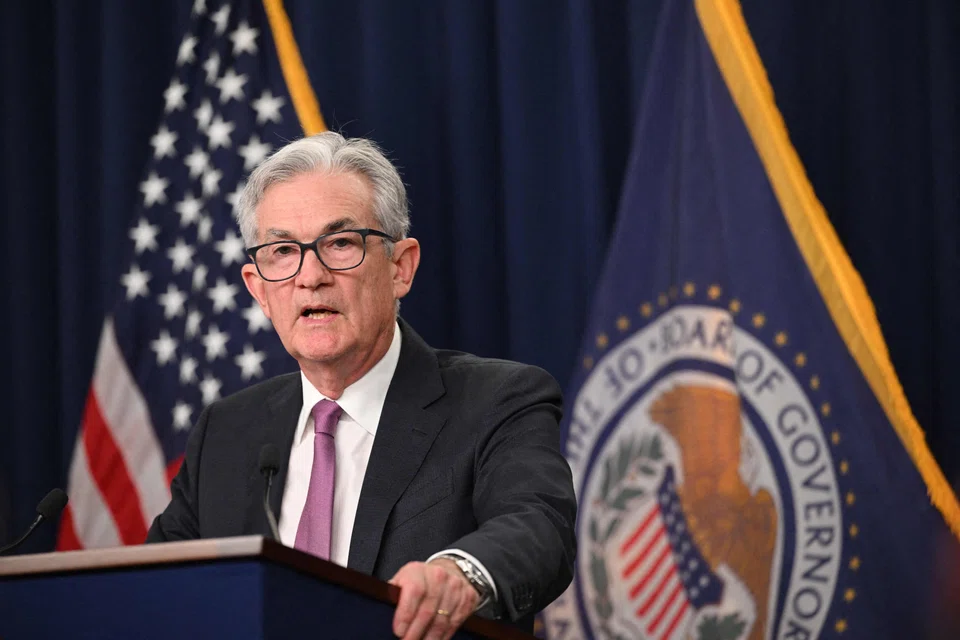
FEDERAL Reserve Chairman Jerome Powell is likely to resist behind-the-scenes pressure at international meetings this week to let up on steep US interest-rate hikes that are putting pressure on economies around the world.
The Fed’s most powerful monetary tightening since the early 1980s has sent the US currency surging, rocking developing countries that borrowed heavily in greenbacks, and raising the cost of dollar-priced energy and other imports for richer nations grappling with historically high inflation.
The steep runup in US rates has also increased the odds of a major mishap in financial markets, as borrowers who took on leverage during a decade or more of easy credit find themselves being pushed to the brink. Voices of concern are almost certain to be a feature of annual meetings of the IMF and World Bank in Washington this week, set to be the largest in-person gathering of finance ministers and central bankers since the pandemic began.
“Powell will be vigorously questioned at these meetings about the pros and cons of a more gradual hiking trajectory,” said Citigroup chief global economist Nathan Sheets, who regularly participated in the semi-annual gatherings of finance chiefs as a senior Treasury Department official under President Barack Obama.
On Monday, heads of the IMF and World Bank warned of a rising risk of global recession as advanced economies slow and faster inflation forces the Fed to keep raising interest rates, adding to the debt pressures on developing nations.
Powell and his colleagues have shown no willingness to ease up, and look on track to deliver their fourth straight 75-basis-point hike when they meet to set rates next month. With US inflation at its highest level in four decades, they’ve argued it’s in the best interest of the US and economies around the world that they bring price increases to heel.
Navigate Asia in
a new global order
Get the insights delivered to your inbox.
Criticism may emerge at the confab over the Fed’s tardiness in launching its tightening campaign, something Powell himself has acknowledged and might have averted some of the current strains.
The Fed’s relentless ratcheting up of rates comes during what IMF Managing Director Kristalina Georgieva called a period of “historic fragility” for the global economy and for financial markets still grappling with the aftershocks of a pandemic and Russia’s invasion of Ukraine.
That fragility was front and centre in the closing days of September, when financial strains at supposedly staid British pension funds touched off tremors in global markets. They were still dumping assets last week.
“These things come out of left field,” said Maurice Obstfeld, a former International Monetary Fund chief economist who’s now a senior fellow at the Peterson Institute for International Economics. “You just don’t know when some sudden movement in interest rates is going to set off a cascade of failures.”
Even so, Fed Governor Christopher Waller dismissed speculation that financial-stability concerns could lead policy makers to slow their rate increases or halt them entirely. “This is not something I’m considering or believe to be a very likely development,” he said in an Oct 6 speech.
Fed leadership, for its part, has been more circumspect. Fed Vice Chair Lael Brainard has said that the US central bank takes financial vulnerabilities and the impact of its rate moves on other countries into account in setting policy.
But she also suggested in a Sept 30 speech that the Fed’s ability to respond to disturbances in financial markets with easier policy is constrained for the moment by the necessity of getting inflation under control.
“In a high-inflation environment, monetary policy is restrictive to restore price stability and maintain anchored inflation expectations,” she told a New York Fed research conference.
Given the dollar’s role as a reserve currency, the Fed has “reluctantly” come to recognise in recent years that it has “special responsibilities” as steward of the world financial system, said Mark Sobel, a former Treasury official who’s now US chairman of the Official Monetary and Financial Institutions Forum.
That suggests the US central bank might be willing to – briefly – put its rate hikes on hold should the global financial system be in danger of a breakdown. Indeed, the Fed is in a better place to do that now than earlier this year, as it’s at least been able to raise rates into what Powell termed “the very lowest level” of restrictive territory.
The dollar’s rise to its strongest point in decades against counterparts including the euro and yen, and to record levels versus some emerging-market currencies, has rocked the global economy. But it’s been a boon for the Fed in its fight against inflation, by lowering the cost of US imports. It’s also acting to damp growth by making US exports less competitive on world markets.
But Fed officials have shown no sign they’d welcome a further advance.
“Nothing I do is trying to move it up, move it down,” Waller said at a University of Kentucky event, stressing that the currency policy was the purview of the Treasury Department, not the Fed.
The dollar is likely to remain strong as the Fed forges ahead with rate increases, Sobel said. It “is going to come off when the market sees the Fed is leveling off and rate expectations downshift.”
Public criticism of the Fed from international organisations and policymakers has been restrained so far, with many acknowledging that it needs to tighten policy to get inflation down.
“The global economy is in the eye of a new storm” as the Fed and other major central banks aggressively raise rates and signal more to come, Reserve Bank of India Governor Shaktikanta Das said on Sept 30 after his institution raised rates by a half percentage point.
This year’s US interest-rate hikes would cut some US$360 billion of future income for developing countries, excluding China, the United Nations Conference on Trade and Development agency tallied in a report released this month.
New York Fed President John Williams on Friday acknowledged the Fed’s actions had international consequences, and said he was in contact with counterparts at foreign central banks, who also face high inflation. But he stressed that the Fed’s focus was its domestic goal to restore price stability.
“We’re all working on our own to make the decisions to bring the economy back into balance,” Williams said. BLOOMBERG
Decoding Asia newsletter: your guide to navigating Asia in a new global order. Sign up here to get Decoding Asia newsletter. Delivered to your inbox. Free.
Share with us your feedback on BT's products and services

