

Rate rise odds drop as Fed calls slowdown a winter effect
Washington
FEDERAL Reserve policymakers said the US economy has weakened, partly for reasons that will fade, after a sharp slowdown reinforced expectations that officials will keep interest rates near zero at their next meeting in June or longer.
"Economic growth slowed during the winter months, in part reflecting transitory factors," the Federal Open Market Committee said in a statement on Wednesday in Washington. "The pace of job gains moderated," it said, and "under-utilisation of labour resources was little changed".
Fed officials have said they expect to raise rates this year for the first time since 2006 as the economy nears full employment, and that their decision will be guided by the latest data.
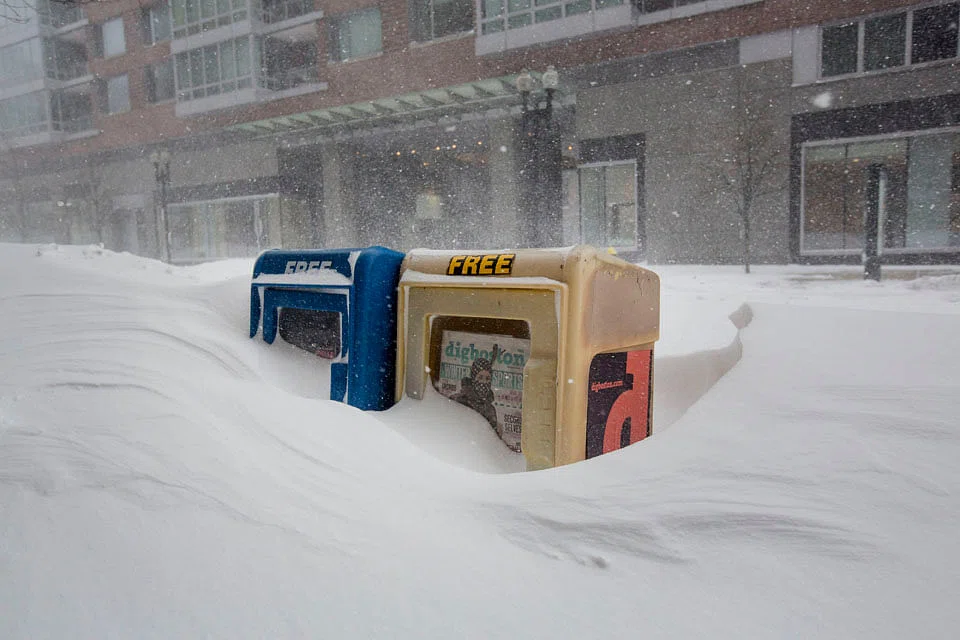
A report earlier on Wednesday showed growth almost ground to a halt in the first quarter, held back by severe winter weather and slumping business spending and exports.
"Although growth in output and unemployment slowed during the first quarter, the committee continues to expect that, with appropriate policy accommodation, economic activity will expand at a moderate pace," the Fed said.
The Fed repeated it will raise rates when it sees further labour market improvement and is "reasonably confident" inflation will move back to its 2 per cent goal over time. The decision was unanimous.
"Inflation is anticipated to remain near its recent low level in the near term, but the committee expects inflation to rise gradually toward 2 per cent over the medium term," the FOMC said.
Officials held the benchmark overnight fed funds rate in a zero to 0.25 per cent range, where it has been since December 2008. They had said last month that they would be unlikely to raise rates at their April meeting.
A run of disappointing economic data has cast doubt on how quickly the Fed can meet its goals for full employment and stable prices.
The economy grew at a 0.2 per cent annual rate last quarter after advancing 2.2 per cent in the prior three months, Commerce Department data showed. Economists surveyed by Bloomberg forecast a one per cent gain.
While the impact of unusually harsh winter weather is likely to fade, other drags, including a drop in capital spending and exports, may last longer.
"The economy has dug a deeper hole and will take longer for growth to bounce back above trend," said Chris Rupkey, chief financial economist at Bank of Tokyo-Mitsubishi UFJ. "A June meeting is on the table, but it's a long shot now."
Employers added 126,000 workers to payrolls in March, the weakest month since December 2013. Reports on manufacturing and retail sales have also trailed behind economists' expectations.
Even before the release of the first quarter GDP report, economists had pushed back their forecasts for liftoff. In a Bloomberg survey conducted last week, 73 per cent of respondents predicted the central bank will wait until September. In a March poll, a majority predicted the first rate increase in June or July.
Expectations for continued low rates have helped fuel gains in stocks while keeping Treasury yields down.
The Standard & Poor's 500 Index is near record highs, and the yield on the benchmark 10-year Treasury note was 2 per cent late on Tuesday in New York, below the one-year average of 2.28 per cent.
While unemployment has fallen to 5.5 per cent from a post-recession peak of 10 per cent, Fed officials have reduced their estimate of the long-run jobless rate to 5 per cent to 5.2 per cent, suggesting they have room to keep borrowing costs low to put more Americans back to work.
What's more, inflation has lingered below the Fed's goal for 34 straight months. The Fed's preferred gauge of prices rose just 0.3 per cent in February from a year earlier.
Lower oil prices have helped keep a lid on inflation while also sapping energy-related investment, and a stronger US dollar has curbed exports and made imports cheaper. Bloomberg
TRENDING NOW

He built the Vingroup empire. Now South-east Asia’s richest man is handing some key roles to his sons
US dollar falters after Iran’s offer to reopen Hormuz sends oil lower

Temasek’s Wan Chee Foong to helm PIL, Lars Kastrup to be board adviser
Despite the de-dollarisation debate, demand for dollar liquidity in Asia is growing

