

Rates will stay low due to macroeconomic factors: RBA governor
Sydney
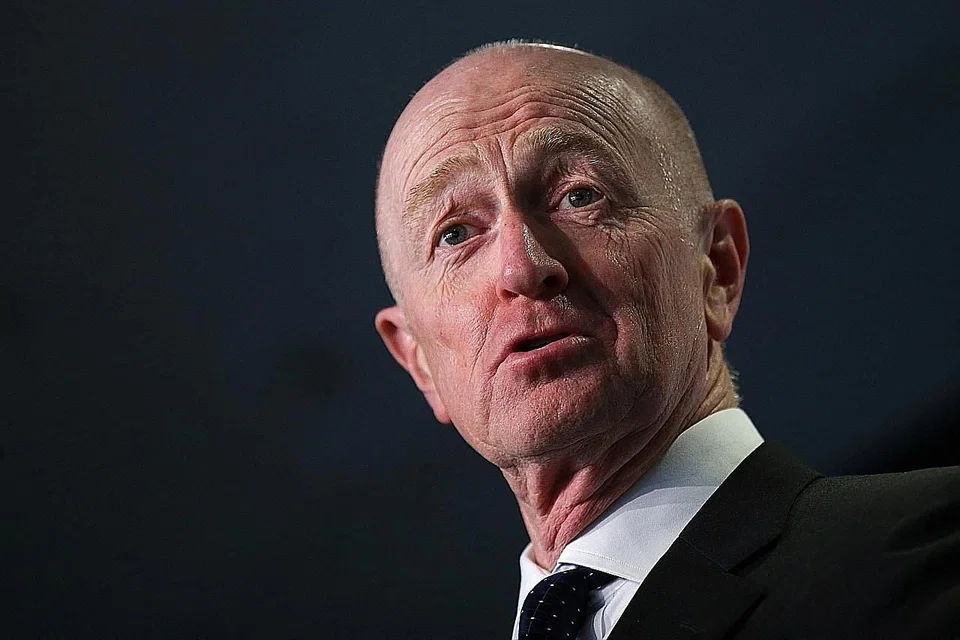
AUSTRALIA'S economy has spare capacity and contained inflation that justify loose monetary policy, and would benefit from an extended period of housing construction growth, central bank Governor Glenn Stevens said.
"The level of interest rates, although very low, is well warranted on macroeconomic grounds," Mr Stevens said in the text of a speech to a function in Melbourne on Tuesday. "But for accommodative monetary policy to support the economy most effectively overall, it's helpful if pockets of potential over-exuberance don't get too carried away."
Mr Stevens was referring to parts of the property market in a speech that traversed familiar ground on an economy transitioning to growth drivers beyond mining.
In minutes of its Nov 4 meeting released earlier on Tuesday, the Reserve Bank of Australia (RBA) reiterated a period of stability for rates that have been unchanged at a record-low 2.5 per cent for 15 months.
It has opted to stand pat to encourage non-mining companies to take a risk and invest as resources investment declines and commodity prices fall. While the property market has surged, businesses in other areas of the economy have been reluctant to spend even as the RBA sought to provide the right conditions.
"There are sufficient spare labour resources such that we could probably enjoy a couple of years of non-mining sector growth somewhat above its trend rate before we needed to worry too much about serious inflation pressure," Mr Stevens told the Committee for Economic Development of Australia. "The decline in the exchange rate will be of some help here, but the currency remains above most estimates of its fundamental value."
The Australian dollar has fallen more than 6 per cent in the past three months, easing some pressure on the nation's import-competing industries. It averaged 93 US cents in the past seven years and touched a record of more than US$1.10 in 2011.
The nation's terms of trade, or export prices relative to import prices, have fallen 22 per cent since their peak in the third quarter of 2011 and will fall further, Mr Stevens said.
"An exchange rate more in line with fundamentals would be a helpful contributor to a balanced growth outcome," he said.
On the brighter side, Mr Stevens said that recent data confirm labour productivity has grown faster over the past three years than it did on average for most of the 2000s.
Loose policy has boosted house prices, which climbed 13.1 per cent in Sydney in the year through October and 8.9 per cent in Melbourne, according to an RP Data-CoreLogic Home Value Index. That has underpinned a revival in housing construction.
"Investment in new and existing dwellings is rising," Mr Stevens said.
"It ought to be possible, if we are being sensible both on the demand management side and the supply side, for this to go further yet and, more importantly, for the level of activity to stay high for longer than the average cyclical experience," he said.
The RBA's concern is the jump in credit to investors that has risen to an annual rate of 10 per cent in the past six months, with investors accounting for almost half of new loans.
"It is not clear whether this acceleration will continue or abate. It is not clear whether price increases will continue or abate," Mr Stevens said. "Furthermore, it is not to be assumed that investor activity is problematic, per se. A proportion of the investor transactions are financing additions to the stock of dwellings, which is helpful. It can also be observed that a bit more of the 'animal spirits' evident in the housing market would be welcome in some other sectors of the economy."
Yet Mr Stevens said it was reasonable to probe whether people are getting "a little overexcited" and whether home-lending standards are being maintained.
Discussions between the RBA and other agencies on possible action to ensure standards are upheld is aimed at stretching out the upswing in housing construction rather than to restrain it, he said.
Australia's economy has had 23 years of uninterrupted growth, including a decade of windfalls from high commodity prices, as it met Chinese demand for steel and energy.
"Australia's economy is continuing to grow, moderately," Mr Stevens said. "It has been responding in ways you would expect to the remarkable set of circumstances it has faced over the past decade. There is continuing adjustment ahead and doubtless no shortage of challenges." BLOOMBERG






