RBA frets over currency, China; sticks with GDP, CPI forecasts
Australia central bank predicts annual growth of 2.5% to 3.5% through December
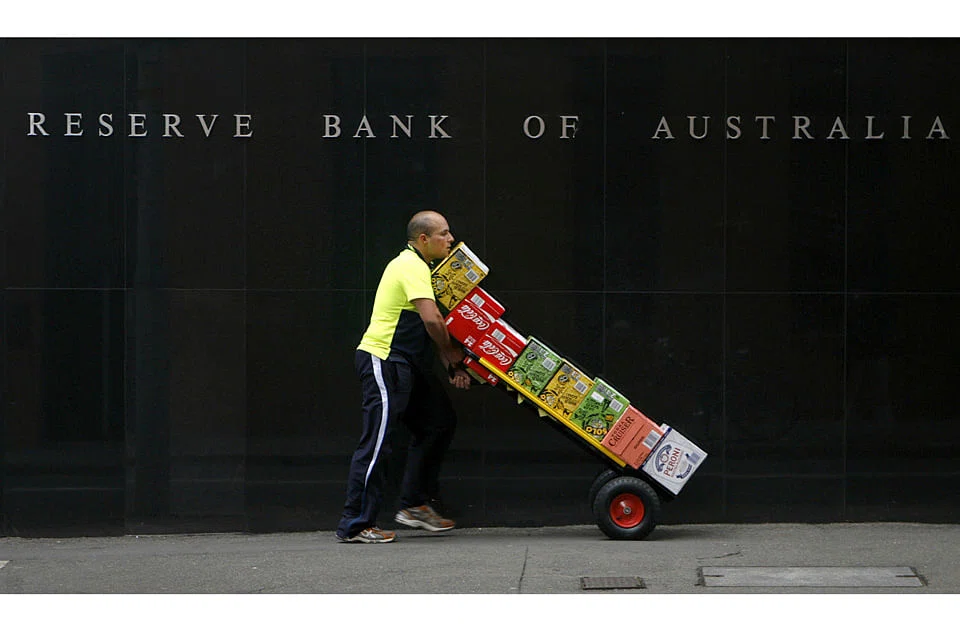
Sydney
AUSTRALIA'S central bank said the outlook for the currency and China are key uncertainties to its growth and inflation forecasts, which were otherwise little changed.
The Reserve Bank of Australia (RBA), in its quarterly statement on Friday, predicted annual growth of 2.5 per cent to 3.5 per cent through December, accelerating to around 3 per cent to 4 per cent in 2018. There was little near-term change for unemployment and core inflation was expected to remain at the current 1.5 per cent before picking up to 2 per cent by late 2018. The bank gave no interest-rate guidance after cutting rates to a record-low 1.5 per cent on Tuesday.
While the currency is forecast to remain at current levels, "it represents a significant source of uncertainty" given its potential to react to changed growth outlooks, commodity prices and policy decisions at home or abroad, the RBA said. Meanwhile, China, Australia's key trading partner, "remains an important source of uncertainty" - from a possible slowdown in the property market to how the authorities balance supporting growth while enacting disruptive reforms.
Governor Glenn Stevens and his board eased policy twice this year to try to keep a lid on a currency circled by yield-hungry investors in a world of zero or negative rates, and to speed up inflation. At the same time, they've made progress on steering the economy towards services from mining, with growth above 3 per cent and unemployment under 6 per cent. The key missing ingredient has been business investment.
"The outlook for non-mining business investment remains subdued in the near term," the central bank said. "However, the subtraction from GDP (gross domestic product) growth from lower mining investment looks to have peaked in the 2015/16 financial year."
It predicted the terms of trade, or ratio of export to import prices, will remain close to current levels over the next couple of years. "This is around 35 per cent lower than their peak in late 2011, but still well above levels that prevailed prior to the mining boom," the RBA said.
Australia's resource industries have benefited from easing in China. The central bank there held benchmark rates unchanged since October and instead injected credit into the economy, while the government - often by stealth fiscal stimulus - has poured cash into infrastructure projects to prop up employment.
The RBA said that its outlook for coal prices "is slightly more positive than previously thought", reflecting supply cuts in China and elsewhere. Iron ore prices are expected to fall from current levels as Chinese steel demand is projected to ease over the next few years and total iron ore supply expected to increase.
Meanwhile, the liquefied natural gas "export profile" has been revised higher to reflect some increase in capacity at LNG projects.
The RBA has faced difficulties with its currency, which has appreciated about 10 per cent from a January trough, as the US hesitates on tightening policy and Europe and Japan run negative rates and bond-buying programmes. Australia's key service sectors of tourism and education are among the most sensitive to the exchange rate. It's predicting net services exports will continue to grow.
The RBA's low-rates policy has had some successes: Rising house prices have fuelled a residential construction boom.
The substantial amount of building work "in the pipeline increased a little further in the March quarter, and it is sufficient to underpin dwelling investment growth for the next year or so". But the bank reiterated its warning about over supply in parts of inner-city Melbourne and Brisbane. If housing demand doesn't continue "it could place downward pressure on prices and rents and increase the risk that off-the-plan purchases fail to settle".
It noted that consumer inflation could also be affected as housing costs "comprise a significant share of the CPI (consumer price index) basket". Bloomberg