

RBA says banks are strong, households resilient to higher rates
 Add BT as a preferred source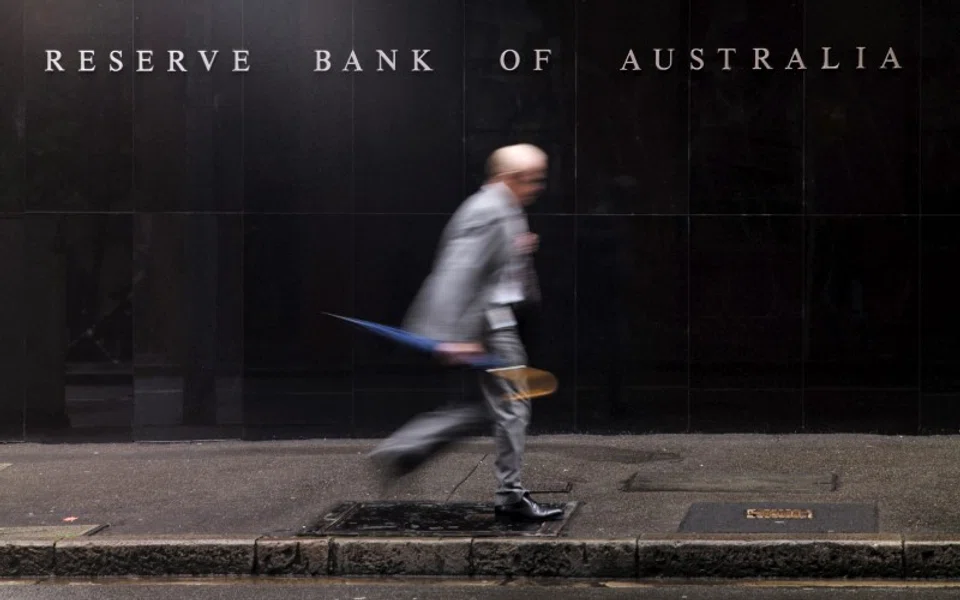
DeeperDive is a beta AI feature. Refer to full articles for the facts.
AUSTRALIA’S lenders are “unquestionably strong” and its households and firms are well placed to cope with higher interest rates and inflation, the Reserve Bank of Australia (RBA) said, seeking to alleviate concerns about potential fallout from global financial turmoil.
“Banks are well regulated, strongly capitalised, profitable and highly liquid,” the RBA said in its semi-annual Financial Stability Review released in Sydney on Thursday (Apr 6). “This leaves them well positioned to continue lending to Australian households and businesses.”
The report comes a month after bank collapses and bailouts in the US and Europe prompted the Federal Reserve and five other central banks to undertake coordinated actions to boost liquidity in their standing dollar swap arrangements.
The crisis of confidence drove financial markets to price in an end to the aggressive global tightening cycle. However, policymakers in a number of jurisdictions continued to see inflation as the greater threat, with the Fed, European Central Bank and the Reserve Bank of New Zealand among those that pushed ahead with rate hikes in recent weeks.
The RBA proved an outlier to that trend, pausing its almost yearlong tightening cycle this week at 3.6 per cent, with governor Philip Lowe saying the board wants to assess the economy given policy lags and signs of slowing inflation.
The global banking stresses prompted money markets to price an end to Australia’s tightening cycle and to bet on a rate cut late this year.
Navigate Asia in
a new global order
Get the insights delivered to your inbox.
The RBA highlighted in the stability review that the global banking sector is in a much stronger position than a decade ago and that higher rates were a trigger, rather than a cause, of the stress. In particular, it pointed to Australian banks’ capital and liquidity positions as being well above regulatory requirements.
“Even so, the country’s prudential regulator is supervising financial institutions “more intensively” than usual,” the RBA said. It is reviewing lessons learned from this recent bank crisis “to ensure Australia’s regulatory regime remains fit for purpose and our financial system remains resilient”.
The central bank warned of a potential rise in the share of households and firms falling into arrears on their loans while pointing out that any increase in banks’ non-performing loans will occur from a “very low level”.

“Further, the share of banks’ loans in or close to negative equity is negligible, which helps limit the losses to both borrowers and banks in the case of default,” the RBA said. “This reflects the generally sound lending standards and the large run-up in housing prices over recent years.”
The RBA also published a scenario analysis on “indebted households’ spare cash flows and prepayment buffers” which showed that even in an adverse scenario where economic growth contracts and unemployment rises to 5.5 per cent, most borrowers would see their spare cash flows remain positive. It also concluded that the broader financial stability implications would likely be limited.
The report showed that a quarter of Australia’s home loans are still on fixed rates and face large increases in their scheduled payments when they roll off over the next two years. The RBA expects these borrowers to transition well given they have had “considerable time” to prepare for the coming increase and have substantial savings in both mortgage prepayments and other forms.
Among threats from outside the financial system that are risks to stability, the central bank highlighted:
- Increasing intensity of cyber attacks on financial institutions.
- Potential for an escalation in geopolitical tensions that results in disruptions to trade and international capital flows.
- Potential climate-related disruptions to parts of the financial system, including but not limited to energy markets. BLOOMBERG
Decoding Asia newsletter: your guide to navigating Asia in a new global order. Sign up here to get Decoding Asia newsletter. Delivered to your inbox. Free.
Share with us your feedback on BT's products and services
TRENDING NOW

Ministry of Home Affairs Permanent Secretary Pang Kin Keong to retire

Shelving S$5 billion office redevelopment plan proved ‘wise’ as geopolitical risks mount: OCBC chairman

Richard Eu on how core values, customers keep Singapore’s TCM chain Eu Yan Sang relevant

China pips the US if Asean is forced to choose, but analysts warn against reading it like a sports result

