

Reasons for Fed's rate freeze dent equities
Stock markets rattled as central bank cites volatile global, financial conditions
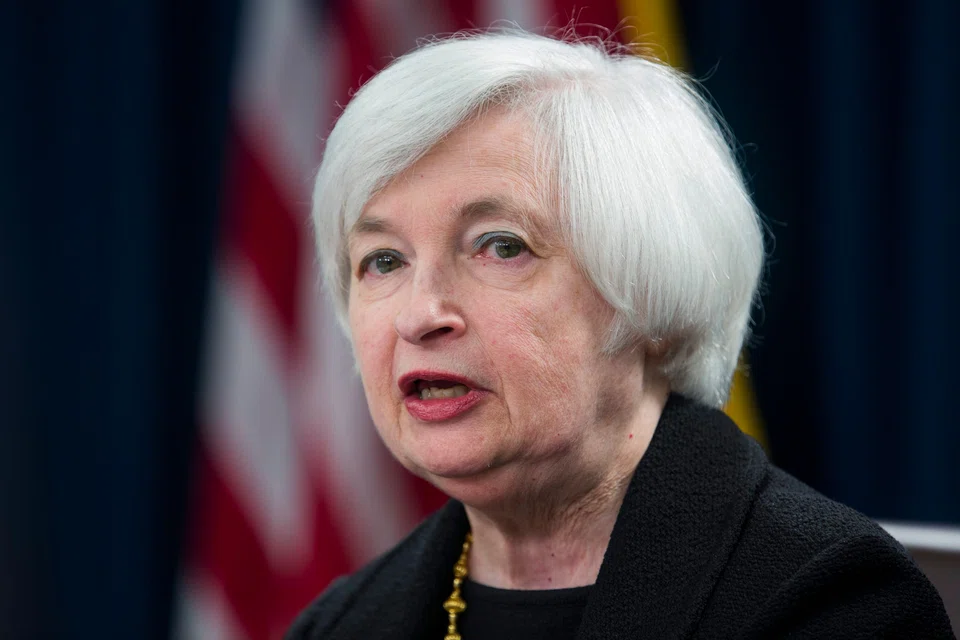
IN an eagerly anticipated decision, the US Federal Reserve kept the rate at which it lends money to banks overnight close to zero per cent, postponing the rate hike it has long promised because of what it said was the recent China-inspired volatility.
Traders have waited so long for the Fed to pull the trigger on rates that the reprieve only caused more consternation - like a prisoner in front of a firing squad willing the shooters to get it over with.
Not only did the central bank postpone the rate increase that chairwoman Janet Yellen had tacitly promised would come in September, the central bank also pushed down the targeted rates for the next three years. Usually, stocks would surge on such an extension of stimulus; this time, stocks fell as traders focused on the central bankers' reasons for delaying, and on their promises for action by the end of the year.
"It means we have to go through this whole thing all over again in October," said Don Ellenberger, a senior portfolio manager for mutual-fund firm Federated Investors. "The stock market might have liked if the Fed had gone 25 basis points (higher), and just got it over with, and everyone stepped back and said, "Hey, the world's not coming to an end - it's okay to buy risk assets'."
As it turned out, traders fled stocks. One likely rationale: if the Fed believed the Chinese crisis and currency instability were serious enough to change its plans, then the threat to US growth must be greater than it previously seemed.
The alternative, according to Mr Ellenberger, is that the Fed is overly cautious about the impact of its own policy on the stock and foreign-exchange markets.
"When they talk about global and financial conditions, they're basically talking about the dollar and stocks," said Mr Ellenberger. While Ms Yellen and Fed vice-chairman Stanley Fischer have repeatedly said the central bank would not pander to markets, they clearly didn't want to compound recent volatility and have a repeat of the "taper tantrum", Mr Ellenberger said.
Concern about foreign-exchange markets makes sense, he said. The rise in the value of the dollar makes US exports less competitive and also "imports deflation", making it less likely that the Fed will meet its inflation target.
The Fed may also have decided that emerging market currencies - such as Brazil's real, Malaysia's ringgit, South Africa's rand, and other commodities-linked currencies - were too badly beaten up already to take the knock-on effect of a rate hike. A full-fledged sovereign-debt crisis in one of these nations could ripple around the world and back to US financial markets.
"In emerging markets, growth is slowing, currencies are depreciating, and risks are rising," said strategists at brokerage Barclays. "When the (Fed) decided not to raise interest rates . . . it specifically stated it was monitoring developments abroad."
The Barclays analysts cut their earnings targets for the Standard & Poor's 500, betting that the Fed was right to anticipate another major stumble in the global recovery in the near term.
If there is a currency crisis in the autumn, will the Fed hold off again? The last time the Fed raised interest rates was June 2006. At that time, then-chairman Ben Bernanke (who had just taken over from Alan Greenspan) was concerned that the US housing market was overheating. That turned out to be the understatement of the century.
Soon, Mr Bernanke had embarked on a half-decade of cuts and bond purchases designed to save the US from another Great Depression. At the time, his moves were described as bold and historic. But adding stimulus was the easy part.
"Whenever the Fed is easing, it's the white knight coming to the rescue," said Mr Ellenberger of Federated Investors. "Tightening is a little bit different - a little bit like taking candy away from children."
The "exit strategy" is what will define the term of Mr Bernanke's successor, Ms Yellen. There's no economically pressing reason to "normalise" policy. Inflation is still weak, as illustrated by another muted increase in consumer prices in August, reported by the Labour Department on Wednesday. Still, Ms Yellen reiterated her promise to do hike rates this year. Time is running out, and there are sure to be more wild moves in currencies and stocks worldwide as the firing squad begins its countdown.
If the central bank breaks the promise to hike this year, the Fed could lose its ability to reassure markets, which made Mr Bernanke the only person who could calm the great market tempests of 2008 and 2009. If the September meeting was the most highly anticipated since those dark days, the October and December meetings will be even more so.
"(With) the Fed, the world's de facto central bank, keeping interest rates at historic lows, it is itself fuelling more uncertainty in global markets than if it had raised them," said Nigel Green, chief executive of money manager DeVere Group, in an e-mail.
"The countdown clock has simply been reset. Of course, this is a trigger for short-term volatility."
READ MORE:
TRENDING NOW

32 companies, 6 individuals bag accolades at Singapore Corporate Awards 2026

He built the Vingroup empire. Now South-east Asia’s richest man is handing some key roles to his sons
URA to review guidelines on floor space to give developers more design flexibility: Chee Hong Tat

Chagee, Mixue and Luckin won the market. Sustaining their edge is the harder part

