
Red Cross to distribute aid in Venezuela next month
 Add BT as a preferred source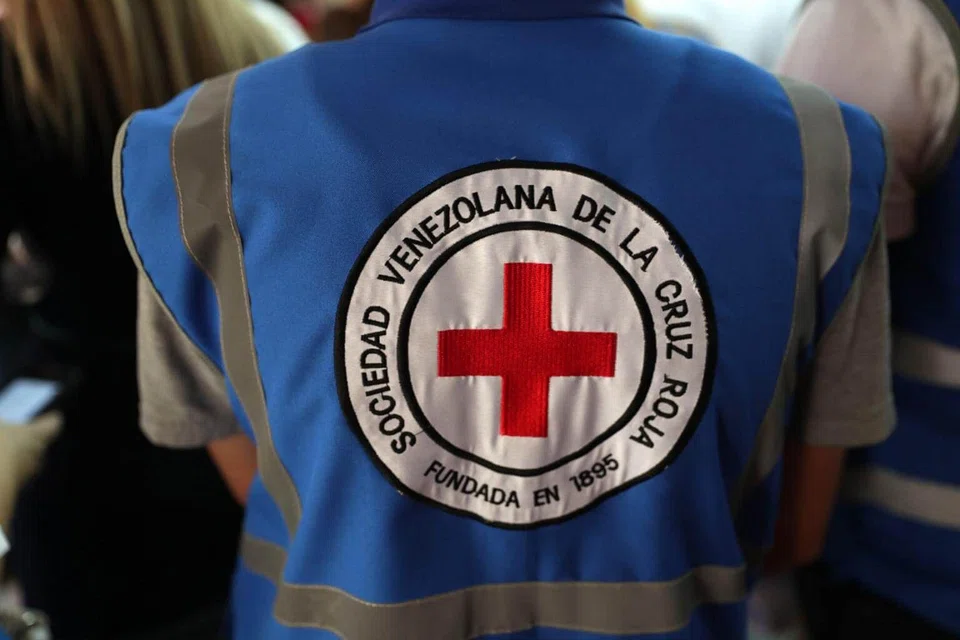
[CARACAS, Venezuela] The Red Cross said Friday it will begin impartially distributing aid in crisis-torn Venezuela in two weeks, brushing aside the threat of political interference amid a power struggle between President Nicolas Maduro and his opposition rival Juan Guaido.
Malnutrition and disease are on the rise as living conditions plummet in the oil-producing Latin American nation, which is spiraling ever deeper into economic chaos.
"We estimate that in a period of approximately 15 days we will be ready to offer help," said Francesco Rocca, head of the International Federation of the Red Cross and Red Crescent.
The United States - which considers Mr Guaido interim president along with some 50 other countries - welcomed the announcement as a "real opportunity."
Mr Rocca told reporters in Caracas the organization would begin distributing aid mid-April, including tons of mostly US food and medical supplies that Mr Maduro has to date refused to allow into the country - leaving it stockpiled for weeks on the borders with Colombia and Brazil.
The Red Cross - aiming to reach 650,000 people initially - would act according to its principles of "impartiality, neutrality and independence," he said, "without accepting interference from anyone."
Navigate Asia in
a new global order
Get the insights delivered to your inbox.
'VICTORY OVER SANCTIONS'
Meanwhile, in a boost to Maduro, a Chinese plane loaded with 65 tons of medical aid landed in Caracas on Friday. His government celebrated it as a victory over US sanctions, which the socialist leader blames for the economic crisis.
Though unpopular, Mr Maduro has the upper hand at home, thanks to loyalty from his military chiefs and, since last weekend, the presence of 100 Russian troops.
"We are overcoming the purported siege, the blockade, which has been undertaken by President Trump and the diabolical puppet from here in Venezuela," said vice-president Tareck El Aissami, referring to Mr Guaido.
Mr El Aissami, on the tarmac to meet the plane, said the medical supplies from China was the "first cargo of several that start from this moment."
It includes analgesics, surgical equipment and medicine for diseases such as diabetes.
China's ambassador Li Baorong said the delivery was part of previous "cooperation agreements" with Venezuela.
Speaking at a news conference in Caracas, Mr Rocca said agreements had been put in place to guarantee aid distribution, but declined to give details.
In Washington, Elliott Abrams, the envoy heading the US effort to oust Mr Maduro, praised the Red Cross initiative and credited appeals by Mr Guaido.
"This looks like a real opportunity, and we think that it is a response to the efforts that interim President Guaido has been making," Mr Abrams told reporters in Washington.
"So it's very welcome, we hope it works, and - assuming that it does, which we do - the United States would be happy to put some of our aid into this method of reaching the Venezuelan people," he said.
Mr Maduro ordered the border closed to keep out the aid, thwarting a high-profile February 23 operation orchestrated by Mr Guaido to bring badly needed food and medical supplies into the country where the UN says seven million people are in dire need.
At least seven people were killed and dozens injured in subsequent rioting at the border.
SEVEN MILLION IN DIRE NEED
The socialist leader said aid would be a precursor to a US military incursion.
"That was an issue that was very politicised," said Mr Rocca. "If that help complies with our rules and our protocols, of course we are willing to distribute it."
About 24 per cent of Venezuela's population - seven million people - are in dire need of humanitarian aid, according to an internal UN report that showed malnutrition and disease were on the rise as living conditions plummet.
The report obtained by AFP on Thursday was presented this week to Mr Maduro's government - which has blamed US sanctions for Venezuela's economic crisis - and to his rival Mr Guaido.
More than 94 per cent of the population lived in poverty in 2018 including 60 per cent who lived in extreme poverty, according to a survey by three universities in Caracas quoted in the report.
Mr Abrams nonetheless said the Red Cross assistance was no substitute for toppling Mr Maduro.
"The kind of aid that is needed for a broad recovery of the Venezuelan economy really cannot be put in place until the regime is replaced by democratic government," Mr Abrams said.
AFP
Share with us your feedback on BT's products and services

