

As rents soar, Londoners turn to vacant pubs, offices and police stations
Property guardianship, in which residents live in otherwise vacant buildings, used to be considered edgy. But more people are embracing the arrangement

[LONDON] For Erika Allen, living in a defunct London police station has its trade-offs.
Pros include cheap rent, a large bedroom and the old holding cells, which make excellent bike storage. Among the cons are the lack of a dedicated living room, monthly room inspections and the possibility of being removed at a moment’s notice.
She said: “But if you’ve got a chilled-out mindset and you’re always ready to move, you can save a lot of money.”
That is the primary sales pitch for property guardianship, as Allen’s living arrangement is known.
The concept, in which people pay licensing fees to live in otherwise vacant buildings for significantly less-than-market rent rates, has become more popular in London in recent years as housing costs in the city have soared.
Proponents say that guardianships could be a solution for the housing crisis in London, as well as in other housing-starved cities.
“There are millions of square feet of commercial properties which are sitting empty and vacant,” said Graham Sievers, chair of the Property Guardian Providers Association, a trade association. “These are places which could be readily and easily converted into safe, habitable (and) affordable accommodations.”
Straightforward model
The guardianship model is straightforward. Residents, known as guardians, live in shuttered offices, closed schools, empty churches and out-of-business pubs for relatively cheap fees.
Building owners get some income and de facto security, as simply having people living in empty buildings is typically enough to ward off issues such as vandalism, break-ins and squatters.


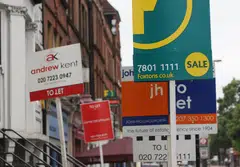
Property guardian companies act as the brokers and property managers, connecting residents and owners, and maintaining the spaces.
They also rehabilitate the buildings to make them habitable, and must meet certain standards established by the government, such as minimum room sizes, adequate showers and bathrooms per inhabitant, and proper ventilation and fire alarm systems.
Guardian companies often share renovation costs with the owner, then typically make money by taking a portion of the guardians’ fee.
It differs from renting in a few other major ways: Guardianship agreements are temporary, and residents are typically given a month’s notice to move out if their building is pulled out of guardianship.
Guardians also do not have exclusive rights to the property, and most guardian companies conduct semi-regular property checks.
The sector itself is also largely unregulated, meaning residents have little recourse compared with typical renters when they have issues with owners or guardian companies.
But for guardians such as Allen, a 30-year-old tattoo artist, the set-up makes it possible to live frugally in a desirable neighbourhood.
She paid around £710 (S$1223) a month for a bedroom in the police station, which she shared with around 10 others.
The building is in Richmond-upon-Thames, one of the city’s poshest boroughs, where the average rent for a one-bedroom apartment is around £1,700, said the Office for National Statistics.
“You get to live with some cool people in very quirky places,” Allen said. She even set up her own tattoo parlour on the ground floor of the police station before moving last year to another property, a former adult learning centre in the trendy borough of Camden.
“It just makes life interesting,” she said.
It makes life cheaper, too, a crucial benefit in London, where the average monthly rent is around £2,200 and the median annual income is around £47,000, before taxes.
Not keeping pace
The city has tried to address its housing shortage, unveiling a plan in 2021 to build around 52,000 new homes a year, but the number of completed units has not kept pace.
Many Londoners have adjusted to ballooning rents by making sacrifices, such as trading their living room for an extra bedroom or taking on roommates for years.
Liam McGovren, a 30-year-old bartender, has lived in eight locations as a guardian since 2021, including in an office, a pub and as the sole occupant of a boutique hotel.
He was recently paying around £700 a month for the entire floor of a town house in central London, a short walk from Buckingham Palace.
“I wouldn’t be able to afford this,” he said, speaking underneath a sleek chandelier in his ample entryway.
“People come over and say, ‘Wow, your room’s like three times the size of mine, and you’re living in central London,’ I think the positives outweigh the negatives.”

In the past, guardianship was seen as an edgy lifestyle choice for transient young people, or creative types. The concept began in the Netherlands in the 1990s as an anti-squatter measure, and spread to Britain in the early 2000s.
But, as the cost of living in London has skyrocketed, guardianship has attracted older and more established residents, property guardian companies said.
The service is particularly popular, they added, among gig workers, people relocating for jobs and those going through a divorce or break-up.
At a recent open house at a tidy, repurposed retirement home in Surbiton, a neighbourhood along the River Thames in south-west London, a constant churn of potential guardians of all ages came to see a few available units.
Single rooms with a shared bathroom were on offer for around £800 a month, a bargain in a neighbourhood where one-bedroom apartments average around £1,400.
Among the prospective roommates was Tim Davis, a construction executive in his early 40s who had recently separated from his wife.
He said he was looking for a budget-friendly place to stay when he worked from his office in the city, with plans to spend the weekends with his daughter in Surrey, a county just south-west of London.
“It suits my lifestyle,” said Davis, who noted he would save around £400 pounds a month by choosing guardianship over sharing a flat with roommates in the neighbourhood. “Having a young daughter, all the money that you can save towards her future just helps really.”
After touring the property for a few minutes, he was eager to put in an application. “It’s (in) really high demand,” he said. “These guardian places, they go very, very quickly.”
Drawing scrutiny
As it has become more popular, guardianship has drawn some scrutiny from the authorities in Britain.
In 2022, the national housing ministry published a report that found that “most property guardians reported very poor conditions” in properties, and admitted that “very little is known” about the sector.
Local governments are largely responsible for regulating guardian properties. In a statement, the ministry said that it had given local authorities the ability to penalise property owners if standards were not met, including preventing buildings from being occupied.
Arthur Duke, owner of Live-in Guardians, one of about a dozen property guardianship companies that operate in London, said that there were “cowboys” in the marketplace, or companies that do not act in good faith and exploit guardians.
He noted that he had worked hard to raise industry standards, and had been troubled a few times during initial inspections of buildings his company has taken over from other guardian companies. “We’d been horrified (because of) what we’ve seen,” he said. “They’re death traps, basically.”
Sievers, of the trade association, agreed that conditions could be hit or miss, and said that his organisation was working to establish a set of standards among guardian companies.
“It’s not a regulated sector, which can lead to people cutting corners,” he explained. “That’s why we would like to see the government cooperate with us and help set up an agency that makes regulations more enforceable.”
Interviews with current and former guardians suggest that guardianship can at times feel like a secret life hack or a complete slog – and sometimes both in the same day.
Ruth Chambers, a 42-year-old artist who has lived in three guardianship properties since 2022, said that some places felt like home with a solid community, while others could feel unsafe because of poor outdoor lighting, antisocial behaviour from roommates or theft issues.
“I think it was only after I left that I realised that I was quite stressed in the day-to-day,” added Chambers, who recently moved out of guardianship and into a shared apartment.
Still, she noted, guardianship provided an invaluable bridge after a sudden break-up, and she found it difficult to secure a traditional lease. “It rescued me at that time,” she said. NYTIMES
Decoding Asia newsletter: your guide to navigating Asia in a new global order. Sign up here to get Decoding Asia newsletter. Delivered to your inbox. Free.
Share with us your feedback on BT's products and services






