

Rules-based system infused with correct spirit key for region: Eng Hen
He calls for all parties in South China Sea dispute to cooperate to provide clarity

Mindy Tan
Singapore
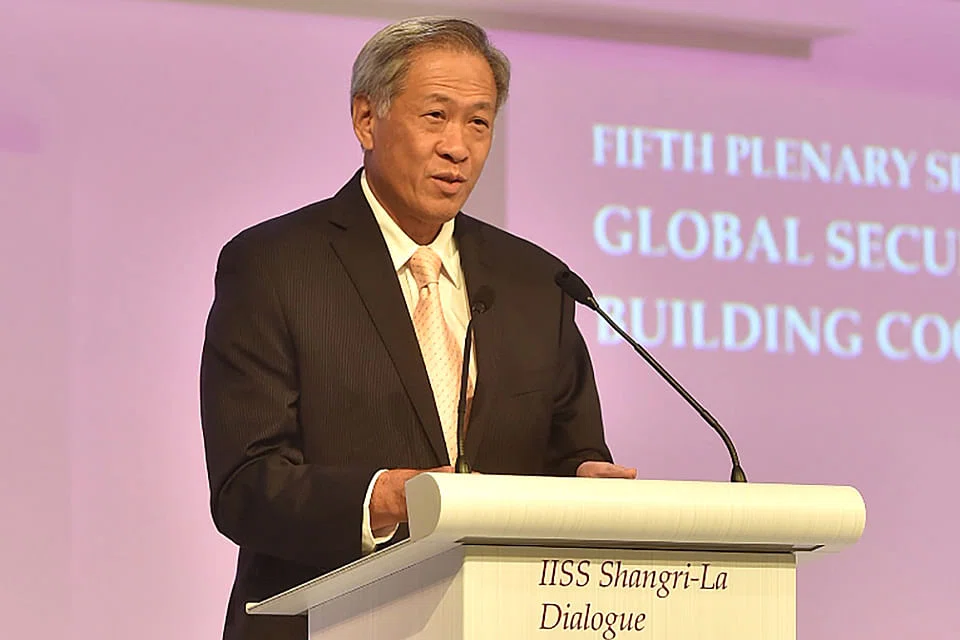
A RULES-BASED system, infused with the correct spirit, is key to maintaining trust and stability in the region, said Minister for Defence Ng Eng Hen in a speech to delegates at the Shangri-La Dialogue on Sunday.
"None would disagree that a rules-based system must prevail if there is to be stability and peace in our region. It has served us well. But any rules framework, while necessary, is insufficient to engender stability and shared prosperity," said Dr Ng in his speech titled "New Century - New Players, New Rules?".
Dr Ng noted that there is pressure for the rules that have governed international order to adjust and accommodate the nationalistic aspirations of new entrants and rising powers in Asia-Pacific.
But rules need to be treated with the correct spirit, in order to be responsive, relevant, and alive to the confronting challenges.
"What is equally vital is the political commitment to build mutual confidence and trust within that (rules) framework, based on shared interests and prosperity," he said.
Citing ongoing disputes in the South China Sea, he reaffirmed that Singapore takes no sides as a non-claimant state, but is concerned that the uncertainties that exist in international agreements or disputes over claims have not built mutual confidence and trust, but instead created instability.
He called for all parties to work together to provide clarity "if not on principles or law, then on procedures and practices that maintain regional stability and restore confidence and trust". The intention to conclude early the Code of Conduct on the South China Sea, for instance, is a positive example.
Whether established powers or rising, large states or small, countries in the region have a vested interest to ensure that a rules-based system is maintained, with respect for sovereignty and international law, said Dr Ng.
He added: "It would be unrealistic to assume that the current rules, and the existing institutions that promote them, would remain status quo, even as new powers emerge.
"But even as the hierarchy of power dynamics alter across regions and between states, we have to ensure that the security architecture remains inclusive and operates on rules and norms that have the consensus of the international community at large."
The alternative would be a factional global system where large powers contest for supremacy, each with its proxy players. Therefore, key players such as the US, Europe, China, India, Japan and Asean have a critical role to play in this evolution where new rules and norms are proposed.
"As leaders we need to guide this process attentively, exercise leadership and political will, to engender trust," he said.
TRENDING NOW

He built the Vingroup empire. Now South-east Asia’s richest man is handing some key roles to his sons

Floods compound Philippine growth woes from public-works scandal
Tokyo reverses baby bust with AI matchmaking and generous subsidies

More interest in ETFs, low-cost funds but Singapore still lacks pressure to further lower fund fees

