

Russian central bank hikes benchmark rate to 21%, highest since 2003
The central bank says the hike is needed to fight inflation, currently at 8.4%
 Add BT as a preferred source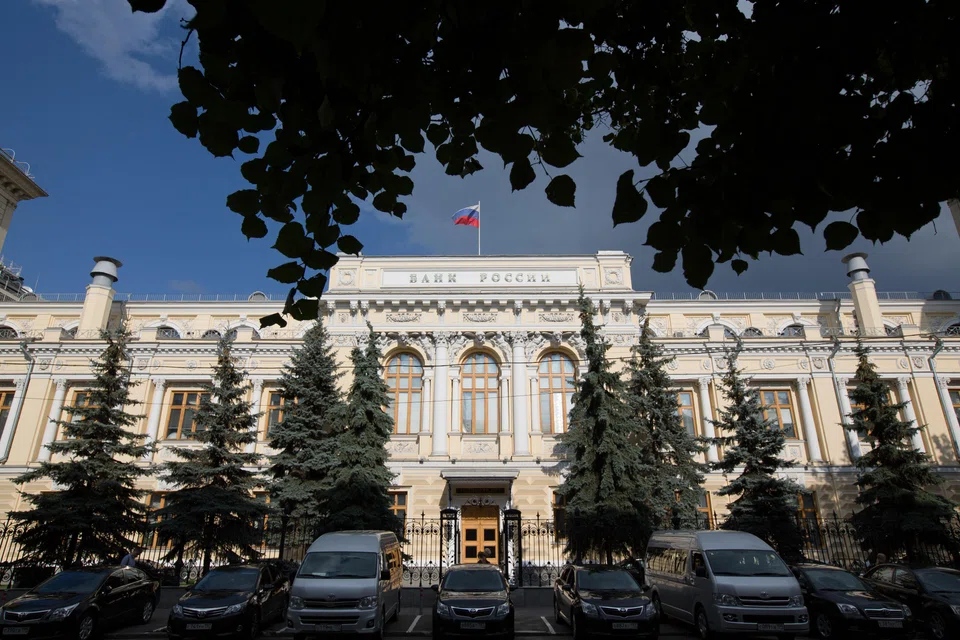
RUSSIA’S central bank hiked its key interest rate by 200 basis points on Friday (Oct 25) to 21 per cent, the highest level since the early years of President Vladimir Putin’s rule, when Russia was recovering from the chaos that followed the collapse of the Soviet Union.
The central bank said in its release that the hike was needed to fight inflation, currently at 8.4 per cent, fuelled by massive budget spending, adding that inflationary expectations among the public have reached their highest level since the start of the year.
“Further tightening of monetary policy is required to ensure that inflation returns to target and to reduce inflation expectations,” the regulator said.
The regulator maintained hawkish rhetoric, saying another hike was possible at the next meeting. It also updated its inflation forecast for 2025 to 4.5-5.0 per cent, signalling that the 4 per cent target for the next year was out of reach.
“The central bank admitted that it will not be able to bring inflation back to target next year,” said economist Evgeny Kogan, calling the move “a capitulation in the face of inflation”.
Most analysts polled by Reuters had expected a 100 bps hike. The decision takes into account Russia’s new draft budget, seen as inflationary due to increased military spending and a higher-than-expected deficit of 1.7 per cent of GDP for this year.
“Additional fiscal budgetary expenditures and the associated increase in the federal budget deficit in 2024 have pro-inflationary effects,” the regulator said.
The rate is also the highest since the key rate was introduced in 2013, replacing the refinancing rate as the main market guidance.
Soon after Putin came to power in 2000, he launched economic reforms to stabilise the economy after the 1998 financial meltdown that enabled the central bank to bring the refinancing rate to below 20 per cent in February 2003 and keep it below this level ever since.
The current weakness of the Russian currency, with the official exchange rate against the US dollar down by over 12 per cent since early August, is also viewed by analysts as a strong inflationary factor.
The hike also reflects political support for the central bank’s leadership, which faced unprecedented pressure from some of Russia’s most powerful businessmen, including the heads of the country’s largest oil and defence companies, to halt the tightening cycle.
Official data shows, however, that despite the tightening measures, corporate lending has not slowed down.
The International Monetary Fund (IMF), which cancelled its mission to Russia last month following protests by several European countries, reduced its forecast for Russia’s economic growth by 0.2 per cent to 1.3 per cent in 2025 from 3.6 per cent this year.
The fund cited slowing consumption and investment growth amid a less tight labour market and more moderate wage growth. The fund stated that its projections assume the central bank is adopting a tight monetary policy stance.
Russia officially forecasts economic growth slowing to 2.5 per cent from the expected 3.9 per cent growth this year.
The central bank raised the interest rate to 20 per cent in February 2022 to calm markets unsettled by Russia’s actions in Ukraine and to stop capital outflow. It lowered the rate to 17 per cent in April 2022. REUTERS
Decoding Asia newsletter: your guide to navigating Asia in a new global order. Sign up here to get Decoding Asia newsletter. Delivered to your inbox. Free.
Share with us your feedback on BT's products and services
TRENDING NOW

MedPark’s assistant CEO runs a hospital where patients, physicians precede profits

E-commerce is killing ‘real’ commerce, says China’s beverage king Zhong Shanshan

Laos-China Railway picks up steam, but S-E Asian country struggles to capture gains
NDR 2026: Singapore to create new Western island to support 'new generation of industries'

